KEB’ MO’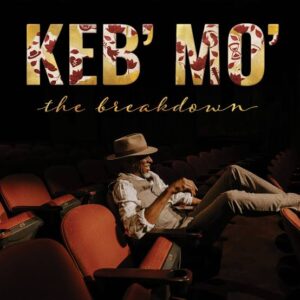
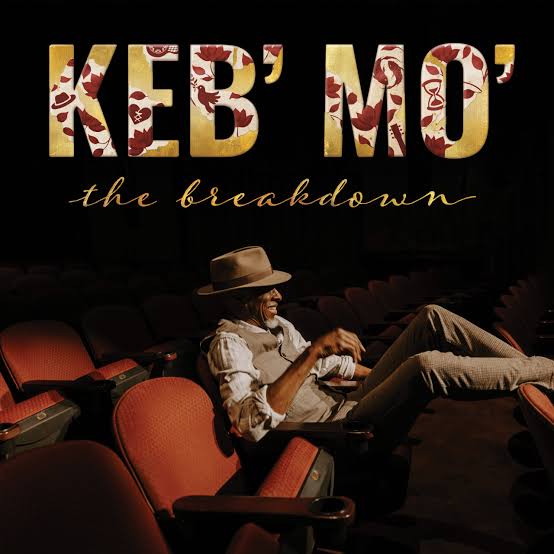
The Breakdown
Concord – CRE03540
For the man born 75 years ago as Kevin Moore, but known professionally for half his life by an abbreviated stage name, this new release may well be the most starkly personal album of an illustrious career. With credentials highlighted by five Grammy Awards for Best Album (four for Contemporary Blues, one in the Americana category) and numerous other high-profile accolades and collaborations, Keb’ Mo’ has long been admired for the understated elegance and folksy intelligence of his music. But this new disc offers the most comprehensively stripped-down-to-the-essence artistic statement he has ever delivered. Recorded at his home studio, it is, on one hand, straight-up Keb’ Mo’—the veteran songwriter, the warm-voiced singer, the adroitly tasteful guitarist—unaccompanied, save for two tracks graced with backing vocals. However, this, the 16th solo album attributed to that familiar persona, is also very much an album by Kevin Moore, the real-life human being.
Featuring ten songs, all written or co-written by Mo’ (who also produced the sessions with Zach Allen), The Breakdown presents the artist self-accompanied on acoustic or (in one case) National steel guitar. But while each track can stand alone, the lyrical content and sequencing coalesce to suggest a larger, cohesive story arc. The album title alludes in part to recent medical, marital, and psychological disruptions reportedly endured by the man behind the Keb’ Mo’ mask. As we all understand, precious things can break down over time: our biological bodies, relationships, mental health, and more. But the concept of breaking something down can also refer to the analytical process by which we can gain understanding. The story that these ten songs collectively convey clearly encompasses both meanings.
Each track might be understood as a scene in an unfolding drama of loss and redemption. The opener, Fussing and Fighting, laments a once-glorious but now fractured coupledom on the verge of disintegration. Every Step of the Way depicts the bitter aftermath of the breakup, as well as the determination to maintain perspective and priorities, to press on “No matter where my road leads.” Riding a mellow but potent groove, They Don’t Make ’Em Like They Used To opens with the line, “I smell biscuits / Baked from scratch.” That sensory stimulus triggers the singer’s appetite to reconnect, to find a new woman who can cook like “Grand mama.” The chorus, accented splendidly with backing from the a cappella group Take 6, comprises the grandmother’s reply, culminating with the title line.
The mood turns more introspective with More Yesterdays, as the protagonist realizes he has “no time for anger . . . more yesterdays than tomorrows.” We Make Love envisions a longed-for utopia, both singular and social, committed to peace and compassion, a place free of pain, depression, war, and recession. Walking on Water ponders the problematic gap between dreams and reality, hitting hard with the assertion, “The only truth that I’ve ever found is for me / There’s no such thing as solid ground.”
Featuring inspired vocal support from the Soweto Gospel Choir, the brilliantly produced Hand It Over marks an uplifting turning point via an original gospel song born of Mo’s personal journey. With its dismissal of “dreams and schemes,” Living in the Moment commits to the succinct philosophy of its title. The penultimate track, Stitched Up Heart, composed in the wake of the songwriter’s divorce and open-heart surgery, contemplates the opportunity for a “brand new start.” The set closes with the well-earned testimony of One Day Away, which affirms, “You may be closer than you think / To your miracle.”
From start to finish, the insightful songwriting, impeccable solo instrumentation, and vivid vocalizing cohere to tell a story that is individually specific yet speaks to the fundamental realities of the human condition. Ultimately, it’s about survival, self-awareness, healing and soul—and on those counts, The Breakdown might be Keb’ Mo’s most important message.
—Roger Wood
RHIANNON GIDDENS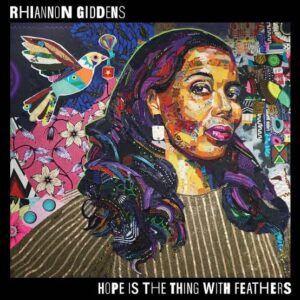
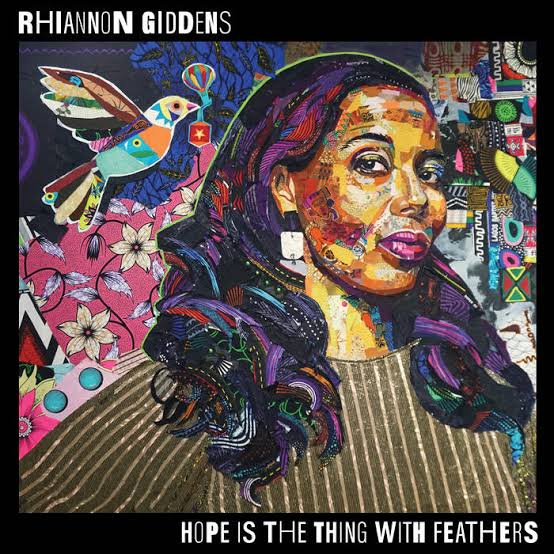
Hope Is the Thing with Feathers
Nonesuch – 07559789194
With Hope Is the Thing with Feathers, Rhiannon Giddens follows up two very different recordings—her return to traditional Black string band music, performing fiddle/banjo duets with fellow Carolina Chocolate Drops alumnus Justin Robinson on What Did the Blackbird Say to the Crow (2025) and a full-blown, pop-oriented studio production of originals on You’re the One (2023). On this new release, in an all-acoustic, stripped-down format, the purity, passion, and power of her voice and deft banjo/fiddle work are front and center, and she integrally collaborates with multi-instrumentalist and singer Dirk Powell, who coproduced the album and cowrote four of the original compositions. Other musicians who join in various combinations with the duo include fiddler and singer Robinson, Italian percussionist and accordion player Francesco Turrisi, Congolese guitarist Niwel Tsumbu, upright bassist Jason Sypher, singer and percussionist Charly Lowry, singer Amelia Powell, percussionist Brady Blade, bones player Justin Harrington, drummer Bill Smith, and her sister singer Lalenja Harrington.
This is music that takes listeners on a journey—into her roots in North Carolina, into the heart of the history and diversity of the American experience, and into her connections with world music traditions. Written by Giddens and Powell, opener Angel Fire Rise, with its understated banjo/fiddle intro, seems to rise out of the past and harks back to early Black string band music. It’s haunting and mystical. On the title track, an Emily Dickinson poem set to music by Giddens and Tsumbu, Giddens delivers an uplifting message for trying times that rides on the lilting interplay of Tsumbu’s fingerpicking guitar and Turrisi’s accordion.
Perhaps the most powerful performance on the album is the original blues song Step Away Blues by Giddens and Powell. With stark accompaniment from her minstrel banjo and Powell’s guitar and fiddle, Giddens injects a harshness into her voice to deliver a message of resistance, a refusal to accommodate racism. In the opening verse, she sings the “A” line of the classic three-line blues stanza, “Step away, step away I’ve got my soul in my hands.” It’s her instrument that is in her hands, and she personifies the blues artists whose music has been both lauded and appropriated in a society that still denies them full participation, hammering home the point with the “B” line, “You betta get my name out of your mouf you’ll never understand.” She echoes Ralph Ellison’s invisibility metaphor for the status of Black people in America in the second verse, “I’m tired of takin’ off my skin so you can see my heart / If you can’t feel it with your eyes closed then we need to stay apart.” And she punctuates her message with devastating defiance in the final stanza with “Step away, step away I’ve got my soul in my hands / ’Til you’ve felt the grit in your mouth baby you’ll never understand.” Step Away Blues is a stunning example of the vitality of the genre as it speaks directly to the current state of the nation.
Other Giddens/Powell originals include Carolina Rain, a full-band, infectious paean to the simple country life, and the Celtic-flavored Wish in Vain, a vocal duet with Powell that empathizes with the longings of refugees. Giddens pays tribute to two female North Carolina musical legends with dynamic, heartfelt covers of their signature songs—a full band version of Ola Belle Reed’s High on a Mountain and Powell’s Piedmont blues–style fingerpicking accompanying the singer on Elizabeth Cotten’s Freight Train. The program also includes two traditional tunes, a full-band hoedown on Cluck Old Hen and a fervent a cappella duet with Lalenja Harrington on the hymn Walk with Me.
Hope Is the Thing with Feathers concludes with Powell’s bluesy slide guitar interweaving with Giddens’ minstrel banjo behind her and Lowry’s vocals on Pura Fé’s Going Home, an homage to the Indigenous and African ancestors from North Carolina. Giddens’ comment on the song asserts that the South is “a combination of cultures from three continents that mixed and mingled and became something new.” And that’s exactly what she achieves on this album.
—Robert H. Cataliotti
EDDIE COTTON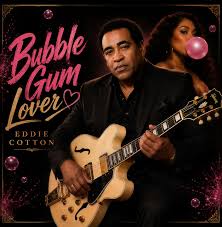
Bubble Gum Lover
Malaco – MCD-7567
This is Eddie Cotton’s first release on Malaco. Whether it indicates that the venerable Jackson, Mississippi–based label is embarking on a mission to reclaim its dominance in the southern blues / soul blues firmament remains to be seen. (In recent years, the formidable Mr. Sipp has been their primary entry in the contemporary blues sweepstakes.) From the sound of what’s here, though, the label still has what it takes to make a valiant stab at it.
The music is a rich, non-synthesized blend of blues and old-school funk, the kind of thing that helped put modern “soul blues” on the map when Z.Z. Hill’s Down Home Blues opened the floodgates in the early 1980s. Cotton delivers his songs in a sinewy baritone, both melodic and winningly atavistic (he sounds as if he’s dropped into a juke after spending the morning in a backroad country church). His guitar work, intense and unerringly precise, reflects his decades as a hard-journeying bluesman (and his formative years in the Church of God in Christ before that). He’s learned to make every note count, substituting honesty and musical acumen for pyrotechnic excess (he crafts his solos as if, like Dizzy Gillespie, he’s spent most of his life learning what notes not to play).
Unfortunately, songwriting credits aren’t provided, but given Cotton’s history as a lyric craftsman, it’s safe to assume that most of these entries are originals. Just as his fretwork is both economical and fully realized, the stories he tells—drawn from real life, with plenty of grit and honesty but avoiding cheap-thrills pandering or adolescent double-entendre humor—sound as if they emanate from hard-won experience, laced with a life-affirming spirit that make clear Cotton’s ongoing dedication to his church upbringing.
The title tune is a straightforward (if unabashedly raw) ode to love won, lost, and sought. Sexy Imperfection, set to a moody funk blues ballad groove, finds the singer praising the joys of lovemaking between partners whose beauty (and bodies) may not be fashion-mag worthy but nonetheless stoke the fires of passion. Bright Future saunters in a N’Awlins–tinged lope, and its message—“I know I don’t have a problem that knowing you won’t heal”—invokes the healing power of carnal love as convincingly as the hymns and houserocking gospel numbers of Cotton’s COGIC background called down the love of the Holy Spirit. Like the bluesman he is, Cotton mines hope from heartbreak (the boogity-popping Your Good Thing Is Gone makes unrequited desire sound almost like a party), even as he determinedly sets his sights on extricating himself from the bonds of false love and false promises (I Wanna Be Free). Echoes of Albert King resonate in his fretwork on Love and Hate, a vivid parable rich with aphoristic wisdom (“A heart can be broken every time love and hate have a date”), again reflecting Cotton’s church roots despite its resolutely secular theme.
The overall quality of this outing will not surprise longtime Eddie Cotton admirers; blues aficionados in general, though, hungry for a taste of “the real thing” from a label that once specialized in delivering just that, will no doubt react to this release with unexpected joy. Seemingly out of nowhere, with almost effortless-sounding ease, Malaco has come up with what will most likely count as one of the year’s top blues releases—all the more so for its unforced musical eloquence and emotional honesty.
—David Whiteis
SHERMAN HOLMES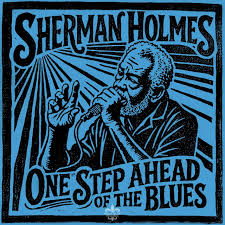
One Step Ahead of the Blues
Nola Blue Records – NB058
From 1959 until the death of two of their members, the Holmes Brothers made some of the finest gospel-inflected, soulful roots music around. Debuting on record with 1990’s In the Spirit, the trio—Popsy Dixon, Wendell Holmes, and elder brother Sherman Holmes—earned numerous critical plaudits including Blues Music Awards in 2005 and 2008. In 2015 both Dixon and Wendell Holmes died, leaving Sherman Holmes as the group’s sole survivor.
Singer and multi-instrumentalist Sherman Holmes launched a recording career under his own name at age 77 with 2017’s The Sherman Holmes Project: The Richmond Sessions. That release followed on with the Sherman Brothers’ approach of synthesizing myriad styles—everything from bluegrass to pop—into something wholly original.
Now, in 2026, Sherman Holmes returns with his sophomore solo release, One Step Ahead of the Blues. Fans of his previous work—solo and with the Holmes Brothers—need not be concerned that the album’s title portends a narrowing of musical style. His new album once again showcases his eclectic, all-encompassing musical approach (which one could term Americana if that label hadn’t long since taken on a more specific and limited character).
After the loping title track, Holmes delivers Your Livin’ Does your Preachin’, a track that subtly swings, telling a story with a gospel flavor leavened with a winning pop sensibility. The arrangement’s understated Wurlitzer and lead guitar provide rock-solid support without getting in the way of the melody and stirring vocal chorus work. The seething, simmering Voices in the Hall adopts a blues rock style, and—like most every kind of music he takes on—it suits Holmes to a T.
Even with a lyric built on a seemingly unending succession of well-worn phrases, Strike While the Iron Is Hot is appealing. The song’s atypically loose arrangement makes it stand out among a clutch of tight tracks, but it still works. The Blues Done Got My Soul puts Holmes’ genre-spanning musical approach into words.
The lyrics of the ruminative Oh America (Still Standing) run through a checklist of ominous omens, but still manage to put forth a hopeful vision for the future. The optimism continues with the funky and upbeat One More Go ’Round; the track has a winning, autobiographical character, and its vocal chorus is stirring.
Holmes serves up a subtly gospel-tinged message with Prophet in Another Land. He’s supported in that endeavor by some understated horn section work. The country blues of Fair to Midland emphasizes yet again how easily Sherman Holmes moves from one musical idiom to another. An entire album from the man in the style of this track would be welcome.
The gospel piano underpinning of I’m So Lonely finds Holmes channeling the late, great Ray Charles. As winning as the other tracks are, it may well be the most fully realized cut on One Step Ahead of the Blues. The record concludes with the stirring Change My Heart; its vocal chorus recalls both field hollers and the Dixie Hummingbirds. It’s a fine ending to a delightful album.
—Bill Kopp
TRENTON AYERS
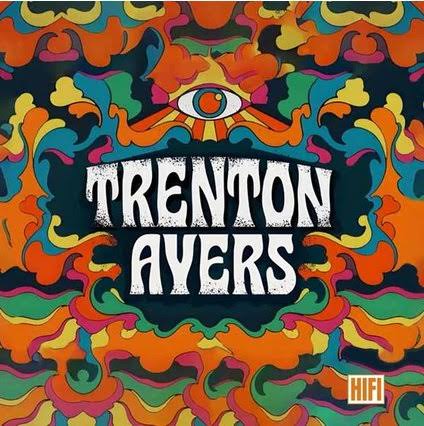
Taking It to the Mountain
Music Maker Foundation – MMCD234
On Taking It to the Mountain, blues guitarist-singer Trenton Ayers steps away from sideman status, where he has labored for years, to occupy the main spotlight.
The Holly Springs, Mississippi, native plays electric guitar on his debut album for the Music Maker Foundation like a young man with an old soul. The nine tracks combine the simple but spellbinding drive of John Lee Hooker with the equally soulful and mesmerizing psychedelia of Jimi Hendrix and Sly Stone. These influences converge most effectively on the album’s only instrumental, Run Leo, though the antiphonal chant of “higher” on the mystical title track is evocative of the Family Stone. Similarly, the fuzzy guitar lick that opens Getting Funky is a hat tip to Hendrix.
None of this is surprising, as Ayers was born into the North Mississippi Hill Country blues tradition, with its emphasis on incessant and hypnotic grooves. His father, bassist Earl “Little Joe” Ayers, played and recorded with Hill Country guitar legend Junior Kimbrough as a member of the Soul Blues Boys. For his part, Trenton picked up the guitar not long after learning to walk and talk, making his live performance debut at age six. By 14, he was opening for B.B. King.
Ayers employs his unhurried but nevertheless penetrating vocal delivery to best effect on Insight, though the innocent lyrics don’t mesh with Ayers’ almost menacing delivery. When he sings, “Come to me baby,” it’s not an affectionate request but an unearthly plea.
Mississippian Jimbo Mathus of the Squirrel Nut Zippers produced Ayers’ album at Music Maker Studios in Fountain, North Carolina. It’s one of the first Music Maker albums to bring Freeman Vines’ FreeVerb reverb chamber into the recording process. The chamber that once served as the headquarters of the late gospel artist and luthier is put to work most explicitly on the entrancing dance tune Snake Hips.
Not only is Freeman Vines’ reverb chamber in the mix, but so is his eclectic guitar collection, which the musicians employ to great effect. His posthumous inspiration doesn’t stop there. Backing Ayers are the Crimestoppers, a singing group representing the Vines-Daniels extended family, whose gospel music resume goes back decades to the Legendary Vines Singers (the Crimestoppers appear individually and collectively on other Music Maker projects). But outside of the lyric content of the title track and Mathus’ warbling organ intro on Insight, the only gospel here is the ancient gospel of tradition-keeping by a young man with an old soul. Taking It to the Mountain stands at the six-corner crossroads of blues, rock, and psych.
—Robert M. Marovich
GUITAR SHORTY

Guitar Shorty Live Birmingham Alabama
Master-Tex Records – MMJ-414
Any time a new release from the late Guitar Shorty is out in the world is a cause for celebration.
Released by Master-Tex Records with the blessing of Alligator Records, Guitar Shorty Live Birmingham Alabama features a 2007 performance from the guitar hero and his band. The sound quality and production are more than a little rough-and-ready, but the 73-minute album captures a magnificent set.
The album starts with a nearly eight-minute take on We the People. Shorty’s vocals are strong and the band tight. But most importantly, Shorty’s solos are electrifying and he absolutely rips. His work on the song sets the tone for the rest of the release, as it’s marked by his blistering guitar playing.
On Roll Over Baby, clocking in at just under ten minutes, he offers up a masterclass. At the midpoint of the track, his solo turn is thrillingly dynamic. While his band holds down the rhythm, Shorty mixes it up in terms of speed and style and absolutely kills it.
While the whole CD is worth your time, there are a pair of tracks that stand out above the rest: covers of Johnnie Taylor’s Jody’s Got Your Girl and Gone and Hey Joe. The former manages to connect the soul funk of the original with Shorty’s torrid guitar playing and singular voice. For this reviewer, it’s the highlight of the entire affair and a thrilling listen. Hey Joe is in a similar vein, with Shorty taking a standard and making it his own.
As noted above, the sound quality on Guitar Shorty Live Birmingham Alabama isn’t fantastic, sounding more like a high-quality bootleg than anything else. But don’t let it deter you from checking it out; it demands your immediate attention.
—Jim Shahen Jr.
ANTHONY GERACI
Where Were You
Delmark – 900
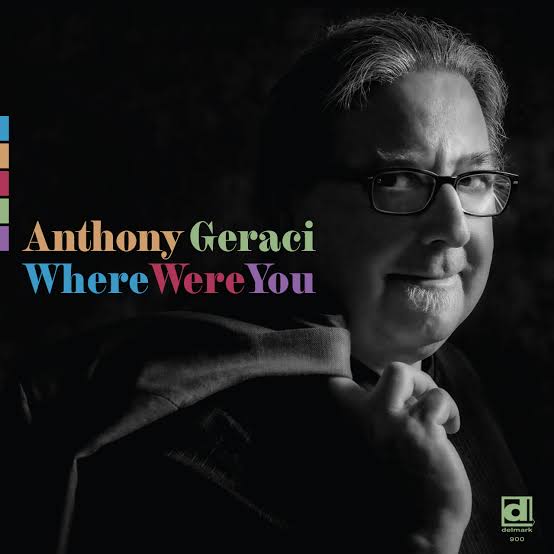
A powerhouse boogie-woogie and blues pianist who’s never gotten the kind of attention and too rarely the praise his stellar chops deserve, Anthony Geraci shows in Where Were You why he is such an in-demand player among his fellow musicians.
One of the highlights of his latest release as leader comes about halfway through: The rollicking instrumental Rockin’ Til Dawn recalls Ray Charles’ What I’d Say, if Charles had played that on an acoustic piano instead of organ. Guitarist Barrett Anderson then adds in a bit of Duane Eddy twang on the fills behind Geraci’s piano, giving it almost a touch of surf rock. Mario Perrett’s muscular tenor sax lead recalls blues hornsmen of lore like Grady Gaines or Eddie Shaw. The end result is a kind of a surf-infused jump blues—one that could keep any dance floor hopping.
Say La-Ti-Da slips into a New Orleans vibe. Geraci’s smooth vocals and second line syncopation on his left hand recall not a little of Marcia Ball’s Crescent City forays (a feeling only reinforced by Sheryl Youngblood’s earthy harmony vocals).
The band heads to Chicago for Alls’ I Got Is You, with Geraci dipping into the lower register of his voice. It’s a perfectly distilled postwar electric blues anchored by a great melodic theme.
Youngblood’s rich voice imbues the title track with a rich gospel feel, riding atop a slowly percolating blues with Geraci ’s block chords on piano—braced by his own double-tracked fills on Hammond B-3.
Youngblood channels her inner Dionne Warwick on Even a Fool’s Right Once in Awhile, with Geraci providing a Burt Bacharach–style piano intro. In fact, the entire song (written by Geraci) has a Bacharach & David feel to it, with Youngblood’s larger-than-life vocal anchoring the gorgeous melody.
Breaking Bread mines a similar vein to Rockin’ Til Dawn, without the surf twang. Perrett and Geraci play the melody in unison to open the song, then begin swapping the lead back and forth. The beat never flags, and Perrett’s extended solo on tenor sax keeps the energy high.
If Oobiedoobie Man is an homage to rock ’n’ roll pioneer Roy Orbison, it’s not obvious. The lyrics are a typical man-desiring-woman tale. The musical performance wouldn’t have been out of place in the Sun Studios where Orbison cut his pioneering hit Ooby Dooby in 1956, but there’s nary a hint of that song’s theme in any of the solos here.
Suite: Blues closes out the album with a deep jazz groove laid atop a blues structure. Geraci’s relaxed yet sophisticated lead on piano creates a late-night supper club atmosphere. You can practically hear the low conversation, see the flicking candles, taste the after-dinner coffee. It is yet another side to Geraci’s seemingly limitless catalog of styles on which he can call upon, apparently at will.
—Jim Trageser
BIG HARP GEORGE
No Shortcuts
Blues Mountain Records – BMR CD-08
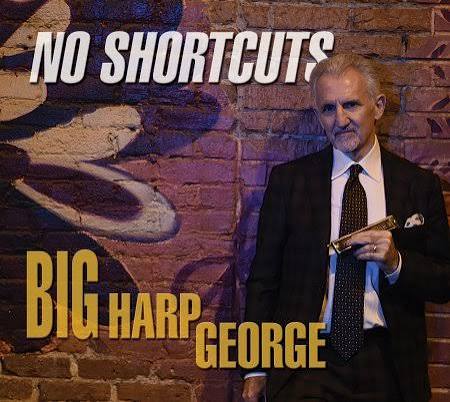
Like his contemporary Sugar Ray Norcia, Big Harp George is willing to take the harmonica into styles (swing, jump blues, R&B), and probably venues, where it’s not normally found, particularly as the lead instrument.
His latest release, No Shortcuts, opens with a rousing jump blues instrumental, Come Out Swinging—and the band more than meets the challenge of the title. Doug Rowan is positively honking on his tenor sax, the entire horn section is wailing, and George blows the heck out of his harp.
Supplement Life introduces the listener to George’s sense of humor as the protagonist tells of his efforts to get healthy through vitamins. The Morgan Brothers provide doo-wop backing vocals on what is otherwise an R&B tune, and Mike Rinta’s knowing trombone solo adds to the sense of fun.
The humor shines through again on Yes Dear! as George sings about his attempts to keep his woman happy. The arrangement is somewhere between neo-swing and Chicago blues, and Kid Andersen has a top-shelf solo on guitar.
Sun Drifting is Memphis-styled blues instrumental, George caressing the lovely melody on harp. Struck Out Again is a slow West Coast blues, with George’s weary vocals punctuated by tasty fills from Andersen. What’s Wrong with Dying? is a modern blues, blending both George’s unique humor and a touch of philosophy in the lyrics.
George’s energetic harp and Chris Burns’ groove-laden organ anchor Mista Boins!, as they trade both the lead and solos throughout the instrumental excursion. Rusty Spoon is a southern blues, with Charlie Bisharat’s violin giving it a touch of country.
The band shifts stylistic gears on Ain’t My Circus, a blues rock shuffle, then heads to the Middle East for the Arabian-tinged I Will Find You, with Mohamed Elshazly playing a haunting intro on oud. Bury My Head is structured like an old-timey music hall tune, Charlie Bisharat’s violin only adding to the vintage patina, and Be Adorable is a cross between swing, pre-war New Orleans jazz, and the Andrews Sisters.
On Do You Remember?, the feel is of 1950s vocal pop—think the Platters or Jim Reeves—with George and Lisa Leuschner Andersen’s sentimental duet happily recalling past times.
The biggest musical leap may be on Last Trip to Itaipu, where George’s chromatic harp dives into a samba motif—calling to mind the great Brazilian harmonica player Rildo Hora. Andersen’s extended solo on fretless bass provides a true “wow” moment, and Bisharat’s violin improvisation somehow maintains the Brazilian feel.
George wrote all 16 songs here (under his legal name of George Bisharat), and it’s likely some of them will end up being covered by other artists—they are that good. The title track, in particular, could end up becoming a standard. When you consider the breadth of styles these songs are performed in—not just blues, but Brazilian, Arabian, music hall, and swing—it is even more impressive.
The arrangements throughout are solid, with punchy horn choruses just where they’re needed, and both the violin and the non-Western instruments deployed effectively. While the album ventures far afield from the blues at times, George and his band are so solid, the melodies so fetching, that just as with much of Charlie Musselwhite’s recent catalog, the album is unlikely to disappoint even the purest of blues fans simply because the music is so outstanding.
—Jim Trageser
VANEESE THOMAS

Window to my Soul
Overton – OMX-1009
Vaneese Thomas, the youngest daughter of the late Memphis blues/soul/R&B legend Rufus Thomas, may not be as widely known as her siblings Carla and Marvell (who died in 2017), but she’s had an active and productive career as a recording and performing artist, songwriter, educator, and activist.
Thomas, as usual, shows herself to be in control from the outset. She wrote or co-wrote seven of this set’s eight offerings, and her leonine growl on the opener, I Still Got the Blues, makes it clear that the legendary Thomas grit remains an inextricable and untamed facet of her musical personality. Her band is a characteristically tight unit, featuring guitarist Al Orlo (whose probing improvisations mine shafts of light, jagged-edged shards, and fertile soil with equal facility) and a robust horn section, all capable of spanning a stylistic spectrum as varied as it is wide—reflecting both Thomas’ own eclecticism and the versatility (and refusal to be classified) that has long typified her home city.
Thomas, steeped in the deep soul tradition, brings new meaning and depth to even the most tried-and-true themes. She declares her independence from a wrong-doing lover with battle-scarred resolve on offerings like Ain’t No Reason (For a Man Like You) and Ain’t Gonna Be No One’s Fool, as the horns, girded by drummer Ross Pederson and bassist Paul Adamy, lay on an appropriately aggressive ass-kicking; Save Me, on the other hand, finds the singer staring down her own foibles and weaknesses (“Here I go again, making the wrong decision”) with an honesty as uncompromising as the womanist determination that courses through the anthemic That’s a Woman. Every Moment Is a Lifetime, an inspirational paean worthy of Mavis Staples, avoids both preciousness and sanctimoniousness through the sheer power of Thomas’ delivery—unforced yet forceful, devoid of bathos but rich in nuance and tonal coloration to amplify its message.
As gifted a songwriter as she is, though, Thomas’ greatest triumph here might be I’m a Diamond, which was penned by Michael Horwitz but sounds as if it emanated from the deepest recesses of her soul. Alternately fierce, pleading, and celebratory, she proclaims victory in a voice laced with a wounded urgency that brooks no compromise, enriched by the band’s moody, deeply resonant minor-key backing through which Orlo’s guitar leads fire redemptive sparks. Offerings like this make it clear that Vaneese Thomas, as well as the living musical heritage she encapsulates, remains a fount of inspiration and empowerment of the kind we need more than ever in our perilous times.
—David Whiteis
LADY A 
The Space in Between
Lady A Productions – No #
A quick bit of history for the uninitiated: The performance career of Seattle-born Anita White began in the 1980s. By 2000 she had adopted the stage name Lady A. White released her debut album, BlueZ in the Key of Me, in 2010. Two years before that, pop country trio Lady Antebellum released their first album. Thinking better of their name choice in the wake of nationwide George Floyd protests, in 2020 the group changed its name to . . . Lady A.
After the band’s discovering the existence of the “other” Lady A—who released a single, My Name Is All I Got—lawsuits and countersuits were initiated. Eventually a settlement was reached (terms undisclosed) and both parties continued using the name, presumably content in the belief that the artists’ respective fan bases would not overlap in a significant way.
The blues-singing Lady A released her first post-dispute album, the pointedly titled Just Bein’ Me, in 2023. Now she returns with The Space in Between. Recorded in Jackson, Mississippi, the album features nine songs, all of them Lady A originals.
The album opens with I Wish You Would, a deep funk groove with a remarkably live, in-your-face production aesthetic. Lady A’s lyrics are street-level and observational, clear-eyed and realistic, yet cautiously optimistic. Overdubbed backing vocals give the song a subtle gospel flavor. Co-producer Dexter Allen lays down a tasty, jazz-inflected guitar solo.
The up-tempo This World is dance-oriented with stellar bass work (again by Allen) and some pleasing—if spare—horn charts. Sittin’ Here Waiting on You leans more heavily into straight blues; once again, the unvarnished production approach highlights the authentic qualities of the performance. Lady A allows a bit of growl to creep into her vocals, and it’s an effective choice.
EveryTime is built upon keyboard textures; some are bluesy, others not. The tune’s stripped-down arrangement places the focus on Lady A’s vocals. She’s joined by co-producer John Oliver III on stirring background vocals. Allen turns in another fine lead guitar break.
The string- (or string keyboards) laden cautionary tale Sip-A-Liquor has a late-night feel, with Lady A taking on a huskier, torchy vocal quality that sets the track apart from the other tracks on The Space in Between. The mood is lightened for That’s My Mama. The tune’s keyboard “horns” don’t sound quite real enough to pass muster, but the song’s overall virtues go some distance toward redeeming it.
Lady A is in top form for That Man I’m Looking For. A sleek and tight arrangement places her vocal assets in the proper context, and Joey Robinson’s piano solo adds appeal. The gospel-flavored title track opens with some lovely dialogue between Lady A’s voice and Allen’s guitar. The tune doubles down on the positive messaging and themes of gratitude introduced on I Wish You Would. The record closes with I Stay Covered, a cut in which Allen turns in some fiery blues rock guitar riffing. A stomping beat supports Lady A as she gives the album’s most powerful performance. On The Space in Between, Lady A makes a strong case: Accept no substitute; she’s the real deal.
—Bill Kopp