JOHN PRIMER AND FRIENDS

Tribute to Theresa’s Lounge
Blues House – BHP-JP2026
Theresa’s Lounge, a smoke-filled basement juke at 4801 South Indiana Avenue in Chicago, was where John Primer launched his career in 1974. It didn’t take Primer long to realize that he’d stepped into living history. At that time, Junior Wells was the featured entertainer, ex-Muddy Waters fretman Sammy Lawhorn was the house guitarist, and the club was already well on its way to establishing its international reputation as a blues mecca. Its history as a music venue extended back to the mid-1950s, and through the years it hosted a virtual who’s who of Chicago blues immortals—Wells, Buddy Guy, James Cotton, J.B. Hutto, Louis and Dave Myers, Luther “Guitar Junior” Johnson, the list goes on—and it was also a training ground for the 1960s/’70s generation of young white musicians—Bloomfield, Butterfield, Elvin Bishop, et al.—who rose the blues “revival” to fame. Primer left T’s to join Muddy in 1979; the club kept going until 1983, when its closing left a hole in the soul of the Chicago blues scene that many feel has never been filled.
For this tribute, Primer has assembled a band of veterans for whom Theresa’s was a training ground and early musical home. The lineup includes harmonica ace Billy Branch, veteran bass man Bob Stroger (undiminished as he approaches his 96th birthday), octogenarian Mary Lane, vocalist Willie Buck, guitarists Carlos Johnson and John Watkins (who first led Primer to Theresa’s door), roots man Mervyn “Harmonica” Hinds, bassist Jeff Brinkman, and drummers Tony Mangiullo (better known today as the proprietor of Rosa’s Lounge) and Twist Turner.
Primer has worked with most of these artists at various times through the years; their musical synergy is tight, and the setlist, consisting of standards and a few Primer originals rooted firmly in the postwar style, lends itself well to the deep blues aesthetic they all share. Primer’s guitar work breathes freshness into timeless themes; Branch, featured on five tracks here, provides a living workshop on Chicago blues harp, dropping references to both Walters, Carey Bell, Rice Miller, and Junior Wells (among others) into his tightly wound solos while always retaining his own stylistic identity. Hinds’ harp work, more elemental but full-toned and sure, echoes the sound he conveyed during his stage-warming sets at Theresa’s.
Carlos Johnson’s reading of Muddy’s She’s Nineteen Years Old drips with a lasciviousness redeemed by the tender sensuality of his vocal timbre, and his guitar work honors the “Chicago glory days” aesthetic that permeates this set. John Watkins sounds revitalized and fully focused on his self-penned Here I Am Knockin’ at Your Door Again. Primer’s own compositions—7 Nights for 7 Years, Blues Survivalist, We All Need Help, The Blues Is King—might strike some as overly earnest, but they can also be seen as comprising his manifesto as a carrier of the traditionalist Chicago blues torch, and he toughens them with an unwavering emotional focus. Mary Lane delivers her own Mary’s Song with a sassy panache befitting her status as a venerated elder stateswoman (which she’s earned primarily over the past few decades, despite a career that extends back to the 1950s). Willie Buck’s workmanlike Champagne and Reefer may not make anyone forget Muddy Waters, but Primer summons a taut muscularity on the Junior Wells standards Up in Heah and Little by Little, and his take on Cut You A-Loose more than does justice to Ricky Allen’s original, despite the somewhat rushed tempo. He pours his heart and soul into Little Walter’s Mean Old World, a tribute to Sammy Lawhorn, who regularly included it in his sets.
Even more than the musicianship—almost a given, with a lineup like this—the dedication and love here are palpable. It’s clear that these artists treasure their recollections of Theresa’s as well as its owner and proprietor, the indefatigable Theresa Needham. If you were lucky enough to have experienced T’s, this set will evoke cherished memories; if you weren’t, dive in and savor a taste of living history reborn.
—David Whiteis
JOHNNY RAWLS & DAVE KELLER
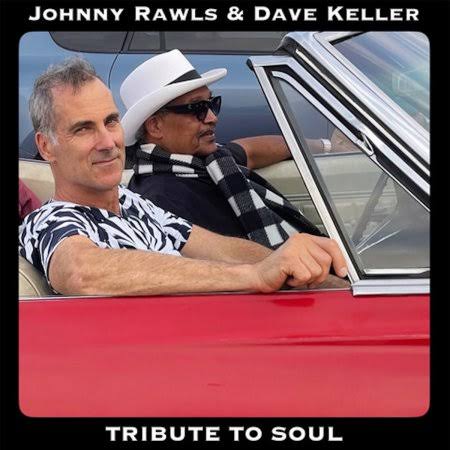
Tribute to Soul
Third Street Cigar Records – TSC 111
On paper, Johnny Rawls and Dave Keller might not seem to share much common ground, but powerful soul blues isn’t created on paper: it stems from deep, bone-level connections that evade any perceived societal divides.
While Rawls is a 75-year-old Black singer, guitarist, and songwriter with roots in rural Mississippi and Keller is a 49-year-old white singer, guitarist, and songwriter raised in the industrial sprawl of Worcester, Massachusetts, the two artists share a profound love of classic soul, R&B, and blues. After crossing paths during a 2010 show in Vermont—where Keller has lived for decades—Rawls, recognizing the younger musician’s appreciation and respect for “Old School” soul blues, took the younger musician under his musical wing; much like iconic soul belter O.V. Wright did for Rawls back in the 1970s.
The two have been sharing stages periodically for nearly 20 years, delivering their collective take on classic R&B and blues in the spirit of masters like Z.Z. Hill, Bobby “Blue” Bland, and Sam & Dave, but Tribute to Soul marks the pair’s first studio effort.
With help from Keller’s backing band featuring Alex Budney (bass), Ira Friedman (keys), and Jay Gleason (drums)—Rawls and Keller, both accomplished axe men in their own right, add rhythm guitar, with Keller handling the lead parts—the duo rip through 11 swaggering, horn-soaked covers.
Keller and Rawls find their sweet spot by trading verses on grooving funk soul numbers. Rawls’ husky tone and Mississippi-bred timing, phrasing, and colloquialisms melds seamlessly with Keller’s crisp, slightly higher range. The duo delivers versions featuring arrangements that stay largely faithful to the originals. Tracks like the opener, Otis Clay’s I’m Qualified (1971) and Neighbor, Neighbor, a smoldering take on Jimmy Hughes’ 1966 hit, are loaded with attitude and snarl. Tommy Tate’s I Remember (1971), with gospel-infused piano and a rollicking arrangement, and Little Johnny Taylor’s Make Love to Me Baby (1970), ignited by an infectious bass line and insistent horns, could have been beamed in from a 1970s radio station.
Joe South’s Walk a Mile in My Shoes, with its hopeful plea for empathy and inclusion and rejection of intolerance, sounds just as relevant today as it did when it simultaneously rattled cages and opened eyes upon its 1968 release, as Keller sings, “When you strike out and try to hurt me / you’re only hurting you.” Drowning on Dry Land, O.V. Wright’s 1972 masterpiece, is an album highlight that features some of Keller’s tightest lead guitar work to complement Rawls’ passionate, reverential vocals.
On Hold What You’ve Got, Rawls and Keller showcase their versatile, nuanced vocal skills on a powerful version of the 1964 Joe Tex gem. The rhythm section’s relentless groove drives James Carr’s unflappable 1968 track You Didn’t Know It but You Had Me to close the album on a gritty, full-speed-ahead note.
Tribute to Soul is an example of how two soul blues lifers can combine their impressive talents to create something that pays homage to the past while keeping things fresh, funky, and exciting.
—Rod Evans
TERRY “HARMONICA” BEAN
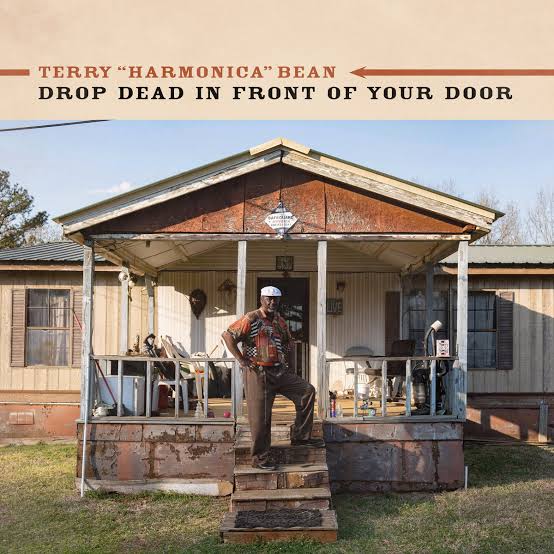
Drop Dead in Front of Your Door
Music Maker – MMCD 219
On his latest release, Terry “Harmonica” Bean brings his hypnotic and stripped-down Hill Country blues sound front and center with a mirthful spark on Drop Dead in Front of Your Door.
Born and raised in Pontotoc, Mississippi, as one of 24 siblings, Terry learned to play the blues from his grandfather Rossie Johnson, and his father, Eddie Bean, who were both bluesmen deeply studied in the Hill Country style—a tradition of playing that is the signature of Northern Mississippi blues legends such as Junior Kimbrough and R.L. Burnside. Terry brings this cultural legacy into a modern blues context, with hard-grooving percussive riffs, wonderfully expressive vocals, and a brilliant presence.
The interplay between his impressionistic harp skills and fast boogie style jostles the music with sharp wit and plenty of punch. You feel like you’re right there with him in a Mississippi juke joint rocking along.
The title track, Drop Dead in Front of Your Door, is a striking 12-bar cut. Terry’s gritty vocals carry a sweet narrative that clips along with nimble melodies dancing across his fret board.
On How Much I Love You, he plays a steady boogie with a humming harp and howling vocals. A solo call-and-response opens The Hill Country Guys, with Terry alternating between the lyric lines and his harmonica before leaning into a love-lorn riff and taking an expressive solo. I’m Ready is a rugged, up-tempo boogie that is underpinned with a growling vocal and plenty of raw steam.
A much-celebrated bluesman in his hometown, Terry’s warmth and vitality come across beautifully within the spirit of the music. The songs crackle with first-take spontaneity and communicate the larger-than-life artistry of his unique blues sound.
Drop Dead in Front of Your Door is definitely a knock that you should answer.
—Patrick Romanowski
VARIOUS ARTISTS
Morgan Freeman’s Symphonic Blues Experience
Ground Zero Blues Club Media / Universal Music – 487-2339
In 1903, at a Mississippi train station, the classically schooled composer W.C. Handy encountered an anonymous Black man playing primal music on a steel-bodied guitar. Handy documented what he heard via notation and began to study the sounds and structures of country blues. His published compositions and performances first bridged the cultural chasm between the rustic origins of this folk genre—in cottonfields, sharecropper shacks, and juke joints—and the urban concert halls where “sophisticated” orchestras performed. Over the many decades since then, other visionaries have syncretized elements of this down-home music and philharmonic grandeur, but nobody has done it before quite like the acclaimed actor Morgan Freeman and his many capable collaborators.
In creating the nationally touring stage production Morgan Freeman’s Symphonic Blues Experience, as well as this 12-track LP of the same name, the production team gets it right. The album is not so much a collection of blues tunes translated into the sumptuous style of symphony as it is a strong set of straight-up blues performances judiciously embellished by symphonic support. In short, devotees of roots music need not be wary, for this ambitious recording project is a triumph, wonderful to behold. Starting off with a gospel blues tune first documented in 1927, and culminating with a song written for Ryan Coogler’s blues-centric 2025 film Sinners, it traces a still-evolving cultural legacy. Though Freeman’s eloquent voice-over introduction enhances the opening track, he does not linger on the stage, so to speak. Over the course of a dozen impeccable song selections, the lyrics and instrumentation tell the epic story.
Ideally, this entire album should be experienced in its original track sequence, start to finish, as a singular listening experience. The opening phase reinterprets four numbers from the first half of the 20th century, starting with the mostly instrumental Dark Was the Night, Cold Was the Ground (first recorded 99 years ago by Blind Willie Johnson, a Texan). Over ethereal, shimmering background orchestration, the aural focus is on Freeman’s brief narration, as well as some achingly beautiful acoustic slide guitar work. Then, Keith Johnson’s mournful humming gradually unfolds into fully articulated words that conclude with a plea: “Somebody tell me, how long, how long?” The pace accelerates with the next track, an exuberantly funky take on Robert Johnson’s Crossroads, featuring Super Chikan as the singer. Next, Taj Mahal delivers a virtuoso performance on vocals and guitar in a highly creative arrangement of the Son House number Death Letter Blues. Another Robert Johnson gem, the classic shuffle Dust My Broom, with Lady Adrena on lead vocals, rides a hard-driving bass line.
The retrospective setlist shifts into the postwar era with Alvin Youngblood Hart’s exquisite cover of The Thrill Is Gone, his wavering voice and stark guitar solo communicating a heart full of hurt. Next, Cadillac Assembly Line acknowledges the Great Migration, as Keb’ Mo’ sings about abandoning cottonfields, moving to Detroit to work in an automotive factory, and starting a new life. Over the second half of the album, Anthony “Big A” Sherrod (a Clarksdale native) plays guitar and sings lead on three tracks: Somebody’s Knockin’, the soulfully emotive Love Me or Leave Me, and his own composition Someday. Interspersed among those three cuts and others of more recent vintage, there’s a fully orchestrated and profoundly effective flashback to Robert Johnson via his song Traveling Riverside Blues, complemented by Shemekia Copeland’s emotive vocalizing and some fine harmonica improvisation by Keith Johnson. Another standout features Tierinii Jackson (of the Memphis-based band called Southern Avenue) on lead vocals, backed sublimely by the Stax Music Academy Choir, on I’ll Take You There. The powerful final track, I Lied to You, begins with the lone voice of Keith Johnson accompanied by acoustic guitar and what sounds like the rhythmic pounding of a work crew. Gradually, other instruments and a chorus of haunting background vocals emerge, rising and falling in volume and intensity, climaxing with Johnson’s improvised closing line, “I love the blues.”
Apart from its well-conceived selection of material and its subtly effective orchestral accompaniment, this concept album succeeds gloriously in large part because of brilliant performances by authentic blues artists. These contemporary stars do not merely vocalize in front of some pre-recorded symphonic background. Instead, they collaborate in studio with various permutations of the Ground Zero Blues Club Band (named after the venue co-founded by Freeman in Clarksdale, Mississippi). That ensemble of veteran musicians constructs a solid and satisfying foundation for the sonic embellishments of the London-based Chineke! Orchestra, conducted by Martin Gellner. By keeping the real-deal blues players in the foreground, this transcendent presentation remains effectively grounded. Bravo!
—Roger Wood
SWAMP DOGG

Swamp Dogg Contemplates the Afterlife
S-Curve Records – 45004
Soul singer Jerry Williams Jr. issued his first single in 1962 with Let’s Do the Wobble. Four years later, he scored his first chart entry with Baby, You’re My Everything, which hit No. 32 on the R&B chart.
And four years after that, with a dozen or so singles under his belt, Williams adopted the stage name he’s used ever since: Swamp Dogg. His 29th album under that pseudonym finds him still joyfully exploring the intersections of R&B, country, and rock, with an idiosyncratic persona that’s reminiscent of both Sun Ra and Frank Zappa, yet wholly it’s own thing.
Intentionally not a farewell album, it is still a checkpoint for the 84 year old, with the octogenarian artist taking stock. With song titles like Searching for Heaven, A Million Tears Ago, and the closing track, Final Approach, plus an accelerator-to-the-floor take on John Prine’s folk classic Please Don’t Bury Me, the lyrics touch on subjects of mortality, of the finite nature of life, of love, and family.
It’s never maudlin, nor terribly sentimental. But it does represent the rare perspective of a mature artist who realizes the end is nearer than the beginning—all too rare in our youth-obsessed pop culture. Consider the lyrics on Final Approach (co-written with Donniele Graves and Sam Hollander):
I’m on my final approach, tray table locked down
Passage gettin’ blurry as wheels kiss the clouds
And I won’t even lie, I ain’t the holiest ghost
That’s why I’m comin’ in hot on my final approach
The album’s tearjerker isn’t even about romance: Daddy’s Little Girl is about a young child struggling to understand why her father was murdered. It’s a gorgeous song, sensitively sung, but those lyrics will rip your guts out.
A real highlight is the duet with his longtime songwriting partner, Gary “U.S.” Bonds, Waka Waka Waka. Propelled by a funky rhythm with the dueling vocals bracketed by pianist Raymond Angry, it’s got a 1960s New Orleans R&B vibe to it. The refrain has a tight melodic hook, and the two singers trade verses with a warm humor that softens the tale of a cheating lover.
Throughout, Dogg is in strong voice with great energy. The assembled band is solid, and the new songs are among the best he’s written or co-written. He may be getting closer to the end, but based on this outing, there remain several rewarding chapters yet to be written.
—Jim Trageser
DANIELLE NICOLE

Fireflies
Forty Below Records – FBR055
Inhabiting a groove-laden vein somewhere between the R&B-infused blues of Tracy Nelson and the soul rock of Traffic, Danielle Nicole’s fourth release finds her mining a rich ore of percolating rhythms and soaring melodies.
With as rich a singing voice as exists, her lower mezzo-soprano can even slide down to a high contralto. She also has tremendous stylistic range, from full-on rockers to flag-waving soul anthems to a slow, dare we say elegant, track like Chameleon, which is closer to Sade or Anita Baker than anything else here.
She and her husband (and guitarist) Brandon Miller have co-written ten new songs for the album, which take in all the territory mentioned in the previous sentence and then some.
The first song, Radical Love, is a catchy bit of contemporary electric blues with a hook a mile wide. A few tracks later, Soulside opens up with a pure Memphis groove, like something straight out of the Otis Redding songbook. Nicole’s vocal is also firmly enmeshed in a Stax vibe. Tug of War is another song built over a Memphis rhythm, but nearer in feel (and lyrical narrative) to Carla Thomas.
Take Me Back is funky and rocking, with more than a hint of Janis Joplin to its delivery, while Memories is a slow blues with Nicole’s vocals framed by acoustic piano and a gently strummed hollow-body guitar.
On the only cover, Bill Withers’ The Same Love That Made Me Laugh, Nicole and the band play it at about the same tempo as Withers’ 1974 original. But where Withers sang in a far more relaxed style than his band’s percolating funk (providing an interesting contrast and tension), here Nicole is out front of the beat. It’s a more assertive approach, and shows a new side to what has become a modern standard.
The fact that Nicole plays electric bass in addition to her vocals likely goes a long way in explaining the remarkable rhythmic feel to her singing. Drummer Tony Braunagel (who also produced this release) is predictably, reliably solid. Jim Pugh reminds us that he carved out his initial reputation as a stellar keyboardist, contributing acoustic piano and organ on different tracks. And Miller is as stylistically flexible on guitar as Nicole is singing, able to memorably improvise in any setting.
Having a combo this solid, this wide-ranging serves Nicole well—providing her a dependable, creative base off which to play.
The album closes out with the title track, another contemporary soul piece. Listening to Nicole caress the lyric is to witness a singer in complete control of her instrument, every pause, every shimmer the result of a conscious decision. The band builds the theme behind her, singer and ensemble bring it to a satisfying close. One would normally question not placing what is arguably the best song at the top of the album, but the ending is so perfect that it’s apparent why Braunagel and Nicole decided this was the closer.
—Jim Trageser
MARK HUMMEL ALL-STARS
Road Dog
Rockinitus – RRCD 1006
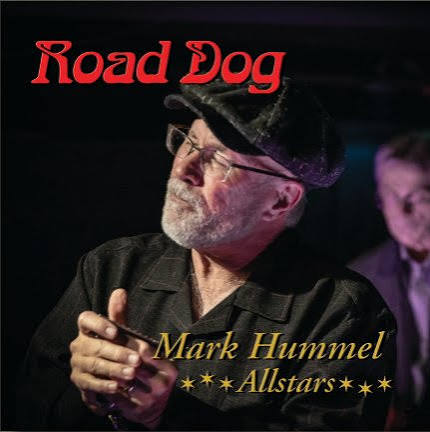
For Road Dog, the latest release in a recording career that stretches back into the 1970s, Mark Hummel shares 14 songs culled primarily from sessions that took place between 2015 and 2025 in Kid Andersen’s Greaseland Studios in Northern California. With no castaway tracks in the bunch, this eclectic album showcases Hummel’s passion for harmonica-centered blues, and with a few surprises thrown in for good measure.
Although the monikers for Hummel’s bands have changed over the decades depending on the project—Blues Survivors, Golden State Lone Star Revue, and now, simply, his All-Stars—those lineups consistently feature the top talent in the genre, both session musicians and veritable frontmen alike. This is no less true here, with the core group comprised of powerhouses Junior Watson and Anson Funderburgh on guitar, Wes Starr on drums and Kedar Roy on bass anchoring the rhythm section, and pianist Bob Welsh, who currently plays with the Fabulous Thunderbirds. With Hummel at the helm, this ensemble of road-hardened veterans makes magic.
It’s no revelation that many blues artists have scaled back their touring schedules, but Hummel, now 70, continues to hit the road for months at a stretch each year. Those long miles provide fodder for two fine tracks: Jugglin’, an easygoing shuffle that speaks to the challenges of managing a national tour, and the title track, a bouncing, amplified update of the acoustic version that debuted on 2019’s Wayback Machine.
Always an expressive singer, Hummel’s vocals have grown more richly textured with time, and he showcases that on unique covers of Johnny Otis’ Rockin’ Blues and Gypsy in My Soul, the Van Morrison tune whose minor key composition is ripe for Hummel’s third position harmonica solo. In the original You Are Right, a humble Hummel heaps praise on his wife amidst Rice Miller–inspired harp work.
A pair of 2015 covers (Miller’s She’s My Baby and Jimmy Reed’s When You’re Doin’ Alright) deliver a wonderful surprise for Little Charlie Baty fans. Recorded for a Golden State Lone Star Revue session five years before his 2020 passing, it’s a real joy to hear the guitarist’s impeccable playing on unissued recordings. That Hummel is able to release an album of such high quality comprised primarily of tracks cut for other projects makes one wonder what other unreleased gems are still in his vault.
—Roger Gatchet
VARIOUS ARTISTS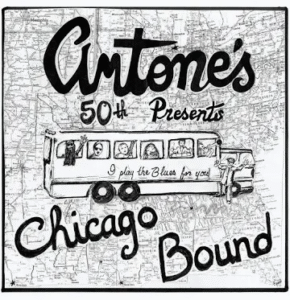
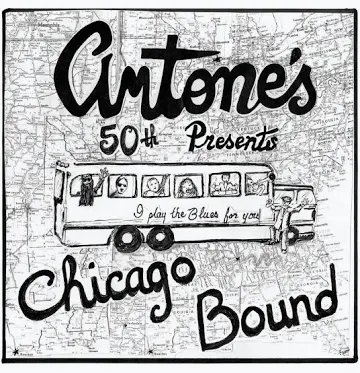
Antone’s 50th Presents Chicago Bound: Honoring Muddy, Cliff & Blue
Blues Til 2 Recording Co. – BT2001
Clifford Antone’s dusty, hole-in-the-wall Austin nightspot (opened in 1975) became, arguably, the launching point for the blues revival that began in the mid-’70s, as well as the catalyst for the Texas city’s grandiose claim as the “Live Music Capital of the World.”
As the first live music venue on Austin’s now famous Sixth Street, Antone’s not only served as a breeding ground for future Texas music icons like the Vaughan brothers, Doug Sahm, Angela Strehli, Charlie Sexton, and Lou Ann Barton, it was also a home away from home for celebrated artists like Muddy Waters, Albert King, Buddy Guy, and B.B. King, who were searching for renewed relevance at a time when the blues was largely relegated to the discount bin.
Released in 2025 to celebrate Antone’s 50th anniversary, the four-disc set, Antone’s: 50 Years of the Blues, featured a trove of rare live recordings from throughout the club’s history. Antone’s 50th Presents Chicago Bound: Honoring Muddy, Cliff & Blue continues the celebration by tracing a spiritual route from central Louisiana, Texas, Memphis, and on to Chicago.
The 11 live-to-tape recordings produced by Jacob Sciba and Zach Ernst feature artists with deep ties to Texas, Antone’s, and the blues in general. Guitarist/singer John Primer, who first played Antone’s in 1979 as the guitarist in Muddy Waters’ band, kicks things off accompanied only by Steve Bell—son of Muddy’s harp player Carey Bell—on harp, and delivers a stripped-down take on Jimmy Rogers’ Chicago Bound.
In a salute to zydeco guiding light Clifton Chenier, who performed on Antone’s opening night, Ivan Neville, CC Adcock, Keith Richards, Ronnie Wood, and Jimmie Vaughan serve up an incendiary cover of Chenier’s seminal shuffle One Step at a Time. Powerhouse Houston singer Kam Franklin leads a silky smooth, Memphis-by-way-of-Houston version of Bobby “Blue” Bland’s I Wouldn’t Treat a Dog (The Way You Treated Me) with a superb group of Memphis players that includes Bland’s drummer son Rodd Bland. The Fabulous Thunderbirds, joined by a four-piece horn section that toured with Bland in his early years and led by Kim Wilson’s timeless vocals, serve up a beautifully soulful take on Bland’s I’m Not Ashamed.
Acclaimed Austin guitarists Anson Funderburgh and Derek O’Brien are joined by bassist Sarah Brown, a former member of the Antone’s house band, for a scorching send up of the Albert Collins instrumental Backstroke.
ZZ Top frontman and blues voyeur Billy Gibbons’ Hangin’ on a Cliff, the album’s sole original track, is a rockin’ tribute to Clifford Antone that name-checks several artists who’ve graced the Antone’s stage, as Gibbons sings, “Heard you drank Muddy Water with a little sip of Jimmy Reed.” He’s joined by keyboard savant Mike “The Drifter” Flanigin and former Double Trouble drummer Chris “Whipper” Layton.
Lavelle White was 95 years old when her fiery cover of Jimmy Reed’s Baby What’s Wrong was recorded in 2025, accompanied by pianist Marcia Ball, Derek O’Brien on guitar, and famed saxman Mark “Kaz” Kazanoff on harp.
Primer and Steve Bell return to lead the raucous closer, Waters’ Got My Mojo Working, joined by Chicago slide wizard Lil’ Ed Williams and drummer Kenny “Beedy Eyes” Smith.
Clifford Antone passed away in 2006, but this high-energy, no-frills album celebrates his legacy and unconditional love of the blues.
—Rod Evans
RUTHIE FOSTER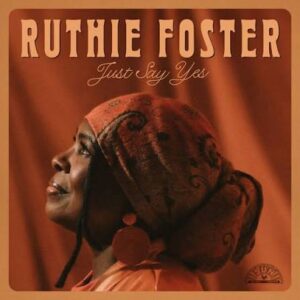
Just Say Yes
Sun Records – SUN8186
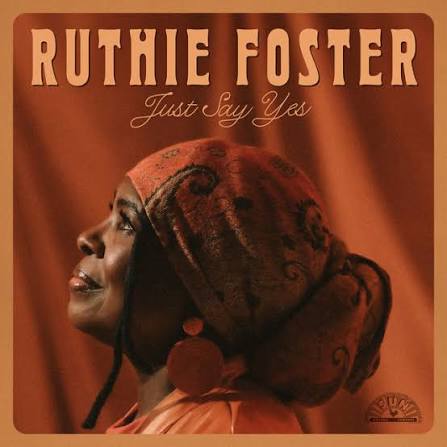
The title of Ruthie Foster’s new album, Just Say Yes, is just right, for it’s a joyous affirmation of life and light. Her soaring vocals and her searing guitar work stir us emotionally on every one of the songs on the album, and she testifies to the power of hope and love and light to overcome the darkness in our lives.
Foster sings over her gentle guitar picking in the opening verses of Take Time before swaying slide guitar and ethereal harmony vocals swell into an atmospheric river of sound. The somber lead lines on the instrumental bridge themselves cry out “slow down, take time” and evoke a lazy stream tumbling over rocks. On this song, Foster’s vocals touch us at our core. The album opens with the funky, thumping Thank You, a defiant ode of gratitude for the events in our lives that cause us to stumble but which stir us to move to more glorious heights. Maybe the best song on this album of outstanding songs, Come on Up combines the transcendent harmonies of gospel—provided by Larkin Poe—with the emotional fervor of soul. Opening with a crunchy Memphis guitar sound, the song about helping out one another in this life soon spirals into the sonic stratosphere and takes listeners to church. A classic handclapping, foot-stomping spiritual, replete with chicken-picking guitars and fervid call-and-response vocals, Hold On counsels lending one another a lifeline in life: “Hold on / hold onto me / And I’ll hold onto you.” On the funky, up-tempo title track, Foster’s towering vocals and her piquant lead runs urge us to be open to life and not to close doors when opportunities present themselves to us: “But when life comes a’knocking at your door / You better say yes, yes, yes.” Foster lays down her guitar and sits down at the piano to produce lush and vibrant layers of sound flowing under the gentle ode to slowing down and reflecting on life, Sitting Still, while the album closes with another soul-stirring bluesy gospel anthem, Reachin’.
Any new album by Ruthie Foster is a gift, and with Just Say Yes, she bestows on us an effervescent blend of blues, soul, and gospel that stirs us emotionally and keeps us clapping our hands and moving across the floor. It’s one of the year’s best albums.
—Henry L. Carrigan Jr.
JOVIN WEBB
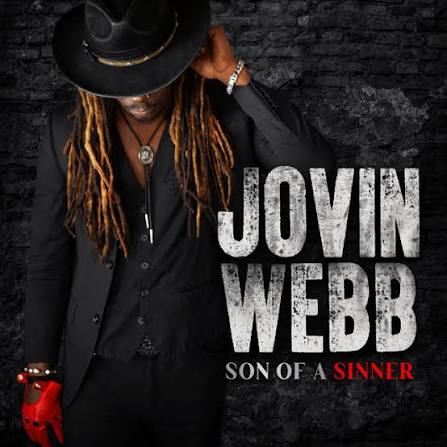
Son of a Sinner
Blind Pig Records – BP5179
Jovin Webb is an artist on the rise. Two years after introducing himself to blues aficionados with his debut release, Drifter, Webb is back with his follow-up, Son of a Sinner. Produced by the legendary Tom Hambridge, it solidifies his reputation as a bold new voice in the genre.
Son of a Sinner gets off to a hot start with Gunpowder & Lead. It’s a fierce blues rocker, led by a cool riff courtesy of guitarist Kenny Greenberg and Webb’s commanding vocals. The torrid pace continues into the second song (and the album’s lead single), Pray for Me. It’s full of fire and brimstone, with Hambridge offering up a primal beat on the drums and Webb singing his ass off, as he sorts through the virtues and vices that go into a life.
Webb and his band slow the pace down on I Started Young. Greenberg plays a pretty mean slide guitar solo and Mike Rojas lays down some great fills on the keyboard. But the star of the song is Webb. This song features some of his most soulful vocals, as he recalls and laments the temptations and bad behaviors he picked up at an early age.
These Boots is, musically speaking, a companion to Gunpowder & Lead. It’s a little funkier than that song, courtesy of bassist Tommy MacDonald, but overall, the song is another powerhouse rock number.
Much of Son of a Sinner is geared toward the “rock” side of the blues rock spectrum. And it works; the beefy, hard-charging sound suits Webb’s voice and lyrical content well. The record’s closing cover of the Allman Brothers classic Whipping Post showcases both the blues and rock at their finest. The song starts as an acoustic ballad and builds to a full-on rock ’n’ roll epic. It’s a fresh, exciting take on a well-known song. Given the potency of Webb as a new voice in the blues, it makes for an apt finale.
—Jim Shahen