CYRIL NEVILLE
Don’t Wait ’Til I’m Gone

World Order Entertainment / Dice Lab – No #
Don’t Wait ’Til I’m Gone is the first solo album from New Orleans singer/percussionist Cyril Neville since his blues-oriented Magic Honey (2013). In the interim, he’s released new material with the Royal Southern Brotherhood and appeared as a guest on numerous recordings, but now he’s literally back in the family groove. His son Omari Neville and his band, the Fuel, are the rhythm section; his older brother, Aaron, co-composed and sings backup on the title track; nephew Ivan Neville contributes keyboards; and he co-wrote You Hold Me Down with his 19-year-old grandson Ari Neville.
When the Neville Brothers emerged from the Wild Tchoupitoulas project with their uncle George “Big Chief Jolly” Landry in the mid-1970s, Cyril was the fiery young blood of the quartet. Today, after the passing of Art and Charles, and with Aaron largely retired, Cyril has stepped up as the family standard bearer and, along with Irma Thomas, has become the elder on the contemporary New Orleans R&B and funk scene. With Don’t Wait ’Til I’m Gone, Neville stays true to his family’s musical legacy, but, as he did in the band with his brothers, he’s always exploring and introducing new grooves—reggae, soca, hip-hop, contemporary R&B—into the mix.
Co-written with trumpeter Irvin Mayfield, Sunrise on the River opens and closes the ten-song program. Part One with its surging organ allows Neville to deliver some soulful gospel sounds. Part Two transitions the piece into percussion-driven Black Masking Indian funk with Neville injecting iconic verses from an array of Indian chants. The title track collaboration with Aaron is a swaggering funk number that boasts searing solos on lead guitar from Gregg Molinario and alto saxophone by Big Chief Donald Harrison. The Hot 8 Brass Band brings the second line funk—especially the super hip tuba-played bass line—to Lemonade with its message of self-confidence and determination delivered by Neville’s gritty, soulful vocal. Poppa Wa Ditty chronicles the history of Jolly and the Tchoupitoulas and evokes Neville’s tenure with the Meters, channeling Fire on the Bayou with contributions from Ivan on keyboards and original Meters guitar man Leo Nocentelli. Neville has consistently shaped reggae grooves, and on his original This Rat Race (a nod to Bob Marley), he crafts a slow, foreboding, socially conscious warning. Neville can shift gears and sing a tender ballad, as he does on the lilting southern soul of Call on Me and on Our Love, which brings to mind Be My Lady, his ballad showcase with the Meters. You Hold Me Down, his collaboration with his grandson Ari, provides him an opportunity to sing over a contemporary electronic soundscape. Opening with a buoyant scat passage, Positive Is How I Live features an infectious, uplifting vocal duet with Neville and Kermit Ruffins.
Props must go out to Shamarr Allen who produced and mixed the album, played horns, and co-wrote a number of the tunes. Don’t Wait ’Til I’m Gone is a late-career triumph from a man who continues to make music that captures “the heartbeat of New Orleans.”
—Robert H. Cataliotti
THE ANTHONY PAULE SOUL ORCHESTRA
What Can We Do?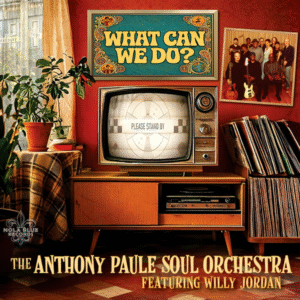
Nola Blue – NB055
Though he was born in Durban, South Africa, guitarist and bandleader Anthony Paule has roots firmly planted in California. A longtime Bay Area fixture, Paule was inspired by the blues but worked in a wide variety of styles. His bluesy debut album, 1995’s Big Guitar, featured Jim Pugh on B-3 and scored with listeners. While that set was recorded by a trio, Paule’s vision called for a larger ensemble: By the time of 2013’s live set, You Don’t Know Nothing (credited to Frank Bey and the Anthony Paule Band), he was leading a powerful nonet.
By 2016 the band had established an identity all its own, with a new name to match. The Anthony Paule Soul Orchestra debuted with 2017’s After a While, backing Wee Willie Walker. A second album supporting Walker, Not in My Lifetime, appeared in 2021. But by the time of 2024’s What Are You Waiting For? the band had earned top billing: The release was credited to the Anthony Paule Soul Orchestra featuring Willy Jordan.
In 2026 Paule is busier than ever. In addition to playing on Van Morrison’s all-star, blues-focused Somebody Tried to Sell Me a Bridge, Paule returns with What Can We Do? The second outing featuring vocalist Willy Jordan, the album has a taut, big sound from a 12-piece band that feels like the work of an even larger ensemble.
Soulful in the extreme, in places What Can We Do? has the feel of 1960s Stax releases, but with a modern sheen that gives the music a timeless vibe. A four-piece horn section and a spirited backing vocal ensemble provides a kinetic and rock-ribbed foundation for Willy Jordan’s powerful soul vocalizing. On the opening track, Still Smellin’ Smoke, all of the band’s assets are out front. Paule’s presence is subtle, initially limited to inserting the occasional Steve Cropper–styled guitar lick. But after a rousing sax solo, he takes center stage for a sinewy (if tantalizingly brief) solo break. Clearly an adherent of the “leave ’em wanting more” school of musicianship, Paule leads the band in arrangements that always place the needs of the song up front.
The album is a showcase for the versatility and skill of Paule’s Soul Orchestra. The soul weeper Too Late is primarily a showcase of Willy Jordan’s emotive singing, but it also affords the ensemble the opportunity to show off its ability to deliver strength and subtlety within the framework of a single track. The simmering Stranger shows yet another side of the band. The hard-charging You Lie Like a Rug is guaranteed to fill the dance floor (or transform a seated concert into a standing one).
Paule makes a nod to his three-decade recorded history with the aptly titled Bigger Guitar, an instrumental showcase that folds in the character of jump blues and swing, rockabilly, classic rock ’n’ roll, and more. Paule tears up the fretboard with skill and sass, delivering pure tone and melodic runs. Solo turns from players on barrelhouse piano, trombone, and trumpet enliven it further, perhaps whetting many listeners’ appetite for an entire album in such a vein.
The album’s title track is a delightful throwback to the tuneful Brill Building style of classic songcraft like Up on the Roof and Under the Boardwalk. The romantic The Heart Never Says Goodbye displays shades of Duke Ellington, applied to the pop idiom. The snaky Secret is equal parts timeless and modern. The ebullient If It Ain’t One Thing It’s Two swings hard. Walkin’ is a feel-good soul stirrer. You’re Nobody Till Somebody Loves You shows that there’s plenty of life left in familiar musical forms. The instrumental album closer, Blue Mood Indica, combines a brassy Vegas character with strong blues values, serving up tasty fills from the players. Taken as a whole, What Can We Do? answers its own question: quite a lot, including making one of the year’s finest releases.
—Bill Kopp
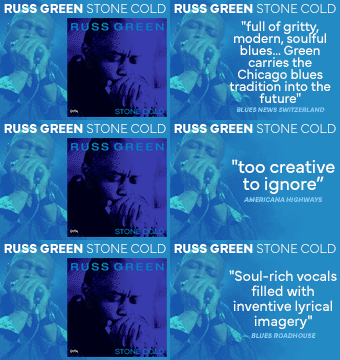
RUSS GREEN
Stone Cold 
Overton Music – OMX 1006
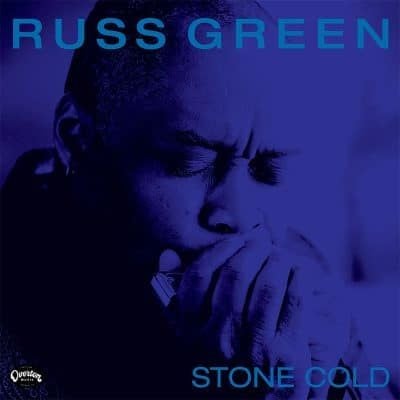
Chicago native Russ Green comes into focus with scorching heat and ferocious grit on his second album, Stone Cold. A strong follow up to his 2018 debut, City Soul, Green continues to perfect his wicked modern blues sound, with one foot placed firmly in the electrified Chicago blues tradition and another stepping on the gas pedal.
Green breaks out ten fresh originals on the album, each propelled by his fiercely intense harmonica style and soaring dynamic vocals, which are driven by his explosive, floor-shaking band. Along with personnel Giles Corey and Vince Agwada on guitar, Vic Jackson on bass, Felix “D-Kat” Pollard on drums, and Joe Munroe on keys, the time is tight and the production has a spacious sound with raw and luminous overtones.
Green’s flesh-and-blood songwriting captures a contemporary Chicago vibe, with rugged stories, tough charm, and relentlessly infectious riffs. His background in filmmaking certainly adds a cinematic dimension to his songcraft that builds a dramatic presence into the material.
Growing up on the city’s West Side, Green developed his harp style while under the wing of Chicago icons like Sugar Blue and Billy Branch. Another key musical influence was Jimi Hendrix, whose mind-bending, blues-soaked innovations similarly inspired Green’s creative approach to the harmonica, pushing him to explore some of the deeper sonic possibilities that can be communicated by the harp.
The opening cut, Lint Redux, strikes up like flint and flash paper in the pocket, as Giles Corey opens things up with a roaring slide riff and Green ignites the air with sharp, serrated harp lines.
The title track, Stone Cold, is a hard-love, up-tempo boogie that showcases the blistering organ work of Joe Munroe. Green alternates seamlessly between vocals and harp to a wonderful, amplifying effect that brings things to a stomping climax.
Need You So Bad is a great, hard-driving number, as Green’s tasteful vocal prowess is nicely tempered with captivating rhythmic passages on the harp.
Green doesn’t shy away from letting his vocals reach out for more ambitious, jazz-oriented phrasing, as he seamlessly blends his raspy delivery with elegance and subtle finesse in all the right places. It would be interesting to hear Green try his voice on some more jazz-forward standards in the future.
“I strive to write songs that relate to the trials, tribulations, and triumphs of everyday life.” Green says of the album, which definitely speaks to the narrative sensibility inherent in the music.
Taken all together, Stone Cold is a bold and deep musical statement that captures the excellence of Green’s powerful and original artistry front and center.
—Patrick Romanowski
EARL “GUITAR” WILLIAMS
The Soul King of Bessemer, AL
Music Maker Foundation – No #
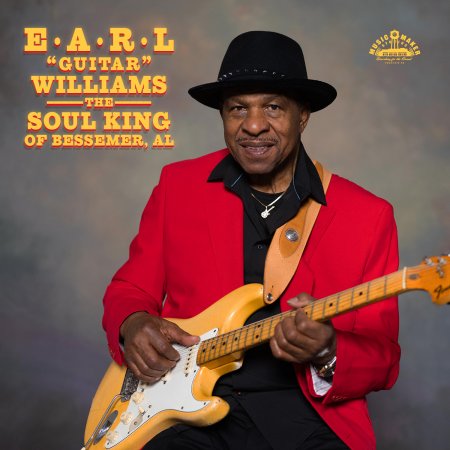
This is the fourth release for Earl “Guitar” Williams, the Alabama-based guitarist-vocalist recently profiled in LB #302 whose career has included stints with Latimore, among other prominent soul blues artists (often as part of the flamboyant show band Kalu), as well as solo and small-group appearances in venues around the Bessemer area, most notably the club in nearby Birmingham owned by 2006 American Idol winner Taylor Hicks. Williams’ compatriots here include Jimbo Mathus, also credited as producer, who weighs in on guitar, keyboards, and drums; bassist/recording engineer Bronson Tew; and the Crimestoppers, a vocal group who’ve sung backup for Music Maker for quite some time and recently released On the Case, their recording debut as a freestanding unit.
No songwriting credits are given, but several of these offerings—California Dreamin’, The Sky Is Crying, Howlin’ for my Darling, Woke Up this Morning, Bring Me my Shotgun—are obviously covers. Even when Williams adheres pretty closely to the originals, though, his corrugated baritone seethes with emotion (or, in the case of California Dreamin’, wounded longing), and his fretboard work is crisp and to the point (although since no track-by-track credits are given, we don’t know for sure which of the leads are his and which are Mathus’). The less familiar tunes on offer, presumably Williams originals, reveal him to be a gifted songwriter, capable of delivering country-funk hipster humor (Can of Alligator), honky-tonk good-timery (74 Blues), and jubilant backstreet boogie (Flashlight, which echoes Little Milton’s The Blues Is Alright). The slide-seasoned Hey Mr. Gip, structured roughly around the chordal and rhythmic patterns of Turn on Your Lovelight, is a shoutout to Gip’s Place, the Bessemer juke that was Williams’ home base for years; it makes us hope that he will highlight his dexterous slidework more on subsequent outings. (A video of him performing this song at Gip’s, wielding a homemade cigar-box guitar patterned after the one he fashioned for himself as a young boy when he was first inspired to play music, is available on YouTube). Unfortunately, the deft harmonica stylist featured on Alligator is uncredited, but s/he deserves recognition.
Williams’ track record in show bands working with Latimore and other chitlin’ circuit blues/soul blues mainstays makes it clear that he’s a musician of considerable sophistication and versatility, not an avatar of primitivist “authenticity” as some of Music Maker’s “discoveries” have been. Nonetheless, there are some rough edges here, especially when Williams coaxes his juke-toughened voice into delivering pop-styled fare like the aforementioned California Dreamin’ and I Know You Love Me (which sounds as if it’s probably another Williams original). The result is a set that reflects the kind of thing Williams no doubt purveys in his local performances around the Bessemer/Birmingham area—bluesy good times delivered with passion, a welcoming spirit, and enough musicality to please even the most demanding Saturday night partygoers.
—David Whiteis
CHRIS O’LEARY
Blue Collar
Alligator – ALCD 5032
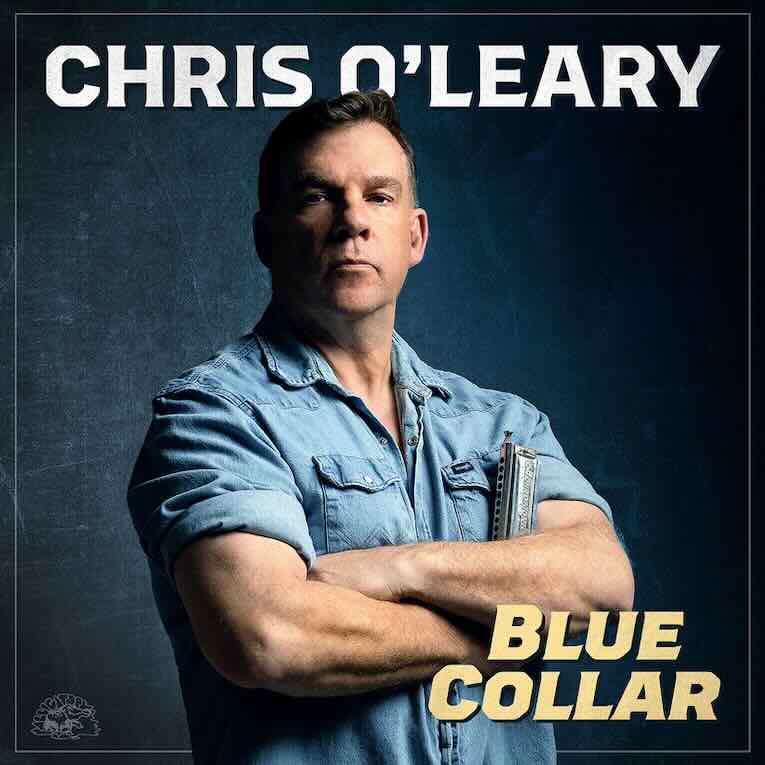
Singer Chris O’Leary earned his stripes fronting Levon Helm’s band, the Barnburners. O’Leary was with that group on vocals and harp for six years, 1999–2005. Setting out on his own, O’Leary debuted with 2011’s Mr. Used to Be, credited to the Chris O’Leary Band. The group was named Best New Artist at that year’s American Blues Music Awards.
O’Leary then released a string of albums for small labels. During that time, he caught the attention of Alligator Records, which signed him and released his major-label debut, The Hard Line, in 2024. Now in 2026 O’Leary returns with his second Alligator release, Blue Collar.
O’Leary’s core band on Blue Collar includes guitarist Pat O’Shea, Shiela Klinefelter on bass, and drummer Chuck Cotton. An extensive roster of guest players contributes in various ways on an assortment of tracks. The ubiquitous and in-demand Kid Andersen recorded the sessions at his famed Greaseland USA studio in San Jose; O’Leary is credited as the album’s producer.
O’Leary’s assertive vocals are paired with lyrics built around street-level stories. The loping Bad Decisions opens the new record, setting a tone that’s gritty, unalloyed, and authentic. O’Leary’s wailing harp is a highlight of the track. On Lady Luck, the band ventures confidently into territory reminiscent of the Fabulous Thunderbirds. His harp blowing engages in fierce dialogue with the lead guitar.
The fiery One More Cup of Coffee is well-named: The band sounds as if every player downed several espressos before rolling tape. Lil’ Ed Williams’ slide work on the track is appropriately frenzied, and the ganged backing vocals strike just the right tone.
Most listeners will need to catch their breath after experiencing that track, and the swaggering, slow blues of Nothing but a Memory provides just such an opportunity. There’s plenty of passion in the track, and more than a little bit of menace. The retro, jump blues–flavored textures of Justice Must Be Blind are not only supremely entertaining; they underscore O’Leary’s command of styles.
One Way Street makes that point yet again; this time O’Leary traffics in a New Orleans style. That feel is furthered by tuba and trombone from Luke Kirley, and the arrangement breaks out of the Crescent City mold a bit with a tasty guitar solo (and of course more wild harp work). The peppy Live Baby Gators applies a bit of country flavor to its story, and all concerned sound like they’re having a helluva time. (Wayne Toups’ accordion solo is a nice touch, too.)
The subtle and sleek How’d I Ever Get Along? provides a respite from the raucousness, again making the point that while Blue Collar is wildly varied, it’s expertly and thoughtfully sequenced. And the character changes up yet again for the album’s closer, Daddy Was a Wolfman. While the song employs a well-worn melody, O’Leary’s musical storytelling shows him to be a true original.
In many ways, Blue Collar plays like a sampler, showing O’Leary’s keen and well-developed skill at moving between styles. But to its credit, the whole affair holds together as a rewarding listening experience as well.
—Bill Kopp
GA-20 WITH CHARLIE MUSSELWHITE
BLUES NOW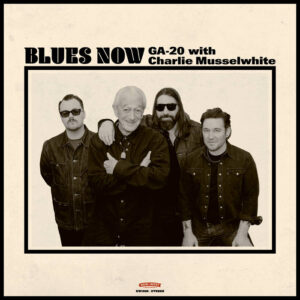
New West Records – LPNW7074IE
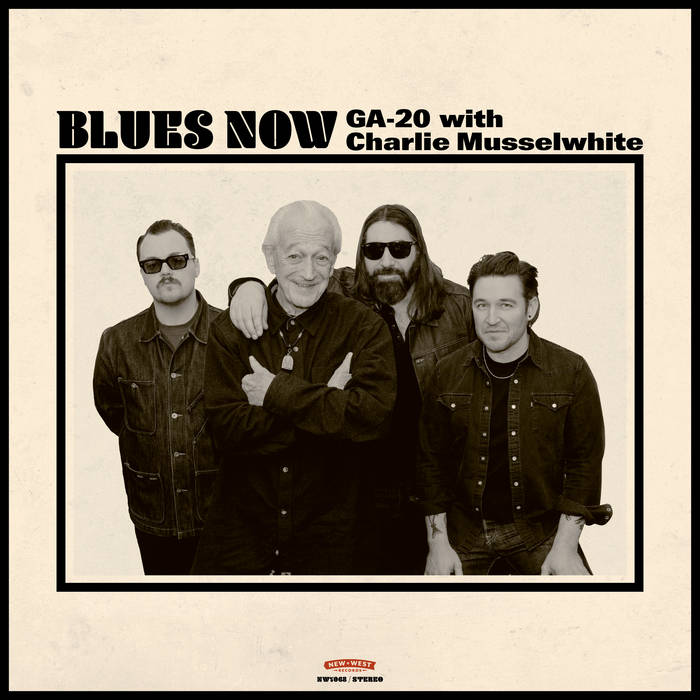
The blues is a vibrant genre and, at its best, spans generations of artists and fans. The new collaborative LP between GA-20 and Charlie Musselwhite is a shining example of that. BLUES NOW finds the youthful blues power trio teaming up with the mouth harp legend and vocalist for a batch of ten Chicago blues standards that crackle with vitality from start to finish.
Recorded live in-studio gives BLUES NOW the type of raw energy the material deserves. The tone is set from the get-go with the opening track, the Willie Dixon–penned, Buddy Guy deep cut Crazy Love. The song is highlighted by a dynamic interplay between Musselwhite’s harmonica playing and Matthew Stubbs—who broke into the biz as a sideman for the icon—offering some tasty lead guitar work.
Crazy Love is sung by newish GA-20 lead singer Cody Nilsen, who offers up the type of soul-garage-blues amalgam in his delivery that’s a hallmark of the band’s sound. That song is followed by the swinging I Can’t Hold Out, where Musselwhite assumes lead vocal responsibilities. The octogenarian sounds strong, more than capable of holding his own with the brawny sounds coming from the GA-20 power trio.
Part of what makes BLUES NOW such a compelling listen is the palpable chemistry between the musicians. Nestled at the midpoint of the LP is the instrumental Universal Rock. It’s an up-tempo jam, allowing space for Musselwhite to offer up some dynamic runs and the Stubbs/Nilsen guitar tandem to get down to business.
The generational legacy of Chicago blues and the strength of this collaboration can best be told through a triptych of songs: covers of Musselwhite’s Stand Back and Cristo Redentor (both originally released on his seminal 1968 Stand Back! album) and The Blues Never Die. The former two allow Musselwhite the opportunity to perform some of his most influential tracks, while also providing GA-20 the chance to pay tribute to and carry on the legacy of their collaborator and mentor. Taken as such, the songs match well with the ballad The Blues Never Die.
As this collaborative album makes clear, the next generation of blues musicians is here and ready to carry on the traditions established by the greats.
—Jim Shahen
TAJ MAHAL & THE PHANTOM BLUES BAND
Time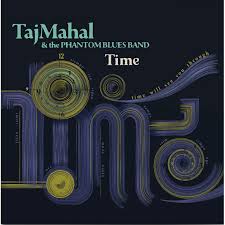
Thirty Tigers – 23080
Recorded in 2010, but only seeing the light of day 16 years later, Time finds Taj Mahal again paired with the revered Phantom Blues Band. (It is likely this will be the final unreleased album featuring the late pianist Mike Finnigan.)
As with every Phantom Blues Band album with Mahal, the music here takes in a very generous definition of “blues.” Jazz, Cuban, New Orleans, R&B—all of it anchored by Mahal’s distinctive vocals. There is a previously unrecorded Bill Withers song (the title track), covers of Otis Redding (Sweet Lorene), Bobby “Blue” Bland (Ask Me ’bout Nothing [But the Blues]), and Bob Marley (Talkin’ Blues). We also get a reggae-tinged remake of Jim Jackson’s century-old blues, Wild About My Lovin’.
The album opens with Life of Love, a percolating soul song braced by a tight horn chart (Joe Sublett, sax; Les Lovitt, trumpet). Mahal lays out a classic vocal here, with his relaxed singing coming across more like a friend telling a story.
On Crazy About a Jukebox, Finnigan’s rolling piano underpins Mahal’s vocals until he turns in a jazz-tinged solo that would sound utterly at home in an old-time saloon (and Lovitt’s muted trumpet solo only adding to the vintage feel).
Withers’ Time is given a 1970s’ arrangement, with a keyboard sounding akin to a Fender Rhodes, a lightly Latin backbeat, and a slowly building horn chorus. Over all of it, Mahal’s vocal hints at a barely constrained passion.
You Put the Whammy on Me has a Caribbean opening, like a Cuban song, before the verse adopts more of a straight-up pop structure (although the Latin rhythm continues in the background).
The reggae groove from Wild About My Lovin’ returns for Talkin’ Blues, which doesn’t veer too far from Marley’s 1974 version. And Sweet Lorene opens with the horns in full-on homage to Redding’s Stax backing band, with Mahal channeling Redding—albeit a few octaves lower. Interestingly, given his baritone register, his ability to capture Bland’s vocal squall at the end of a passage on Ask Me ’bout Nothing (But the Blues) is remarkable.
Mahal even throws in a rollicking cover of Charles Sheffield’s 1961 Excello swamp rocker, It’s Your Voodoo Working. Again, his talent at capturing a bit of the style and feel of the original while staying true to his own very personalized sound is impressive indeed.
The album closes out with Rowdy Blues, another nearly century-old piece that Rory Block covered in 1995. Originally recorded by Kid Bailey in 1929 with just guitar and vocal, here Mahal and the Phantom Blues Band fill it out with Finnigan’s piano providing a honky-tonk opening before the rest of the band jumps in. It’s still played in a slow dirge, as with Bailey’s original and Block’s cover—and retains the feeling of a Depression-era bar. And Mahal gives Finnigan a shout before his extended solo, handing it off to “Mr. Piano Man.”
Throughout, Larry Fulcher’s rock-solid bass playing is the unmistakable heartbeat of the band, freeing drummer Tony Braunagel to add in atmospheric percussion fills and figures, giving a tropical feel to tracks like Wild About My Lovin’ and It’s Your Voodoo Working.
—Jim Trageser
ZAC HARMON & THE DRIVE
Live
No label – No #
Jackson, Mississippi, native Zac Harmon honed his guitar chops early; he was backing Z.Z. Hill and others when still in high school. Moving to LA and immersing himself in session work, Harmon proved his skill as producer in a variety of styles including R&B (Alexander O’Neal), reggae (Black Uhuru), soul (Freddie Jackson), and for a number of new jack swing artists. He wrote for artists in many genres as well. But when it came to his own career as a musician, Harmon was steeped in the blues.
Harmon debuted on record under his own name with 2002’s self-released Live at Babe and Ricky’s Inn. Two years later he won the Best Unsigned Band award at the International Blues Challenge. Other accolades would follow, including Blues Music Awards in 2006 (Best New Artist Debut) and 2022 (Soul Blues Album of the Year).
Between 2002 and 2021, Harmon released eight albums; three of those were self-released and the remainder were cut for a variety of labels. Now in 2026 Harmon comes full circle with a self-released live collection. Culled from the best among recordings of concerts in Europe and the US, Live presents Harmon’s brand of blues: deep grooves, a refined jazz sensibility, top-notch playing, and an engaging vibe. The smooth and tuneful Nitro opens the set, laying down a sound that allows Harmon, his four bandmates, and select guest musicians plenty of opportunities to shine.
Hump in Your Back is sophisticated uptown blues with kinetic guitar work, beefy and whip-smart horn charts, and soulful vocals. The textural contrast between Harmon’s winning lead style and that of fellow guitarist Kingston “Soul Fingers” Livingston only increases the wattage. Harmon’s original Blue Pill Thrill showcases his rich and expressive vocals, but not at the expense of guitar fireworks. The band is super tight, providing Harmon with just the right sonic canvas.
The searing, slow blues of Feet Back on the Ground gives Harmon the opportunity to lean into soulful subtlety. During the eight-minute tune, the band gets whisper-quiet in places; Harmon answers the near-silence with understated yet passion-filled fretwork. The bouncy, Chicago-style 40 Days brings the energy back; its call-and-response vocal arrangement is a treat.
A familiar guitar figure forms the foundation of Harmon’s reading of Otis Mays’ 1968 gospel chestnut Don’t Let the Devil Ride. In Harmon’s hands, the song is bouncy and upbeat. Duet vocalist Tommye Young-West and guest guitarist Jabari Johnson both add power to the performance. Boogie Down is an excuse—albeit a very good one—for a round-the-band set of solo spots, some lively musician interplay, and plenty of spirited audience participation.
A searing take on Johnnie Taylor’s 1966 single Little Bluebird (written by Isaac Hayes, David Porter, and Booker T. Jones) features fiery guitar work and a rousing horn chart. Harmon and the Drive deftly alternate between swagger and subtlety. Its name notwithstanding, Harmon’s Mississippi Bar B Q is smooth and soulful jazz blues in the mold of George Benson. The set concludes with Slide, a funky R&B-flavored number with plenty of pop sensibility. As the tune winds toward its end, the band (and the horn players) pull out all the stops, getting ultra funky for a big finish.
While the performances are drawn from a variety of sources, Live plays like a single concert; Harmon and co-producer Christopher Troy have assembled a seamless set that showcases the musical virtues of Zac Harmon and the Drive.
—Bill Kopp
GINA COLEMAN
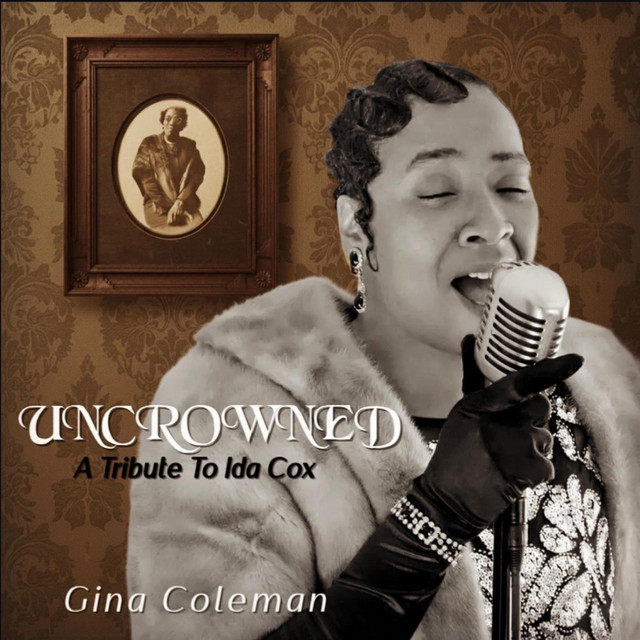
Uncrowned: A Tribute to Ida Cox
Guitar One Records – No #
Ida Cox was not just one of the great voices of classic blues. She was also a trailblazing songwriter, her formidable discography made up largely of her own compositions. Fellow singer-songwriter Gina Coleman, for over two decades the frontwoman of Misty Blues, pays homage to the Cox-paved path she herself travels with Uncrowned: A Tribute to Ida Cox.
Coleman’s voice is huskier, more impressionistic than Cox’s crisp, emphatic tone. She shimmies and weaves with flair on Wild Women Don’t Have the Blues and brings a dreamy, dark-edged power to Graveyard Dream Blues. Coleman channels Cox’s vaudevillian history with her brassy reading of the delightfully naughty Four Day Creep, and amidst the vigorous energy of You Got to Swing and Sway, she maintains every iota of her customary mature gravity.
Coleman is joined by an array of gifted instrumentalists familiar to longtime Misty Blues listeners. Guitarist Seth Fleischmann’s work here hearkens back to the country blues tradition, particularly the crystalline twang of his strings on Worried Mama Blues. Bassist Diego Mongue, Coleman’s son, contributes a low-boiling, funk-drenched solo to the swaggering Mail Man Blues. Rob Tatten’s drums are a forceful presence throughout, his unstinting, broad-shouldered beats a rich echo of the lo-fi era of classic blues recording.
Clarinetist Aaron Dean provides Uncrowned with its firmest sonic link to early jazz instrumentation. On One Hour Mama, he beautifully complements Coleman’s defiant sexuality with his own exuberant touches of raunch. Reaching further back to the blues’ home territories, Jeff Dudziak’s banjo rings through Lawdy Lawdy Blues with insouciant fervor. The album’s most thrilling guest performer is Gaye Adegbalola, whose slashing steel guitar, supported by the hissing shakers of percussionist and album co-producer Ronan Chris Murphy, makes Hard Times Blues a firm high point of this CD.
Uncrowned closes with its longest, most leisurely track, the nearly seven-minute Blues Ain’t Nothin’ Else But. Cox didn’t have the luxury, at the height of her career, of forging musical statements of this length, and Coleman makes the most of those extra minutes. Backed by the sublimely sensitive rhythm of Mongue and keyboardist David Vittone, the vocalist infuses Cox’s resonant lyrics with the tragic weight of every great blues tune ever put to wax. The performance, like the album as a whole, is a loving laurel in honor of a true blues pioneer.
—Matt R. Lohr
BEAR RYAN & THE DELTA SNAKES
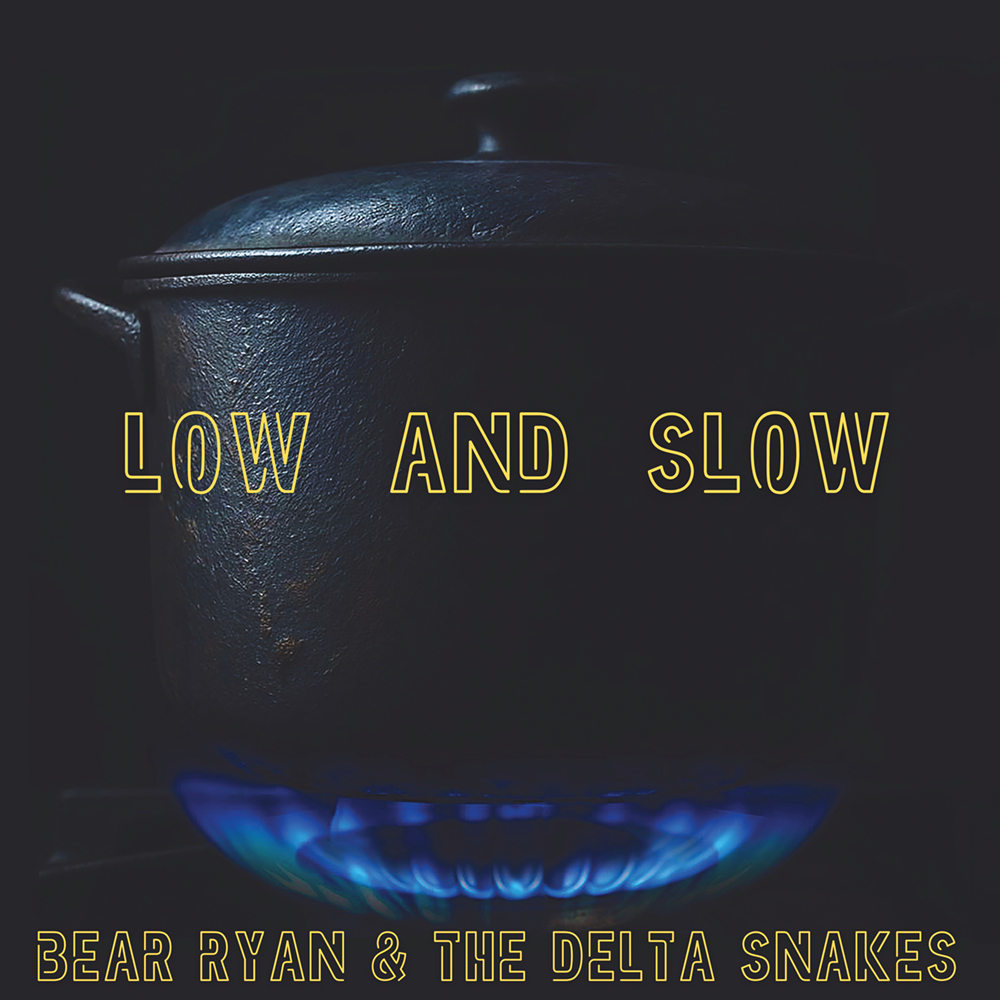
Low and Slow
Hard No Records – No #
“When the preacher baptized me, he must’ve used muddy water,” Karen “Bear” Ryan sings in Snake Handler’s Daughter from her auspicious debut disc.
That murky fluid might explain why the Texan turned Clarksdale transplant comes across like the pink-haired stepchild of Bobbie Gentry and John Lee Hooker on the eight original songs that comprise Low and Slow.
As the album title implies, things don’t happen fast in the world of Bear Ryan & the Delta Snakes. The songs simmer and ooze out of the speakers and reveal themselves in their own time. Oh, and they rock hard when they need to.
Ryan accompanies herself on cigar box guitars (built by her partner in life and musical crime, Ryan Robertson, himself a Delta Snake) and is backed by a coterie of North Mississippi badasses, including her Clarksdale neighbor Charlie Musselwhite, whose lowdown harp shines on two numbers here, and A.J. Haynes of the Seratones, who provides backing vocals on the opener, Woman. But it’s in her songwriting and delivery that Ryan shines. Her voice, at times reminiscent of a wide swath of great singers (including the aforementioned Gentry, Jessie Mae Hemphill, or Patti Smith), carries plaintive, yet buoyant, melodies over deep hypnotic one-chord grooves, providing the perfect bed for her observational lyrics full of oddball characters and southern storytelling that bring both Sonny Boy Williamson and Flannery O’Connor to mind.
The protagonist of I Am the Weather is “as mean as she can be, drinking red wine, codeine, gonna bring the world to its knees.” The narrator of Mississippi Mornings lives “down in the buckle of the Bible Belt,” has a “chicken drunk dog” and “nothing to lose but a monkey on my back.” The Snake Handler’s Daughter’s sister bakes cakes, while the singer gets paid “for the way I shake.” Bear’s fictional Bad Old Man is revenge-fueled, knows where to hide the bodies, and “won’t need his gun, son, he’s gonna do it for fun,” all while Musselwhite’s reverb- and distortion-drenched harmonica blows bad juju tones in the background.
Recorded by Starlin Browning in Water Valley, Mississippi, at Drive-By Trucker Matt Patton’s Dial Back Sound, Low and Slow feels murky like a hot summer Delta dusk, but that effect never overtakes the music, which cuts through the humidity like a knife. The playing is top-notch across the board, and psychedelic production touches such as electric sitar on Snake Handler’s Daughter only serve to enhance the mysterious vibe of Low and Slow.
Despite its nods to Americana, rock ’n’ roll, and country, Low and Slow is steeped in the blues, marrying the Hill Country and Delta varieties into a cohesive sound that is very much its own thang.
And what a thang it is. Dig it deep.
—Tim Lee