ERIC BIBB
One Mississippi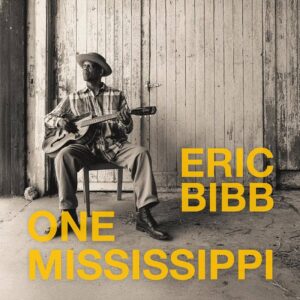
Repute Records – RRCD001
In his landmark collection of essays Notes of a Native Son (1955), James Baldwin writes how his move to leave the United States and live in France provided him with a new perspective on the racial divide in America. Based on his latest album, One Mississippi, it sounds like singer, guitarist/banjo player, and songwriter Eric Bibb has developed a similar African American expat viewpoint after living in Stockholm, Sweden, for more than 50 years. The 14 tracks thematically examine the world today—particularly race and the American experience—and the need to both address the past and make amends. Bibb is abetted in this project by his longtime collaborator Glen Scott, who serves as producer, co-writer of 11 songs, and multi-instrumentalist, along with a cast of first-rate sidemen. Scott’s production shapes a powerfully resonant soundscape that often slowly builds to accent spare, acoustic, blues-based guitar and banjo lines. He also crafts some funky, highly danceable grooves.
The album opens with the lone cover tune, Janis Ian (Bibb’s high school friend) and Fred Koller’s One Mississippi, which sets the tone of addressing the past with its atmospheric evocation of slavery, segregation, exploitation, and inequity. Didn’t I Keep Runnin’ features a dueling slide guitar and banjo accented by a swirl of violins that lend an urgency to a first-person narrative of escape from enslavement. A reworking of the iconic Texas work song associated with Lead Belly Go Down Ol’ Hannah has an impassioned, epic feel. Bibb previously sang about the lynching of Emmett Till in Emmett’s Ghost from Dear America (2021). He focuses on Till’s accuser, Carolyn Bryant Donham, with Crossroads Marilyn Monroe, telling a haunting tale in stark language over a chugging blues groove that acknowledges her ultimately telling the truth 50 years after the tragedy occurred. No Clothes On evokes the socially conscious R&B of the Staple Singers with its chorus that addresses hypocrisy in a land supposedly founded on equality: “How can you be so vain? / So far gone? / You’re struttin’ down the street like the boss / With no clothes on.” Many of the other tracks are infused with an optimism that folks can bridge these long-standing divides. Highlights include the gospel-fueled If You’re Free, the slide guitar–driven blues rock on Waiting on the Sun, and the funky We Got to Find a Way. One Mississippi makes it clear that Eric Bibb is a contemporary, blues-based artist determined to mine new possibilities out of venerable traditions.
—Robert H. Cataliotti
COREY HARRIS, ALVIN YOUNGBLOOD HART, GUY DAVIS
Fight On: True Blues Vol. 2
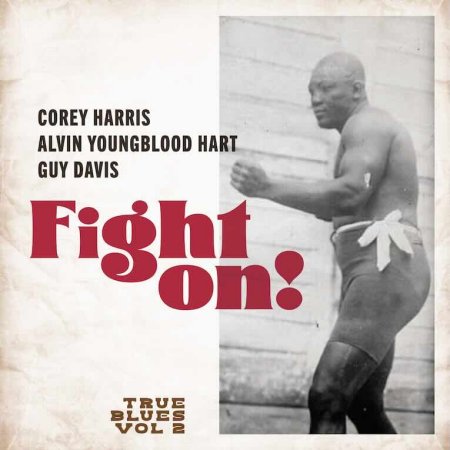
Yellow Dog Records – YDR2903
Over the decades following the 1960s blues revival, the emphasis in the “blues business” has been placed on an electric guitar–driven, rock-influenced approach. In 2013, the album True Blues was released to shine a spotlight on contemporary acoustic blues. It was comprised of live performances from venues around the country, including Jazz at Lincoln Center, LA’s House of Blues, DC’s Howard Theatre, and Annapolis’ Rams Head on Stage. The featured artists are Taj Mahal, Alvin “Youngblood” Hart, Corey Harris, Guy Davis, Phil Wiggins, and Shemekia Copeland, largely performing solo but also in some grouping including tracks with Hart and Wiggins; Hart, Harris, Davis, and Wiggins; and Copeland, Hart, Harris, and Wiggins. Fight On: True Blues Vol. 2 likewise is aimed at kindling an interest in acoustic blues with today’s audience. Harris, Hart, and Davis are back on board, and this time around, all the performances are solo and recorded in studios. Each of these musicians is now a veteran on the scene, and Hart (62), Harris (56), and Davis (73) possess the gravitas to deliver this music with technical facility, confident command, and emotive depth that honors the legacy of the artists who pioneered this music in the early decades of the 20th century and demonstrates that the format is vibrant, powerful, and effective.
The presence of those pioneers—including Jimmie Strother, Charley Patton, Buddy Bolden, Henry Townsend, Honeyboy Edwards, Fred McDowell, Rev. Gary Davis, and Elizabeth Cotten—is felt through covers of their songs and mentions of their influence in the liner notes. Harris, Hart, and Davis contribute three performances each. Harris’ fingerpicked guitar on We Are Almost Down to the Shore (Fight On) transforms Strother’s banjo tune to a Piedmont blues; on What’s That I Smell, a ragtime-flavored number, he draws imagery from his time performing in New Orleans at the Funky Butt club (named in honor of the turn-of-the-20th century home base for Bolden); and he turns in a rousing gospel blues performance of Rev. Davis’ I Belong to the Band. Guy Davis’ selections include two originals, See Me When You Can, a foreboding, Delta-style lament written in the voice of his grandmother, and Deep Sea Diver, in which he crafts the persona of Handsome Jack, a medicine show huckster riding a jaunty Mississippi John Hurt–inspired groove; he adapts Elizabeth Cotten’s Everything I Got Is Done in Pawn to a Blind Willie McTell 12-string guitar approach. Hart tackles Patton’s Screamin’ and Hollerin’ the Blues with percussive attack on the guitar and searing vocal intensity. He delivers his original If the Blues Was Money, a tune inspired by Townsend, with the power and authority of Son House; and his rendition of McDowell’s Highway 61 is imbued with a rocking momentum and enhanced with stabbing harmonica fills. Having the three individuals showcase their individual approach to acoustic blues is effective but given that the playing time is under 30 minutes, the program could have harked back to the first volume and included a few tracks with these blues artists interacting with each other. That said, the nine tracks on Fight On: True Blues Vol. 2 should tantalize acoustic blues enthusiasts and provide a great orientation for neophytes.
—Robert H. Cataliotti
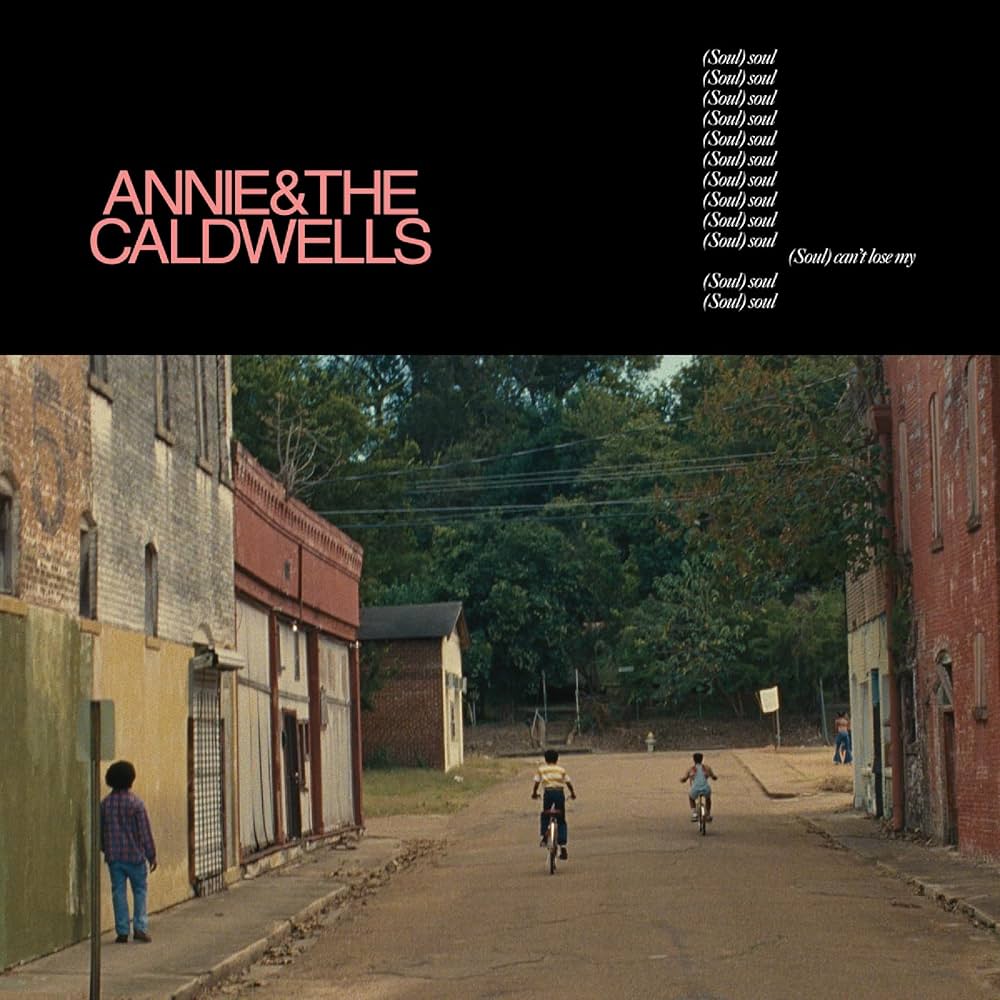
ANNIE & THE CALDWELLS
Can’t Lose My (Soul)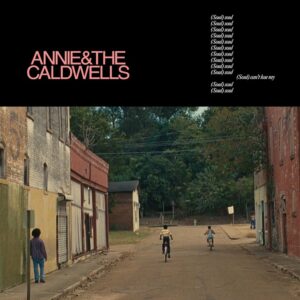
Luaka Bop – CDLBOP0103
Although Annie & the Caldwells have been recording as an ensemble for more than a decade, I first learned about the family gospel group when it appeared on a major British music magazine’s Best of 2025 list. Turns out the group, which features singers Annie Brown Caldwell, her daughters Deborah and Anjessica, and goddaughter Toni Rivers, has ties to another family band, the Staples Jr. Singers, for which Annie was a lead singer. On Can’t Lose My (Soul), their six-track debut album for Luaka Bop, Annie & the Caldwells continue to minister in the same wooden church style that the Staples Jr. Singers employed nearly 50 years ago and still do today.
For the most part, the song lyrics are cautionary. For example, on the ten-minute title track, Annie shakes her index finger at those committing, or even considering, dirty deeds, warning them that they stand to lose their soul in the process. “The struggle is real,” she appears to advise, “because I’ve experienced it myself.” Similarly, I Made It—included on the aforementioned UK magazine’s Best of 2025 companion CD—taunts Satan by playfully quoting from the Gap Band’s 1982 You Dropped a Bomb on Me. Even metaphorical explosives can’t break the resolve of the faithful. Fittingly, bassist Willie Caldwell Jr. and guitarist Willie Caldwell Sr., Annie’s eldest son and husband, respectively, exploit the Gap Band reference by injecting extra funkiness into the track.
Don’t You Hear Me Calling, about the healing power of a praying mother, is the kind of slow jam testimony one hears at gospel programs when the singers need a break from the high-energy shouting numbers. Another extended testimony, Dear Lord expresses gratitude for miraculously escaping a house fire. Like gospel singers Dorothy Norwood and Maggie Ingram, Annie Caldwell has a fondness and a gift for storytelling.
Notwithstanding the popularity of I Made It, I’m Going to Rise is the album’s standout cut. A freedom trope lurks within its lines about resurrection after death.
Can’t Lose My (Soul) has been referred to variously as gospel disco and disco soul, but nothing could be further from the truth. The sound of Annie & the Caldwells is neither heavy nor flashy but earthy and measured, as leisurely paced as a Mississippi summer afternoon and without airs or affectations. The singers and instruments moan, weep, and testify, but otherwise they are as austere and uncompromising as church mothers.
—Robert M. Marovich
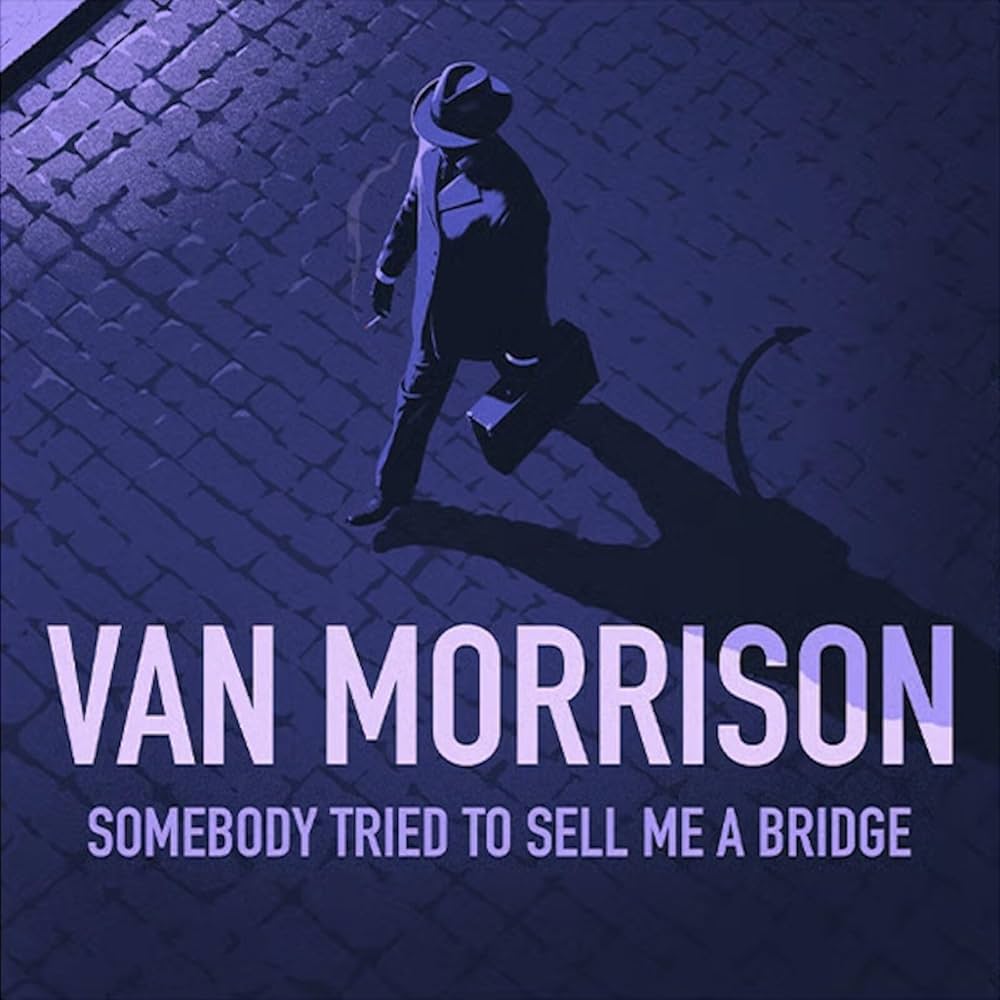
VAN MORRISON
Somebody Tried to Sell Me a Bridge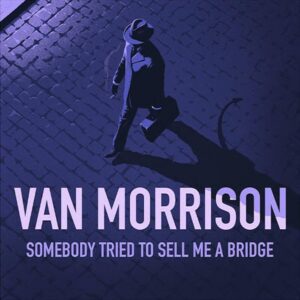
Orangefield Records – EXILE0003CD
With Somebody Tried to Sell Me a Bridge, Van Morrison, at age 80, delivers his 48th studio album since his 1967 solo debut, Blowin’ Your Mind! Following the remarkable, reflective lyricism of Remembering Now (2025), he has crafted a swinging excursion into some deep blues with simpatico help from Taj Mahal, Elvin Bishop, and Buddy Guy. Perhaps what is most striking when initially listening to the album is the stellar musicianship of the veteran band Morrison has assembled, including Anthony Paule on guitar; John Allair and/or Mitch Woods on piano and organ; David Hayes on bass; Larry Vann on drums; Bobby Ruggero on percussion; and different combinations of Nona Brown, Omega Rae Brooks, Crawford Bell, Jolene O’Hara, Larry Batiste, and Dana Masters on backing vocals, their call-and-response with Morrison paying homage to the Raelettes. Morrison joins in on guitar, harmonica, and saxophone throughout the 20 tracks.
The program kicks off with two rousing jump blues from Eddie “Cleanhead” Vinson, Kidney Stew Blues and King for a Day Blues, that feature hot licks from Paule’s guitar, dynamic interplay between Allair’s organ and Woods’ piano, and, fittingly in homage to Vinson, Morrison’s blues-drenched alto saxophone solos. Taj Mahal helps Morrison shape rocking versions of folk blues tunes on four tracks, contributing shared vocals and his signature harmonica style on the Sonny Terry & Brownie McGhee classics Can’t Help Myself and Betty and Dupree; Bahamian Alphonso “Blind Blake” Higgs’ Delia’s Gone; and Lead Belly’s On a Monday; the latter with Mahal on banjo is a celebration of Morrison’s skiffle roots. Elvin Bishop locks in his groove-enhancing lead guitar skills, effectively interacting with Paule’s rhythm work on six tracks: John Lee Hooker’s Deep Blue Sea; Terry & McGhee’s When It’s Love Time; Marie Adams’ 1952 R&B hit Play the Honk Tonks; the Bobby “Blue” Band B-side You’re the One I Adore; a Morrison original Loving Memories; and Madame Butterfly Blues, a smoldering slow blues written by fellow Belfast-based musician Dave Lewis. Keyboard man Allair shares the vocals with Morrison on his own (Go to the) High Place in Your Mind, evoking 1950s New Orleans R&B. Morrison effectively reworks the Fats Domino / Dave Bartholomew hit Ain’t That a Shame into a heartfelt ballad that explores the borderlines between country, R&B, and gospel. Woods’ piano and Morrison’s passionate harmonica work highlight the slinky boogie of Monte Carlo Blues, another Morrison original. Neither the title song with its Latin-esque groove or the foreboding, noirish Social Climbing Scene are strictly blues, but they are solid Morrison originals that work within the program. On Junior Wells’ Snatch It Back and Hold It, the churning blues funk groove built on the interplay of Paule’s grinding guitar, a dialogue between Allair and Woods, and the leader’s harmonica highlights the dynamic rapport Morrison established with the band. While many of the songs that Morrison covers are deep cuts, he joins forces with Buddy Guy (with his longtime collaborator Tom Hambridge taking over on drums) for two iconic numbers, the Willie Dixon–composed, Muddy Waters–associated I’m Ready and B.B. King’s Rock Me Baby, and the veteran guitar king does not disappoint as he shares vocals on former and delivers blazing lead lines and solos on both tracks. Somebody Tried to Sell Me a Bridge is a vibrant testament a lifetime of dedication to the blues form and the enduring vitality and creativity of the Belfast Cowboy.
—Robert H. Cataliotti
HARRELL DAVENPORT
Young Rell 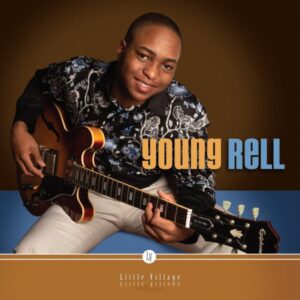
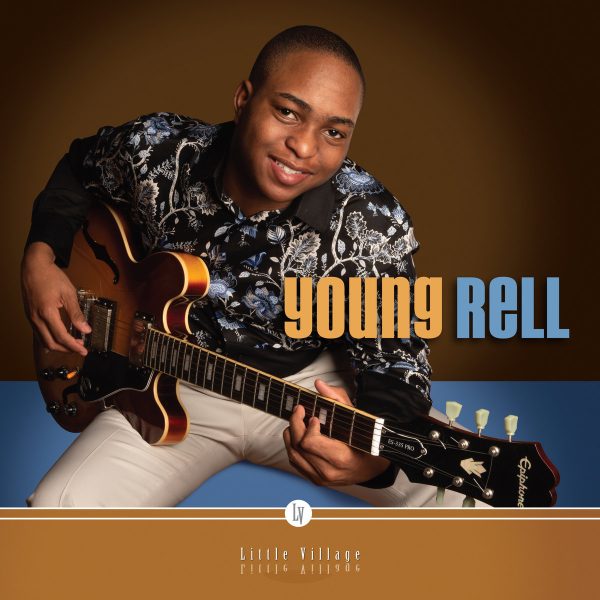
Little Village – LVF – 1080
Harrell “Young Rell” Davenport is a Mississippi-born prodigy who burst onto the national scene just two years ago and has already become one of our country’s most talked-about and admired bluesmen. This is his first full-length recording under his own name, and it largely lives up to the promise that so many have seen in him. Aside from his skills on harmonica and guitar, he is a gifted lyricist, drawing vignettes from a life that already sounds well-lived after only 19 years (he turns 20 this December), and delivering them in a voice that likewise sounds seasoned by experience and life lessons learned.
Ten of the 12 songs here are Davenport originals; they range from the soul-bearing Fatherless Child, which he delivers with defiant, life-affirming brio despite the bleak subject matter, to the funk-seasoned lope I’ll Keep It Hot for You, with its musical references to the Otis Redding / Carla Thomas classic Tramp. Along the way, Davenport revisits a couple of standards—Fenton Robinson’s anthemic I Hear Some Blues Downstairs and Bob Dylan’s anti-war diatribe Masters of War, which he transforms into a juke-rocking 12-bar shuffle and toughens further with a few streetsy updatings of Dylan’s lyrics (“I can see through your masks” becomes “I can see through your mess”); but his primary focus, and his forte, remains his own already impressive and growing oeuvre.
Davenport’s harp work, sure-toned and resonant, reflects the influence of both Walters as well as modern-day carriers of the torch like his friend and mentor Billy Branch, but his tonal and melodic conceits are his own. He shares guitar duties here with Kid Andersen and they both comport themselves admirably, but once again Davenport merits special kudos for the maturity and exploratory drive of his leadwork. A word might also be said about his tough sense of irony: “Come back tomorrow when I’m grown,” the youthful player sings to a temptress in Tomorrow, the set’s opener; Hurt People Hurt People, set to changes borrowed from Key to the Highway, is ostensibly the meditation of a man trying to understand why the human condition is so racked with pain and mistreatment, but it also resonates with a darker implication—what goes around comes around, and he is a “hurt” person, too, so caution may be in order.
For once, the hype is justified: This kid is the real deal.
—David Whiteis
LITTLE FREDDIE KING
Live at BJ’s Lounge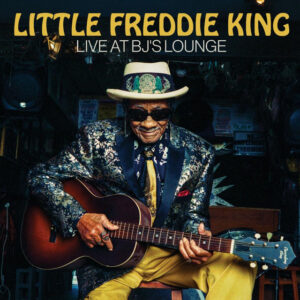
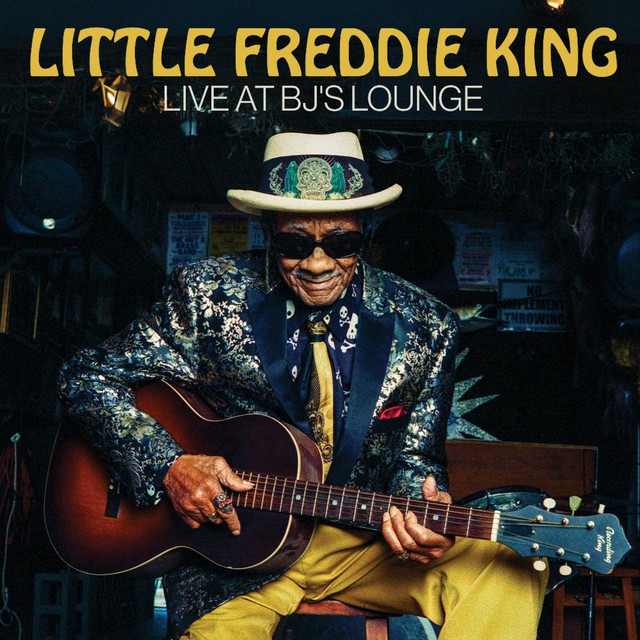
Made Wright Records – MWR-81
New Orleans blues icon Little Freddie King had been riding the wave of a late career resurgence that was introducing his unique style of swampy, mesmerizing blues to a new generation of blues lovers. Then 2025 happened. Even for a man whose backstory reads like a character from an Elmore Leonard novel, including surviving several shootings, a nearly fatal bicycle crash, and an accidental electrocution, it was an exceedingly difficult year, punctuated by another severe accident suffered while astride his trusty bike (his primary mode of transport) that has left him partially paralyzed.
While the future of his guitar playing career is in question, Little Freddie King: Live at BJ’s Lounge offers a taste of what his audiences have reveled in for more than 60 years. King (a.k.a. Fread E. Martin) has called the tiny dive bar in New Orleans’ Bywater neighborhood his performing home for more than 30 years. There’s even a huge mural of the guitarist/singer adorning one of the bar’s exterior walls!
It’s fitting that the album was recorded on a Friday night—September 19, 2025—before the typical King crowd of locals and tourists young and old, many of them properly lubricated and all of them looking to dance and have a big time in the Big Easy.
Produced by King’s longtime cohort, drummer “Wacko” Wade Wright, King is joined on stage by harp player Robert Louis Di Tullio Jr. and bassist Robert Snow Sr. The band rips through 15 tracks (nine originals) that showcase King’s singular approach.
King’s style is difficult to categorize. Swamp boogie permeates everything, but he also leans heavily on a hypnotic beat akin to the North Mississippi Hill Country blues, with some jam band tendencies thrown in for good measure.
King’s songs tell stories that sound as if they could’ve been lifted from experiences encountered during his 85 years on the planet. There’s the pain of waiting for a wayward lover to return, like on Bus Station Blues, where King shows off his still-strong picking skills, and tunes that place women on a pedestal, such as his cover of Fats Domino’s My Girl Josephine. There are also tales of New Orleanians living on the margins, like the wonderfully messy jam of Crack Head Joe. King is never shy about serving up a mischievous double entendre or two, like on Pocket Full of Money, when he sings, “Got plenty of money, baby / Just let me come inside” over a smoky, snarling groove.
The band covers songs by four blues titans. Lightnin’ Hopkins’ Mojo Hand churns with intensity. Slim Harpo’s Baby, Scratch My Back is a deliciously naughty modified shuffle. King turns Howlin’ Wolf’s Smokestack Lightning into a bubbling, Hill Country blues rocker, and you can feel the impossibly tight groove of John Lee Hooker’s Boogie Children in your bones.
The hypnotic jam Louisiana Train Wreck almost runs off the rails, before King and company pull it all together to close the show.
Do yourself a favor and get the vinyl, double album release. Thanks to its immaculate fidelity, you can feel King’s warmth and soul and hear the feet shuffling on the dance floor and the beer pouring from the tap.
—Rod Evans
JOE BONAMASSA
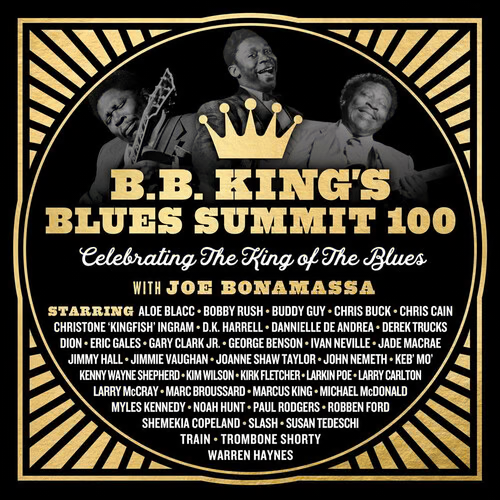
B.B. King’s Blues Summit 100: Celebrating the King of the Blues
KTBA Records – KTBA10125
Over the course of his nearly 30-year career it’s become abundantly clear that singer-songwriter/guitarist Joe Bonamassa has one guiding mission: to promote the art form of the blues and B.B. King’s status as the genre’s singular “King.”
Few modern blues artists elicit the extreme range of reactions from fans—good and bad—as Bonamassa. On one side are those who appreciate the New York native putting a fresh face on the blues. On the other side are those who, citing his fiery, rock-centric style, formidable merchandising machine, and social media efforts, have questioned his authenticity. No matter which side you’re on, the B.B. King’s Blues Summit 100: Celebrating the King of the Blues double CD is a testament to Bonamassa’s dedication to honoring the career of the blues giant he first shared a stage with as a 12-year-old prodigy.
Co-producers Bonamassa and Los Angeles guitarist/singer-songwriter and producer Josh Smith began working on the 32-track album in January 2025 as a celebration of what would have been the blues titan’s 100th birthday. But rather than putting together a traditional compilation, the duo laid down the core tracks first, then artists were invited to interpret the songs that resonated for them personally.
The album includes 42 artists, representing a variety of genres and musical styles, who are not simply covering King’s catalog, but creating their own versions. The artist pairings and song choices induced unexpected creative sparks throughout.
Christone “Kingfish” Ingram’s take on Paying the Cost to Be the Boss, with its rollicking, swinging groove, is the ideal opener. Susan Tedeschi and Michael McDonald turn To Know You Is to Love You into a smoldering duet drenched in soul.
Buddy Guy tones down his customary fretboard and vocal pyrotechnics on a faithfully sweet version of Sweet Little Angel. Love Comes to Town, featuring the unlikely team of Shemekia Copeland and rockers Slash and Myles Kennedy, with its propulsive groove, crunching guitars, and incendiary vocals, is a take-no-prisoners surprise.
Other cool pairings include Trombone Shorty and Eric Gales (Heartbreaker), Jimmy Hall and Larry Carlton (Sweet Sixteen), and the superstar duo of Chaka Khan and Eric Clapton, who laid down an impeccable performance on The Thrill Is Gone.
In addition to Ingram, the next generation of blues/soul artists is well represented by the likes of Gary Clark Jr. (Chains and Things), D.K. Harrell (Every Day I Have the Blues), Larkin Poe (Don’t You Want a Man Like Me?), and Kirk Fletcher with Better Not Look Down, the album closer that includes spoken word artist tributes to King.
Veteran bluesmen Keb’ Mo (I’ll Survive), Bobby Rush (Why I Sing the Blues), Jimmie Vaughan (Watch Yourself), and Kim Wilson (It’s My Own Fault) bring musicianship, grit, and emotional heft to the party.
Singer-songwriter/rapper Aloe Blacc provides one of the album’s “wow” moments by transforming So Excited into a funk jam rave up, while British singer/guitarist Joanne Shaw Taylor leads a blistering version of Bad Case of Love.
A big shoutout to the super tight backing band led by Bonamassa and Smith. Bass duties are handled superbly by Travis Carlton (on 22 tracks) and Calvin Turner (10 tracks). Drummer Lemar Carter holds down the groove on all 32 tunes!
An album with no weaknesses is made even better by the fact that proceeds from sales support the Keeping the Blues Alive Foundation, a nonprofit that funds musical projects and scholarships, and provides musical instruments to school music departments across the country.
—Rod Evans
THE ALEXIS P. SUTER BAND
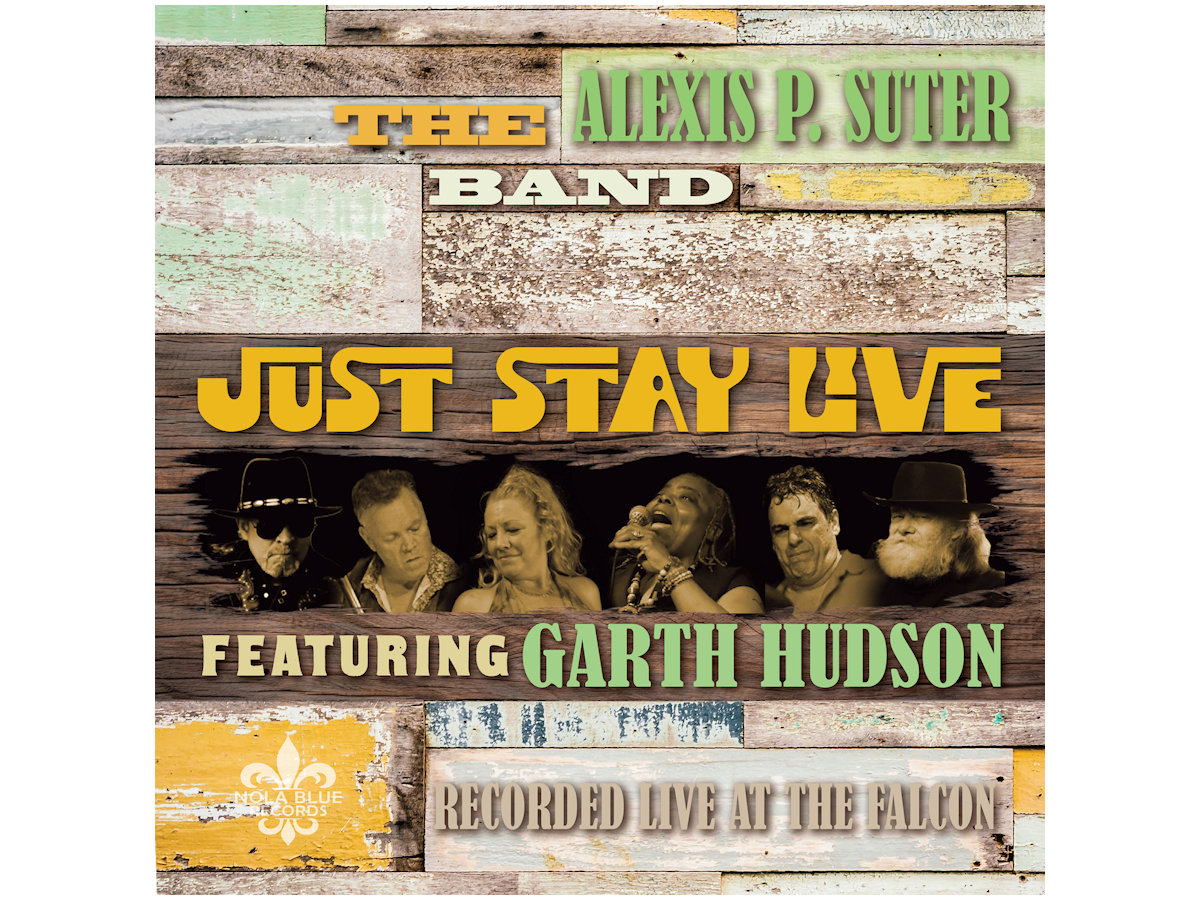
Just Stay Live
Nola Blue – NB054
Singer-songwriter Alexis P. Suter was raised in Brooklyn, New York, and possesses a powerhouse voice that more than one critic has likened to a gale force wind. Her six-piece ensemble, the Alexis P. Suter Band, plays an eclectic mix of blues, rock, and jazz and first gained attention with regular performances at the late Levon Helm’s famous Midnight Rambles in Woodstock, New York. Just Stay Live is notable for featuring the legendary musician and onetime member of the Band, Garth Hudson. Recorded at the Falcon, an intimate venue in Marlboro, New York, this 2011 performance features a mix of familiar cover tunes and original material.
A high-octane reading of Blind Willie Johnson’s John the Revelator kicks off the proceedings. Suter’s a cappella vocals grab the listener’s attention, and as the rest of the band joins in, they settle into a loping arrangement that’s anchored by Benny Harrison’s piano and Jimmy Bennett’s slide guitar. Bennett’s sweet, melodic phrasing owes a debt to Lowell George. A wave of excitement ripples through the crowd as Suter introduces Hudson. He performs a piece, titled simply Garth’s Piano Solo, that showcases his legendary finesse and grasp of multiple American roots styles. Right on Time is a meditative instrumental featuring beautiful interplay between Hudson’s piano and Harrison’s organ. Bennett gets plenty of room to stretch out on guitar, and his flowing lead lines summon the spirit of Duane Allman.
There’s a striking contrast between the cover material, which is steeped in tradition, and the band’s innovative, genre-bending originals. Hole That I’m In sports a frantic tempo and a jazz-tinged arrangement. Hudson shines once again on piano, and Ray Grappone’s drumming drives the rest of the band. The bold, anthemic Rise is one of the band’s most ambitious compositions. The lyrics, which celebrate action and empowerment, take full advantage of Suter’s range and power as a vocalist. The heady arrangement, which blends rock and jazz, gives band members plenty of solo space.
A soulful rendition of George Harrison’s Isn’t It a Pity, featuring Hudson on accordion, is a perfect landing point. Just Stay Live makes listeners feel as though they were in the audience during that wonderful night at the Falcon, which is the highest praise one can give a live recording.
—Jon Kleinman
AMANI BURNHAM
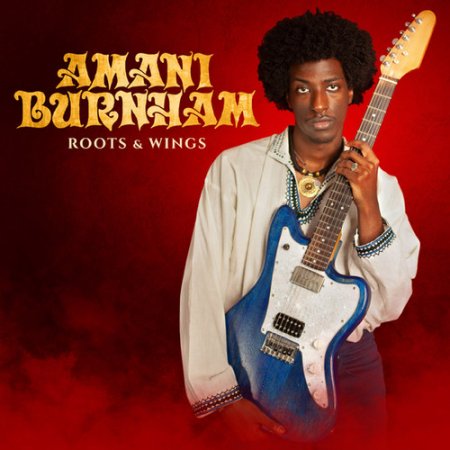
Roots & Wings
Blind Pig – BPCD5178
Blazing blues rocker Amani Burnham started out playing drums, which might explain his sense of timing and his ability to propel a song down various rhythmic highways. During COVID, he slung on his guitar in earnest, never looking back; since 2023, he’s attracted millions of views on TikTok. Now, on his debut album, Roots & Wings, he showcases to even larger audiences his way with an axe.
Barreling off in hard-charging fashion, the album opens with the jet-fueled instrumental Fastlane, which mimics a propulsive ride down the blacktop, swerving and swaying with shuffling rhythm guitar and driving along screaming lead licks. The Hendrix-esque I Wanna Know couches the singer’s philosophical yearnings about the meaning of life in a stomping psychedelic rocker. The bright and crunchy soul blues opening riffs of the title track elide into the spiraling rock lead lines of the instrumental bridge. A slow burning blues rocker, The Last Thing I Remember evokes the dreamlike state of sleep paralysis through layers of smoky rhythms, while the scampering tempo of Bluejay uses the rapid movements of a bird’s flight as an image of the singer’s own speedy attempts to fly through life. Burnham combines the harmonies and bright guitar rhythms of early British rock with Hendrix-like lead riffs in the ode to time travel Sideways thru Time, while the funked-up Lovers Till They Die captures the urgent can’t-live-with-you-can’t-live-without-you feelings of two lovers. The album closes with Elmore James’ classic Bleeding Heart, this version featuring Burnham’s crisp, scorching lead guitar work.
With Roots & Wings, Amani Burnham blazes his own trail, following closely in the lights of guitarists like Hendrix and Stevie Ray Vaughan, but bringing his own fierce styles of towering rhythms and blistering leads on his songs.
—Henry L. Carrigan Jr.
THE WILD MAGNOLIAS FEATURING THE NEW ORLEANS PROJECT
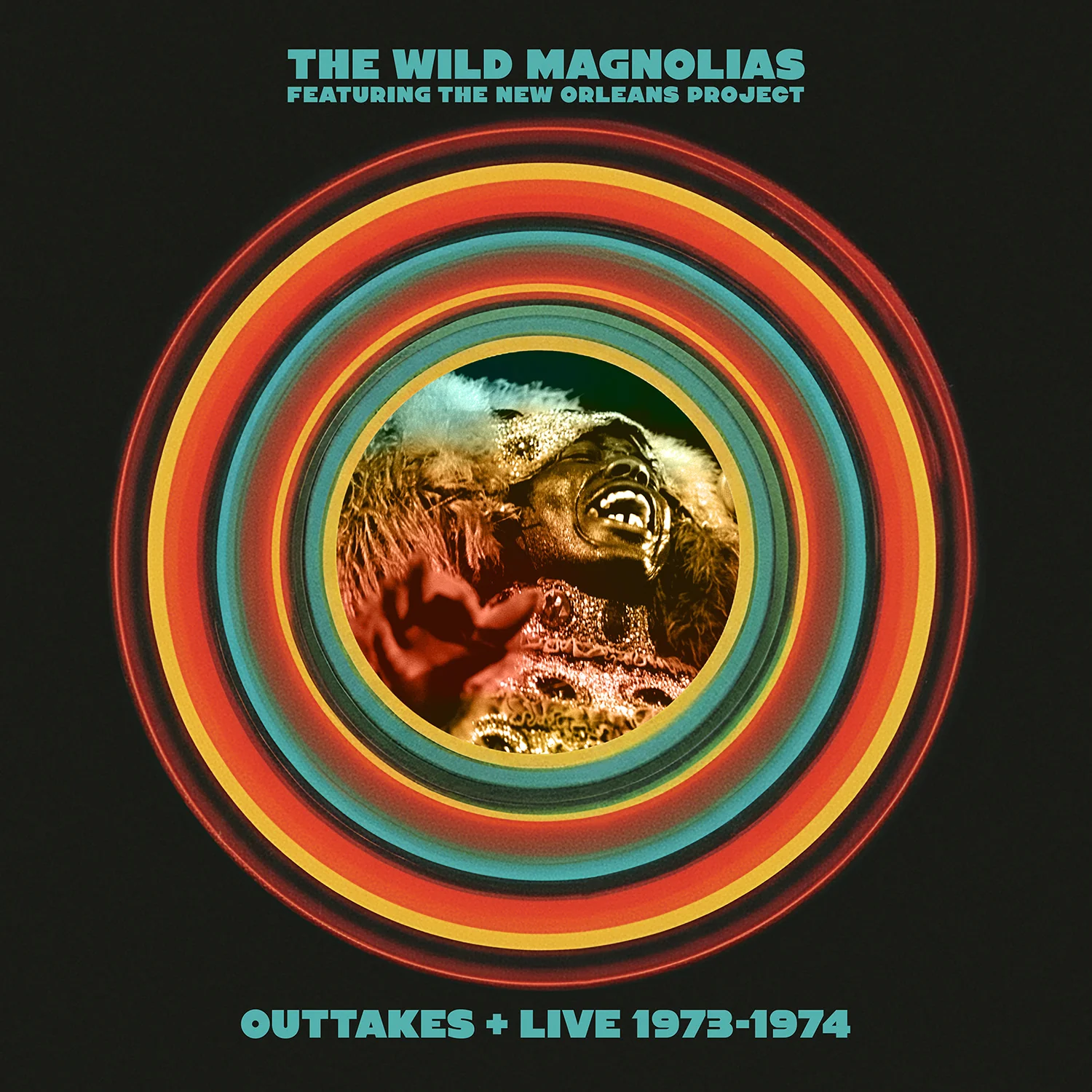
Outtakes + Live 1973–1974
Tipitina’s Record Club – TRC-0601
Following in the wake of last year’s Wild Tchoupitoulas / Neville Brothers New Orleans ’77 album, Tipitina’s Record Club has done it again, releasing unearthed recordings of groundbreaking Black masking Indians (a.k.a. Mardi Gras Indians) performances with Outtakes + Live 1973–1974 from the Wild Magnolias. This music goes back to the source point when the street music of the Indians was first joined with a contemporary R&B/funk band and recorded for commercial release, laying the foundation for a remarkable parade of creative endeavors that have emanated from New Orleans for more than a half century!
This wellspring can be traced back to 1970 when New Orleans Jazz & Heritage Festival producer Quint Davis was an undergraduate at Tulane University. Inspired by the street beats and call-and-response chants of Indians, he arranged for a 45 r.p.m. single to be cut by Big Chief Bo Dollis of the Wild Magnolias and his tribe, along with Big Chief Monk Boudreaux of the Golden Eagles, with support from R&B/funk veteran pianist, producer, composer, and bandleader Willie Tee (Wilson Turbinton). Handa Wanda Pt. 1–2 became a local juke box hit and caught the attention of French producer Philippe Rault, who signed the Wild Magnolias to record two albums, The Wild Magnolias (1973) and They Call Us Wild (1975). For the recordings, Tee assembled the New Orleans Project, a powerhouse, funkified band that included his brother Earl Turbinton on reeds, Snooks Eaglin on guitar, Alfred “Uganda” Roberts on congas, Julius Farmer on bass, Larry Panna on drums, and a gang of Magnolias on hand percussion and background vocals. (On the second LP, Farmer and Eaglin were replaced by bassist Irving Charles and guitarist Guitar June.) Both albums are stunning examples of prototypical Black masking Indian funk.
Side A of this red vinyl release features three outtakes from the first album. The opener is a slightly faster, looser version of Two Way Pak E Way, an incendiary performance by the singers and the band. It’s worth the price of admission all on its own. The second track captures them remaking Handa Wanda with Dollis, Boudreaux, and the gang kicking it off with call-and-response and hand percussion that give way to an extended instrumental jam by the band riding on that percolating groove. Eaglin contributes crackling rhythmic guitar fills, but the highlight is the thundering piano work by Tee, who sounds more like McCoy Tyner than Professor Longhair. The third outtake (Somebody Got) Soul, Soul, Soul is similarly focused on the band jamming on street funk with Roberts’ congas anchoring the groove. Side B is culled from a 1974 New York City performance—one of the first ever of Black masking Indians outside New Orleans. The sound is a bit murkier than the studio tracks (which sound great!), but the intensity is there. The New Orleans Project opens with Untitled Intro, an instrumental jam that boasts some brilliant electric piano wizardry from Tee that could easily hold up to what players like George Duke, Chick Corea, and Herbie Hancock were laying down at the time. Handa Wanda features a spacey, electric piano–driven opening that calls to mind some of the things Miles Davis did on albums like Get Up with It and Big Fun, but once the Indians join in, the unrelenting funk grooves take over. Rather than strictly an Indian chant, Tee’s original Smoke My Peace Pipe is more of a rollicking New Orleans R&B number that again shines a light on Tee’s keyboard and Roberts’ congas, and the set closes with the band going back to spacey jam territory on Untitled Outro. Outtakes + Live 1973–1974 is both historic and vital. And for members of the Tipitina’s Record Club, it includes a 45 r.p.m. single of Dollis, Boudreaux, and the Magnolias performing three songs with just hand percussion at a 1977 Milwaukee show.
—Robert H. Cataliotti