LIL’ ED AND THE BLUES IMPERIALS
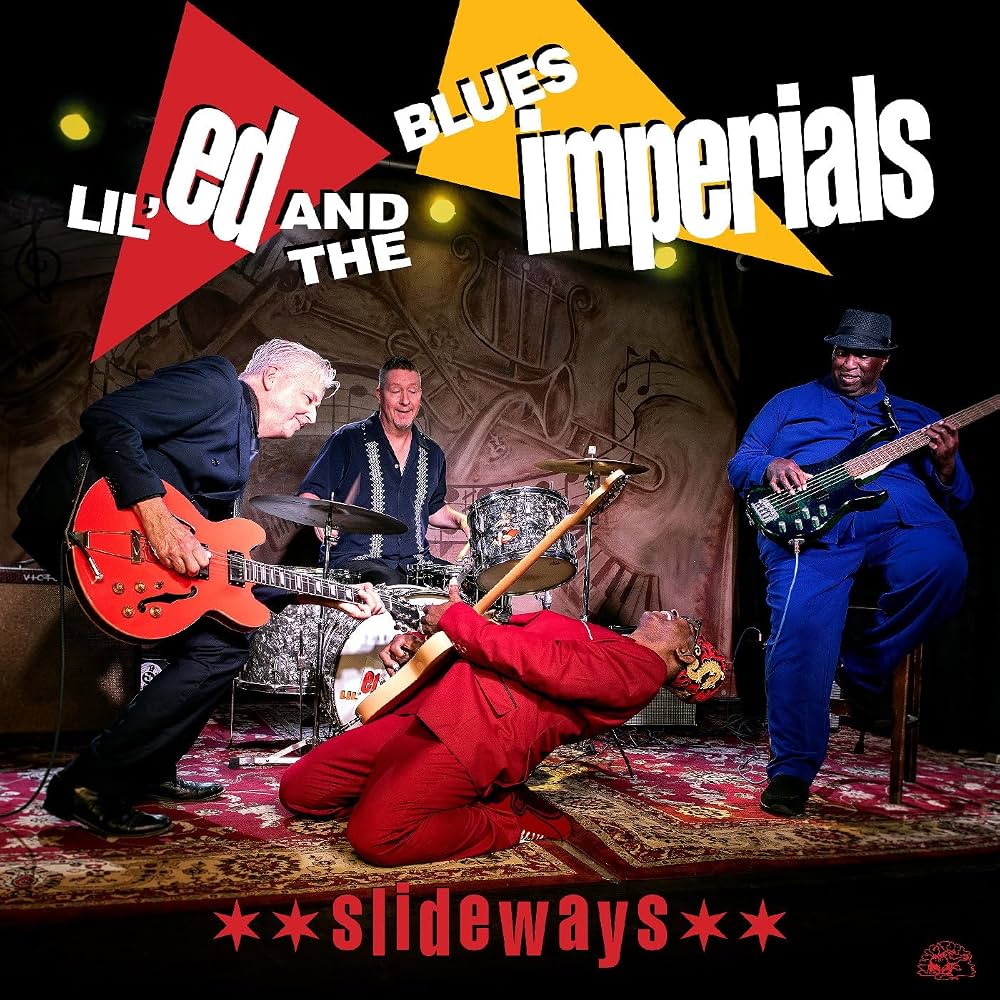
Slideways
Alligator – ALCD 5030
Over the years, Lil’ Ed Williams’ name has become virtually synonymous with the kind of no-holds-barred, “houserocking” blues party that summons the spirit of such now-legendary figures as J.B. Hutto (Ed’s uncle and early mentor), Hound Dog Taylor (the first artist to appear on Alligator, whose own band was famously named the Houserockers), and, of course, Elmore James. Although he’s capable of soul-baring introspection (as in Change My Way of Living from 1999’s Get Wild!), and he has occasionally suggested that he’d like to expand his stylistic and emotional palette further (“As we get older,” he told me when we spoke for the chapter I included on him in my 2019 book Blues Legacy, “you can hear things that speak to you. . . . There’s a little more to Lil’ Ed than you think”), Lil’ Ed remains the once and future king of slide-powered, boogie-driven revelry. This disc, his tenth for Alligator, shows him still near the height of his powers as he approaches his 71st birthday.
But don’t be deceived—there’s plenty of texture and nuance to Ed’s music, even if you occasionally need to stop dancing and listen in order to catch it. The influences and references alone are enough to keep a diehard blues aficionado on his or her toes. To cite just a few examples from this set: One Foot On the Brake, One On the Gas echoes Wolf (Howlin’ for My Darling) as well as Elmore; the lurching cadence propelling More Time harks back to Muddy’s I’m Ready; there are echoes of Albert King’s Born Under a Bad Sign underlying Cold Side of the Bed; the rhumba rhythm driving If I Should Lose Your Love recalls Elmore’s I Can’t Stop Loving You (although Ed’s full-spectrum slidework is all his own). None of that detracts from the originality or distinctiveness of anything here, but it testifies to the deep-rootedness of Ed’s music and his ongoing determination to keep the blues torch burning.
Sonically as well, there’s plenty to savor. Ed’s voice is rich and emotionally expressive, even at his most uninhibited; his instrumental timbre, on both slide and single-string work, ranges from raucous to delicate; his melodic and harmonic acumen have matured significantly since his early outings; his band, likewise, has honed a sound that’s roomy and expressive as well as declamatory.
As usual, when Ed tones things down for a ballad, he shines with special brilliance. Whether the pathos sounds ironic (Wayward Women) or heartfelt (Homeless Blues, written and originally recorded in the late 1940s by Chicago bluesman Willie “Long Time” Smith), the feeling is deep, and both his playing and his singing are sufficiently nuanced to allow the emotion to surge forth on its own. Whether partying or brooding, Lil’ Ed never forces the issue—yet another reason why his is such a distinctive and essential blues voice on the contemporary scene.
—David Whiteis
SOLOMON HICKS
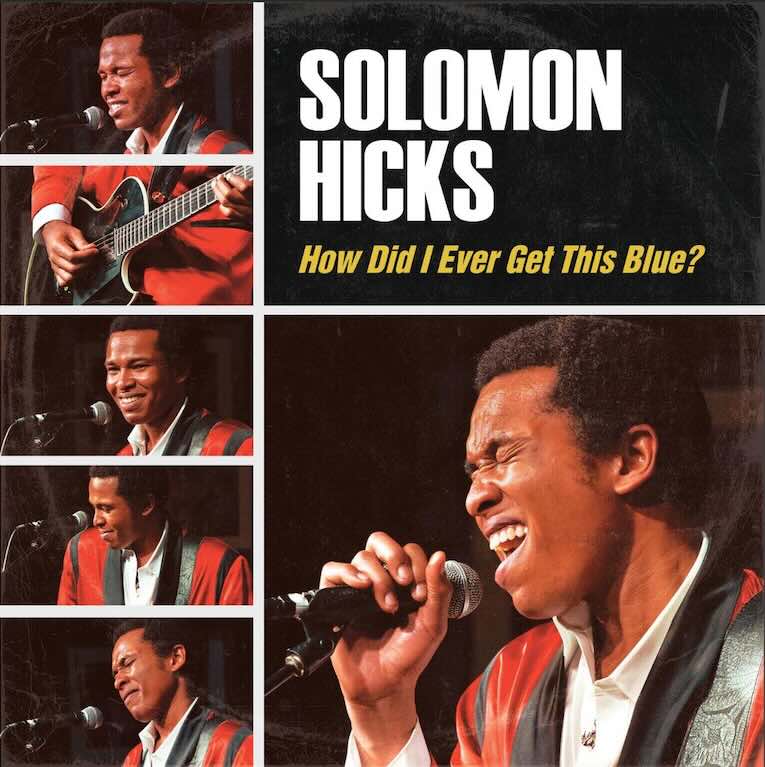
How Did I Ever Get This Blue?
Mascot Label Group – PRD77692
He may have dropped the “King” from his stage name in the years since his last CD, but Solomon Hicks is still an elite talent. His newest record for Mascot, How Did I Ever Get This Blue?, is his first since 2020. That’s a long time, but it’s well worth the wait. Hicks and his cadre of talented musicians offer up a delightful 11-song, 44-minute set of blues, roots rock, and soul.
How Did I Ever Get This Blue? opens up with the pleasing shuffle of Further on Up the Road. Hicks and the band really swing, steadily building up the song’s intensity, culminating in a pretty lively guitar solo and vocal pairing to bring it on home. The vibe carries over into the next track, a cover of John Lee Hooker’s Dimples. Hicks’ vocal dexterity really shines on this number, as he mixes it up between a gentle croon and scratchy soul belter with equal aplomb.
While Hicks excels at a straightforward blues number, he uses How Did I Ever Get This Blue? to showcase an eclectic sonic palette. Driftin’ and Driftin’ balances the blues with a monolithic, Led Zeppelin–esque riff, while covers of pop superstar Bruno Mars’ When I Was Your Man and Adele’s Rumour Has It allow Hicks to give listeners a taste of his non-blues interests. Both tracks are standouts, with the latter evoking a less synth-reliant, up-tempo Prince and the Revolution jam.
The approach and sonic aesthetic of the Adele song pairs well with one of Hicks’ original compositions, I’m Burnin’ Up. It’s buoyed by a big beat, courtesy of drummer Les Warner, and an irrepressibly grooving acoustic and slide guitar combo from Hicks and Kirk Yano (who also plays keys and synths across the release).
As much as How Did I Ever Get This Blue? dabbles in non-genre tones, it is still very much something for blues aficionados. The title track, another Hicks original, is a soulful blues ballad in the Chicago tradition. And Hicks closes the album with a spin on the Chuck Berry staple Memphis, Tennessee. He doesn’t reinvent the wheel; it’s straightforward, lively, but makes for a strong conclusion.
—Jim Shahen
SELWYN BIRCHWOOD
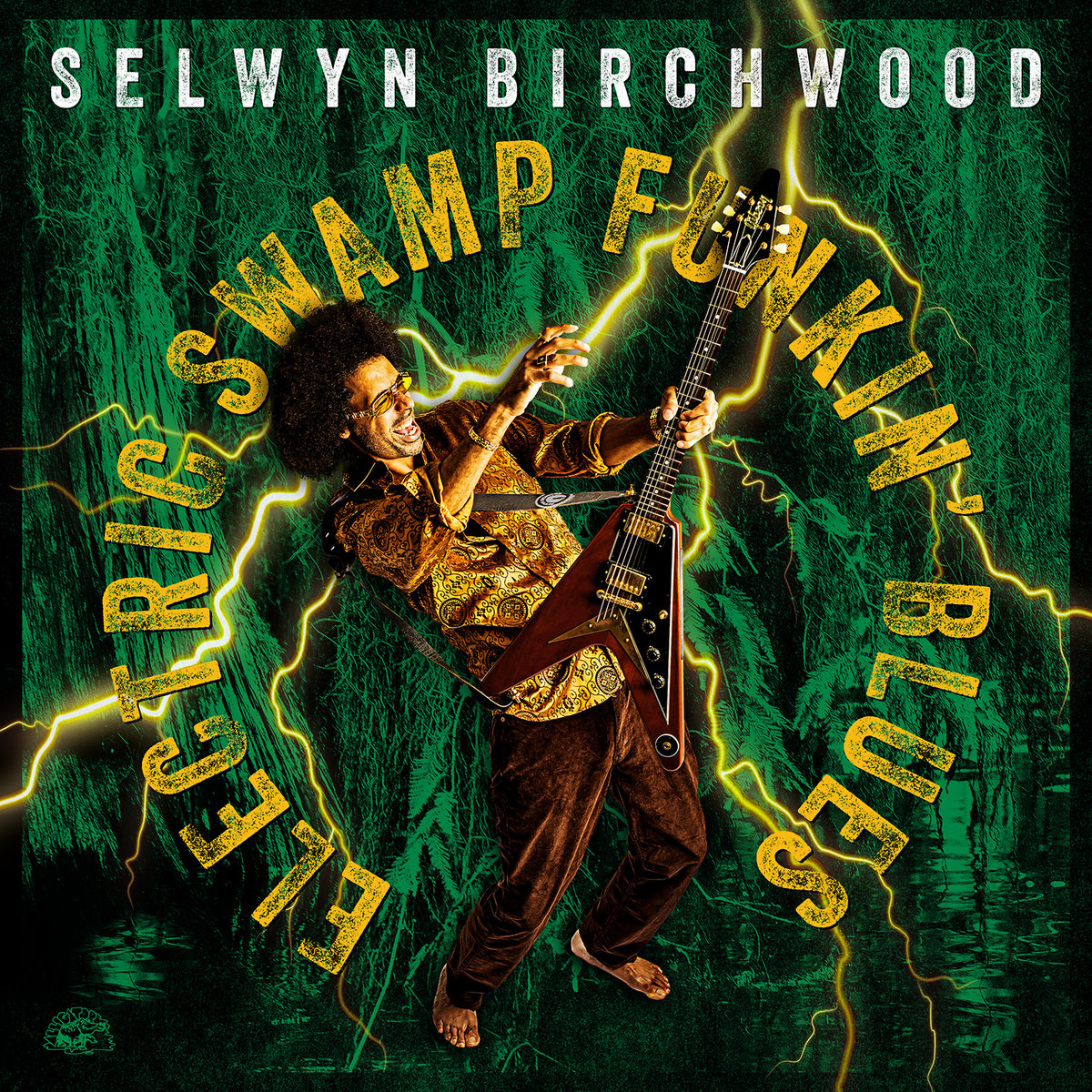
Electric Swamp Funkin’ Blues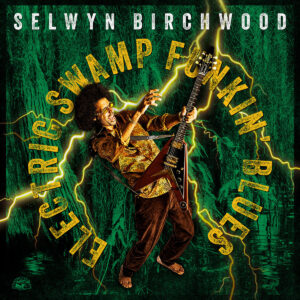
Alligator Records – ALCD5029
Electric Swamp Funkin’ Blues is singer, guitarist, and songwriter Selwyn Birchwood’s sixth album since Don’t Call No Ambulance, his 2014 debut on Alligator Records that followed his first-place finish in the band category at the previous year’s International Blues Challenge. He’s come a long way since then in shaping a musical persona that is anchored in tradition and tempered with a contemporary consciousness. His gruff, burly vocal style and his incendiary guitar and lap steel virtuosity are showcased to maximum effect on this self-produced release that features a first-rate band delivering ten original compositions that highlight his broad stylistic palette.
One of his earliest influences was Jimi Hendrix, and the dramatic, volcanic electric guitar he unleashes on the brief instrumental overture The Eagle Has Landed clearly pays homage to the iconic musician. Hendrix referred to his performances as “Electric Church,” and Birchwood signifies on that with The Church of Electric Swamp Funkin’ Blues that melds his lap steel rave up with B3 organ and handclaps, infusing the performance with a gospel fervor. Birchwood shifts gears for some slinky funk on the soul blues Damaged Goods. Robert Johnson famously declared he was “gonna write a letter” and “telephone every town I know”; Birchwood takes the blues into the 21st century realm of virtual communication and the paranoia of “Big Brother is watching you” with All Hail the Algorithm, which opens with line “Welcome to our digital hell” and features another stunning display of electric guitar wizardry. On Soulmate, Birchwood channels Freddie King’s Ain’t Nobody’s Business with a majestic, extended slow blues guitar showcase. Three tracks that testify to Birchwood’s stylistic range are the mellow, acoustic guitar–driven ballad Labor of Love, enhanced by Regi Oliver’s baritone saxophone; the Elmore James–inspired, Chicago-style slide guitar tribute of What I’ve Been Accused Of; and Meters-evoking funky scratch guitar/organ groove of Talking Heads. He concludes Electric Swamp Funkin’ Blues in tandem with Briana Lutzi and Taylor Opie’s background chorus on the warm, folky Afro-Caribbean lilt of The Struggle Is Real, delivering a life-affirming closing sermon. “Let the church say Amen.”
—Robert H. Cataliotti
BOB CORRITORE AND FRIENDS
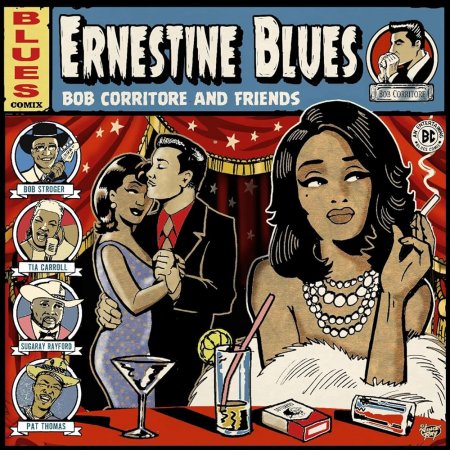
Ernestine Blues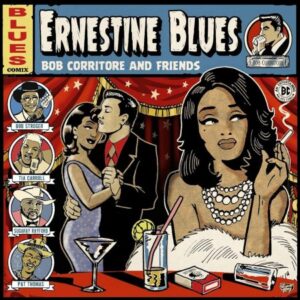
VizzTone/Southwest Musical Arts Foundation – SWMAF 31
By now, blues fans know what to expect from a new album by harmonica master Bob Corritore. Ernestine Blues is the latest Corritore release to feature top-notch musicianship, old-school attitude, and a small army of collaborators. Corritore remains one of the blues world’s greatest team players—he has a gift for bringing out the best in his fellow musicians. The album’s tracks were drawn from ten recording sessions that took place between 2023 and 2025. As with any Corritore release, there are so many great performances that a review can only point out the highlights.
A powerful reading of Snooky Pryor’s How’d You Learn to Shake It Like That kicks off the proceedings. Tony Coleman handles the drums and vocals, while guitar from Jimi “Primetime” Smith and piano from Anthony Geraci flesh out the arrangement. Corritore’s harp is, as always, larger than life. The late Mississippi Delta bluesman Pat Thomas played guitar and sang on the acoustic Big Fat Mama. Even unamplified, Corritore’s harmonica loses none of its edge. Soul blues powerhouse Sugaray Rayford takes the vocal mic on Blind Man Cry. The haunting minor key lament is anchored by Smith’s delicate guitar work and Ross Harwood’s lowdown organ riffs. Chicago stalwart Willie Buck’s vocals do justice to the Muddy Waters warhorse Trouble No More. Smith and Geraci’s chemistry is immaculate, and Corritore dips into his Little Walter trick bag.
Johnny Rawls’ honey-smooth vocals shine on I Love the South. Terry “TJ” Harris’ organ rounds out the gentle, melodic arrangement while Corritore takes a low-key, supporting role. Chicago native Carla Denise lends her high-octane voice to the raw, stripped-down Troubles on Your Mind. Accompanied only by pianist Ben Levin and Corritore, Denise holds her own on a track that’s thick with juke joint atmosphere. The Cash Box Kings’ Oscar Wilson lends his distinctive, weathered voice to a cover of Jimmy Reed’s Down in Mississippi. Bob Margolin lends his signature behind-the-beat guitar work, and Geraci is once again in fine form on piano.
Ernestine Blues is a reminder that Corritore is in a class of his own when it comes to bringing an all-star blues jam into the listener’s living room. The album is a wonderful addition to Corritore’s formidable body of work.
—Jon Kleinman
DUKE ROBILLARD
Blast Off!
Nola Blue Records – NB/053
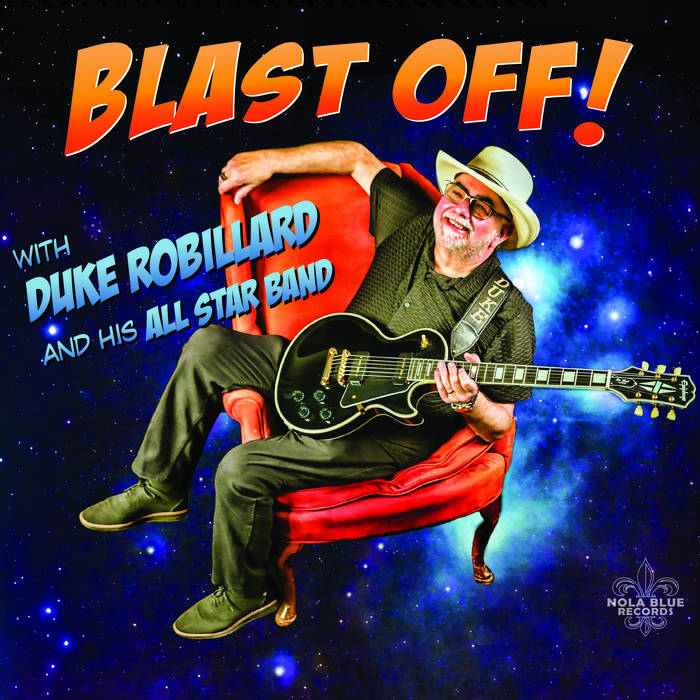
On his latest release, guitarist Duke Robillard casts a wide net—covering everyone from Guitar Slim to Percy Sledge, Floyd Dixon to Tom Waits, Allen Toussaint to Count Basie. And stylistically? Everything from New Orleans instrumental jam band (Galactic Grease) to postwar swing (When I Get Lucky, The King), early R&B (Warm and Tender Love, Play Boy Hop) to hard blues rock (Lowdown).
But Robillard has long had a wide-ranging musical curiosity. From the jump blues of Roomful of Blues to his stint playing Texas blues in the Fabulous Thunderbirds to his jazz forays with fellow guitarists Herb Ellis, Gerry Beaudoin, and Jay Geils, the overarching theme of his career seems to have been “If it swings, I’ll play it.” That certainly holds true here, where Robillard and his band (Bruce Bears on keys, Marty Ballou on bass, and Mark Teixeira on drums) and guest horn players switch styles seamlessly, sounding at home no matter the musical setting.
On an album full of highlights, perhaps the standout track is the cover of the old pre-war swing gem I’ll Be Glad When You’re Dead (You Rascal You). Recorded by everyone from Louis Armstrong to Dr. John, this reading is steeped in early New Orleans jazz and anchored by the vocals of Robillard and his lead vocalist, Chris Cote, who trade off as the story of a romantic rivalry plays out. The horn section (Mark Earley and Doug James on sax, the always wonderful Billy Novick on clarinet, and Doc Chanonhouse on trumpet) provides atmospheric framing, while Teixeira’s drumming captures that pre-war stylistic approach. It’s blues the way the Basie band played blues—a rousing flag-waver that would have everyone up out of their seats and dancing in a live setting.
Their cover of Waits’ Lowdown is a rollicking blues rock tune in a Rolling Stones vein, while they play Toussaint’s Confusion as a mid-tempo R&B number. Guitar Slim’s Stand By Me is played in nearly the same arrangement as his original, while Floyd Dixon’s When I Get Lucky is a straight-up jump blues.
Galactic Grease finds them in a Crescent City jam band mode—with a song title that sure sounds like homage to the great New Orleans groove band Galactic (and Teixeira channeling his inner Stanton Moore).
The King was written by Basie with Jon Hendricks for the 1959 vocalese album Sing Along with Basie with Joe Williams and Lambert, Hendricks & Ross. Here, it is performed as an instrumental with the reeds taking the vocal leads. It’s a great, swinging chart—but one wonders just what Cote could have done with it given his strong vocals on most of the other tracks here (minus a few other instrumentals).
Cote is the real revelation here. Possessed of an amazingly versatile voice, he can sing in whatever style the band is in. On Warm and Tender Love, written for Percy Sledge by Bobby Robinson and Irral Berger, Cote’s rich tenor voice soars over the horns like an old Philly soul singer. But on Tampa Red’s Look a There, Look a There, he adds a nice growl that fits in with the straight-ahead blues arrangement.
Every track here just grooves, and the variety of styles and arrangements means it never gets old or stuck either. Just stellar playing by a tight band on a strong selection of songs
—Jim Trageser
AL GREEN
To Love Somebody
Fat Possum Records – No #
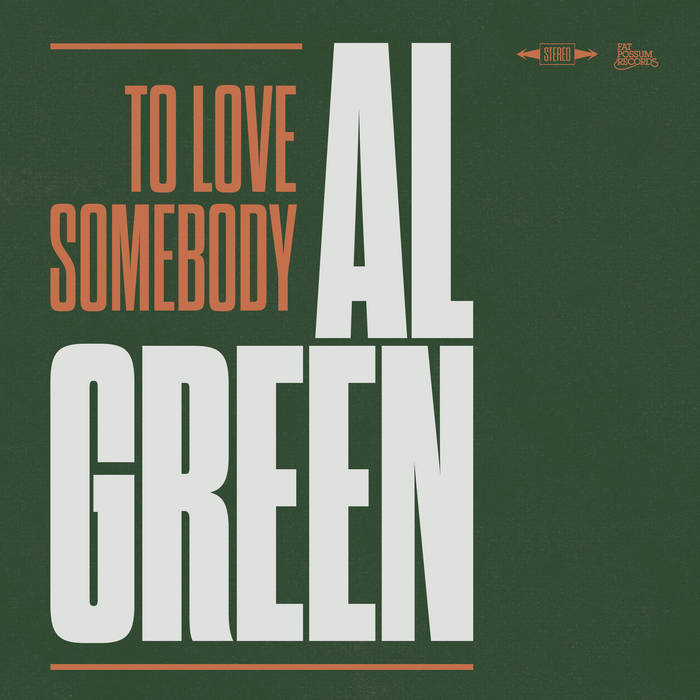
As he approaches his 80th birthday, soul legend Al Green remains a vital force on his new four-track EP. While the album is classic soul as only Green can deliver, it’s interesting that the songs are drawn from the rock canon—comprising covers of the Bee Gees, Lou Reed, and R.E.M.
The EP is named after the lead track, a cover of the Bee Gees’ 1967 hit. Green’s take joins a distinguished list of artists who have covered this gem of a pop song—everyone from Janis Joplin to the Flying Burrito Brothers, Carla Thomas to Nina Simone. While some of the above nearly reinvented the song, Green’s arrangement hews pretty close to the original—albeit with the vocal an octave lower. But the horn charts, and the backing instrumentation don’t vary too far from what the Bee Gees did. Green is content to let the magic of his singing distinguish his version.
And in Green’s case, that approach pays off handsomely. His vocal control remains extraordinary, his ability to hold a note, to add a quiver. If Humphrey Bogart could convey emotional turmoil with a glance, so can Green with a pause, a slight break in his voice. To listen to this track alone is to witness a master at the absolute top of his craft.
Not only is Green still in top form, but the backing band is composed of fellow veterans from Hi Records—Charles Hodges on organ, Leroy Hodges on bass, and Archie Turner on piano, along with longtime Booker T. & the MG’s drummer Steve Potts. And Stax’s old producer and pianist Lester Snell handles the strings here, so this is a group that knows as much about classic soul as anyone.
If this isn’t even the first Bee Gees cover from Green—he sang How Can You Mend a Broken Heart on his 1972 album Let’s Stay Together—his take of the Velvet Underground’s I Found a Reason might seem a bit more out of his wheelhouse. But the arrangement favors him, Lou Reed’s melodic theme is lovely, and Green’s voice becomes conversational at times, lending it a warm intimacy.
Another Lou Reed composition, Perfect Day, is performed here as a duet with British singer RAYE in a different version from Green’s 2023 single.
But after his 2024 single of Everybody Hurts by R.E.M. (which is also included here), maybe it no longer makes sense to try to define Green’s wheelhouse. The man’s wheelhouse is simply a good song of any style.
—Jim Trageser
ROOSEVELT HOLTS
Sun Gonna Shine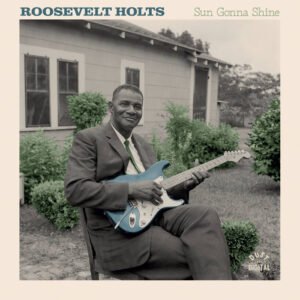
Dust-to-Digital – No #
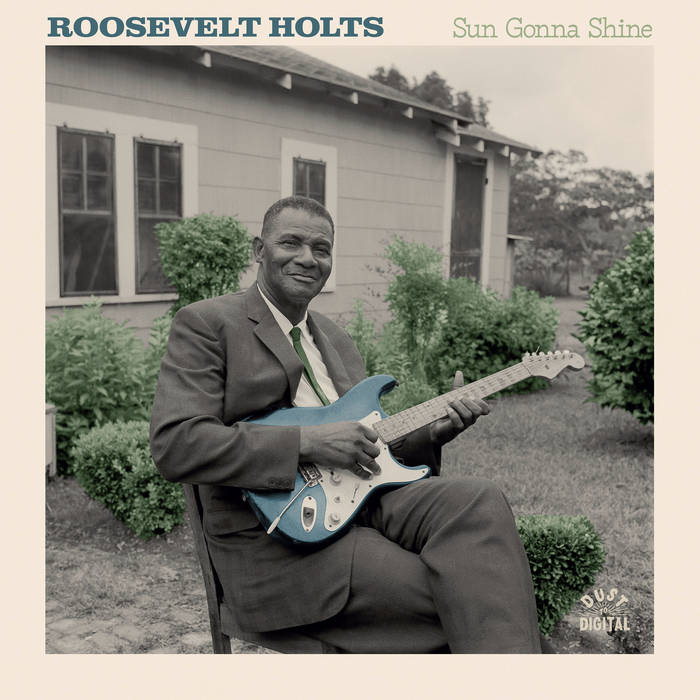
Guitarist and singer Roosevelt Holts was born around 1905 east of Tylertown, Mississippi, and was initially drawn to the blues through the recordings of Blind Lemon Jefferson and Lonnie Johnson. He listened to guitarists and pianists entertaining workers in juke joints and in lumber camps, sawmills, and paper mill towns. Around 1926, he started playing guitar and a few years later came under the influence of Delta blues icon Tommy Johnson, who married Holts’ cousin, and from the veteran blues artist, Holts learned both guitar techniques and songs that he carried on for decades. In 1932, he killed a man in an argument and was sentenced to four years at the infamous Parchman Farm. After his release, he eventually left Mississippi and moved to Louisiana and lived variously in Franklinton, Folsom, Baton Rouge, and Bogalusa. When he was injured in a paper mill accident, he shifted to farming, bootlegging, and playing blues locally. He stopped playing music jobs in the mid-1950s. That might have been the end of Holts’ musical story, but in 1965, the blues revival brought an enthusiast and fledgling researcher named David Evans to the area. Holts made some recordings for Evans, and he was back in action again. Over the next seven years, Holts would record five additional sessions with Evans, who would go on to become one of the foremost blues scholars. Sun Gonna Shine is the second download-only collaborative release from Evans’ personal archive with Dust-to-Digital, featuring 19 tracks from Holts’ six sessions with Evans, as well as a 40-page booklet containing extensive historical, biographical, musicological, and personal notes by Evans.
Holts’ talents may have been “discovered” during the blues revival, but he never achieved the broad recognition of Fred McDowell or John Hurt that took them to folk clubs and festivals around the country and to record albums that garnered reviews in Sing Out! or Rolling Stone. Evans did manage to get a few recordings released in Great Britain, but Holts remained limited to performing in his community. Yet he didn’t rest on his laurels; Holts bought a Gibson electric guitar and amp in the late 1960s, exhibiting an awareness of what was happening in urban blues and R&B. Sun Gonna Shine features both acoustic and electric guitar performances. Although Evans was recording in less-than-optimal settings—living rooms and front porches—the performances are remarkably clear and resonant. Holts is a charming, confident, and emotive singer and a resourceful guitarist who can easily range from Muddy Waters–style acoustic slide work on My Telephone Keeps Ringing to propulsive electric guitar boogie runs on I Don’t See No Train, from signature Tommy Johnson riffs on Maggie Campbell Blues (acoustic) and Stop and Listen (electric) to electric boogie-woogie duets with (fittingly) Boogie Bill Webb on Going Up the Country, Big Road Blues, and Coal Black Mare. In addition to Webb, Holts is joined by his harmonica player brother Herlin Holts on two rocking numbers, Bogalusa Stomp and Bill Doggett’s Honky Tonk, and his cousin Esau Youngblood (Esau Weary), who sings quartet-style bass accompaniment on the lone gospel number, I’m Going to Build Right on That Shore. Seven decades on, Sun Gonna Shine provides an opportunity for blues enthusiasts to make a blues revival discovery with the recorded legacy of Roosevelt Holts, a largely unsung hero of the blues.
—Robert H. Cataliotti
VARIOUS ARTISTS
A Tribute to the King of Zydeco
Valcour Records – VAL-CD-0058
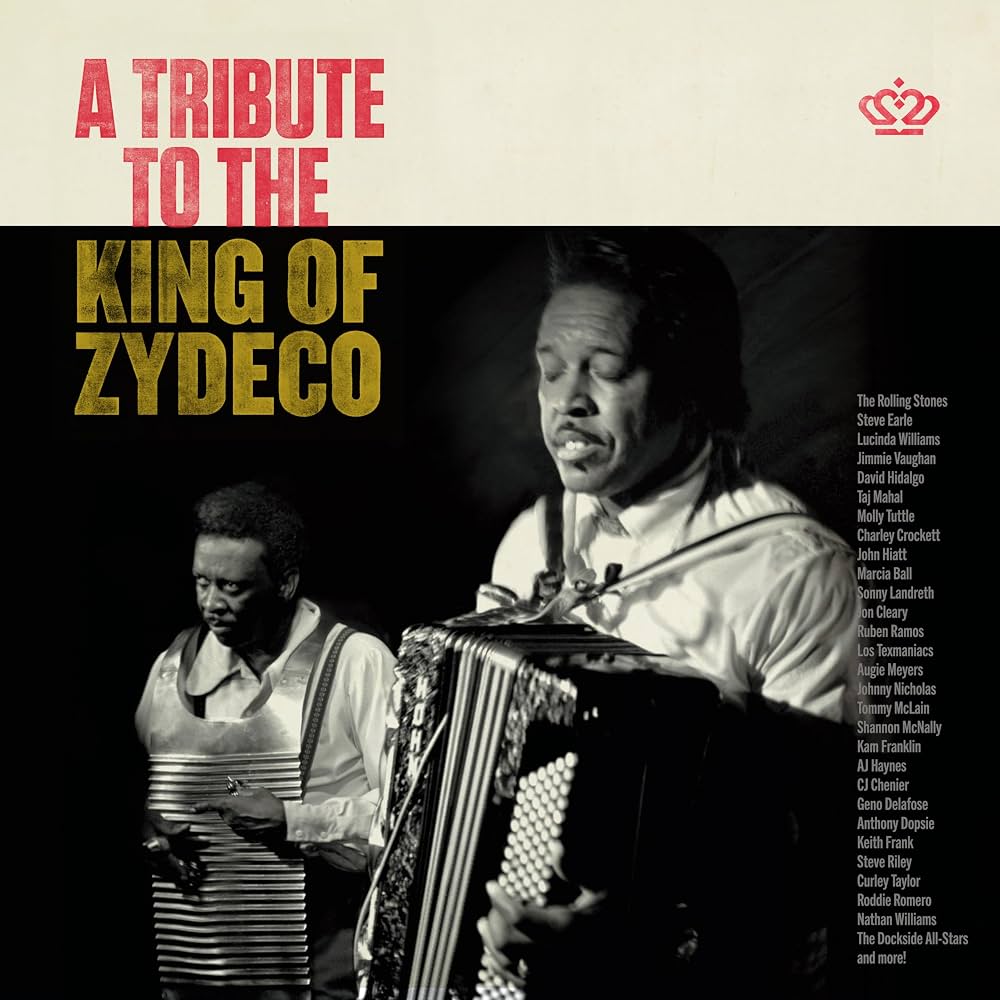
It’s fitting that A Tribute to the King of Zydeco is the winner of the 2026 Grammy Award for Best Regional Roots Music Album, which was released in the centennial year of the birth of the zydeco and blues originator, singer, accordion and harmonica player, and band leader Clifton Chenier (1925-1987).
The tribute album concept usually gathers a star-packed roster of present-day admirers who each select a song from the honoree’s repertoire and craft a cover version in the hopes that the star power will draw new listeners to explore the original body of work. That’s certainly the hope for this release, and there’s plenty of star power on this celebration of the King, but that’s not what makes it a stunningly brilliant example of the format. A Tribute to the King of Zydeco honors Chenier but also celebrates today’s Southwest Louisiana zydeco scene that is the most viable testament to his legacy.
Rather than farm out its 19 tracks to the “stars,” producers Steve Berlin, Joel Savoy, and John Leopold laid the foundation for each track with an outstanding cast of local players whose talents shine just as brightly, including drummers Jermaine Prejean and Robert St. Julien; bassists Dave Ranson and Lee Allen Zeno; rubboard (frottoir) players Paul “Bird” Edwards and Sherelle Chenier Mouton (Chenier’s great-niece); pianist Eric Adcock; and saxophonists Derek Huston, Dickie Landry, and Berlin. In addition, each of the stars is paired with a present-day zydeco accordion player, including Steve Riley, Nathan Williams Sr., Keith Frank, Anthony Dopsie, Curley Taylor, Geno Delafose, Roddie Romero (who’s also a killer guitar slinger), and, of course, the King’s son C.J. Chenier. The presence of these masterful musicians assures there can be no complaints about “watered-down” versions. It’s the real deal and kicks butt from start to finish.
The stars who join in with these zydeco masters include: The Rolling Stones; Charley Crockett; Taj Mahal; Lucinda Williams and Tommy McLain; Steve Earle; Jon Cleary; Kam Franklin and A.J. Haynes; David Hidalgo; Shannon McNally and Molly Tuttle; Jimmy Vaughan and Johnny Nicholas; John Hiatt; Augie Meyers; Marcia Ball; and Sonny Landreth (who is actually a product of and mainstay on the scene). Additionally, Tejano singer Ruben Ramos joins with the conjunto band Los Texmaniacs (with their accordionist Josh Baca) and Meyers for a south-of-the-border take on Chenier’s Ay Ai Ai. It’s hard to single out highlights when every track is a winner, but here are a few. The Stones and Steve Riley’s version of Zydeco Sont Pas Salés rides on an unrelenting groove anchored by Riley, drummer Robert St. Julien, and bassist Dave Ranson as Jagger wails on harp and vocals and Richards and Wood weave crushing guitar lines. It would fit perfectly on Exile on Main Street with its gritty sound. Taj Mahal and Keith Frank rock the house with Hey ’Tite Fille, which features a fiery guitar solo from Roddy Romero and a breathtaking back and forth between Frank’s accordion and Eric Adcock’s piano. Legendary Louisiana country singer Tommy McLain (who passed away in 2025) and Lucinda Williams, supported by beautiful unison lines from Frank’s accordion and Dickie Landry’s saxophone, deliver a lilting Cajun waltz on Release Me. C.J. Chenier and David Hidalgo pull out all the stops on the instrumental boogie Hot Rod. On My Soul, guitarist Jimmy Vaughan, singer/harmonica player Johnny Nicholas, and accordionist Riley craft a seductive zydeco/Texas blues shuffle hybrid. The emotional high point of the program is the closer, I’m Coming Home, the master’s theme song, played by C.J. Chenier and slide guitar virtuoso Sonny Landreth, longtime bandmates in both Clifton Chenier’s Red Hot Louisiana Band and their own Bayou Rhythm Band. And the icing on the cake is that not only is A Tribute to the King of Zydeco a great album, but its proceeds are being donated to fund the newly created Clifton Chenier Memorial Scholarship at the University of Louisiana at Lafayette for the study of traditional zydeco accordion.
—Robert H. Cataliotti
ALTERED FIVE BLUES BAND
Hammer & Chisel
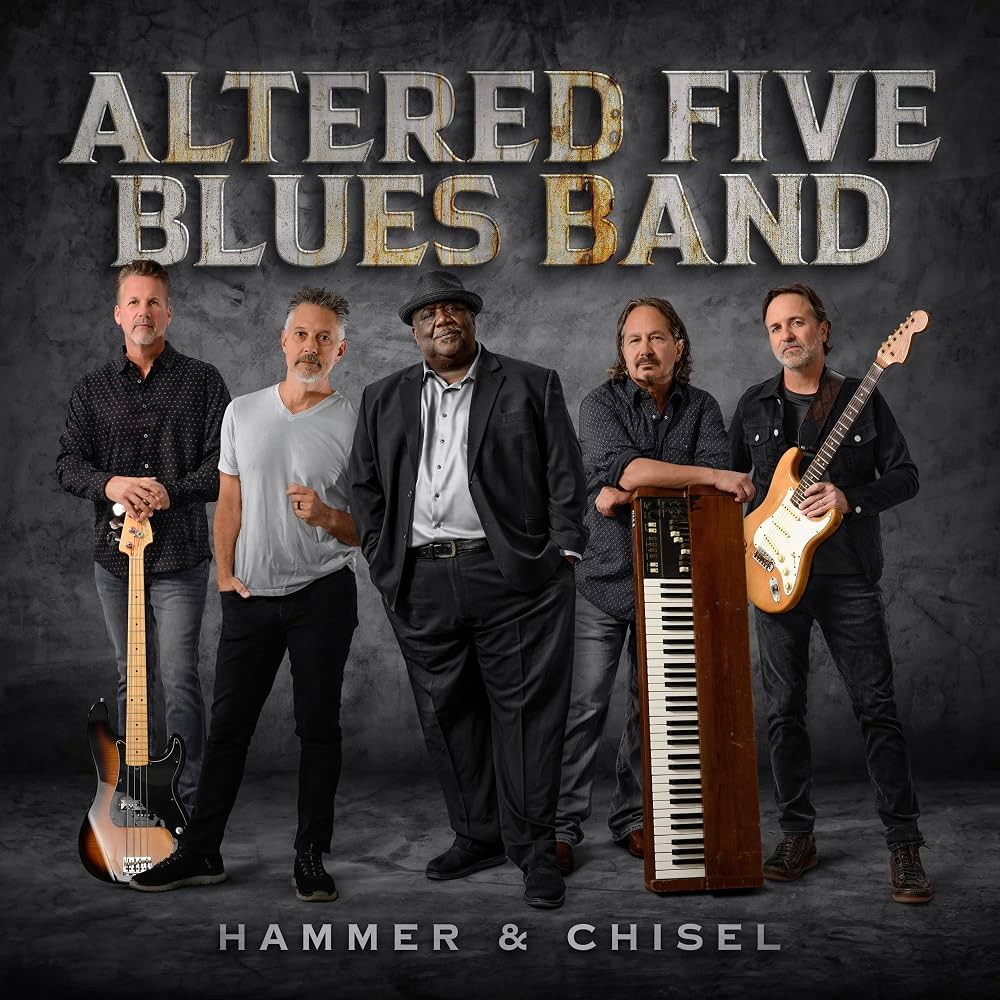
Blind Pig Records – BPCD 5177
From their home base in Milwaukee, Altered Five Blues Band has made a formidable noise for almost a quarter century. The award-winning quintet’s latest album, Hammer & Chisel, finds them in reliably strong form, with 11 all-original tunes brimming with instrumental fire and lyrical energy.
Guitarist Jeff Schroedl wrote or co-wrote every track on Hammer & Chisel, the resultant playlist a solid cross-section of blues moods. Dare Me to Do It vibrates with take-no-prisoners erotic force, Jeff Taylor’s vocals balancing natural grit with nuance and versatility. Schroedl’s chug-a-lug guitar riffs and the heavy grind of Steve Huebler’s organ give Can’t Shake It a serious-minded authority, and bassist Mark Solveson is an implacable presence on Who Can You Trust, an ode to suspicion delivered by Taylor with an authentic edge of wisdom. This trio of tracks also benefits from guest harmonicist Jason Ricci’s always welcome, mesquite-smoky tone.
Another pair of guests, saxophonist Max Abrams and trumpeter Julio Diaz, put a driving spark into I Got It Good, an especially arresting showcase for Solveson’s sleek, pulsating sound. Drummer Alan Arber’s own tricky rhythmic sensibility is ideal for Crazy One, a witty spin on the “women, am I right?” trope. In a far more romantically earnest vein, Lotta Love Left in Me exudes lived-in cool, Taylor gliding over Huebler’s velveteen acoustic piano as he declares his heart “like a battle-worn boxer / Still ready to fight.”
Throughout Hammer & Chisel, the crisp production of Grammy winner Tom Hambridge showcases this ensemble’s scintillating interplay. The blend of Schroedl and Huebler brings a slinky, insouciant flavor to My Love Ain’t a Lie, while Arber’s unwavering tom hits put pedal to metal on the sturdily anthemic title track. Headline Blues, Altered Five’s comment on the highly fraught realities of the moment, marries a broadly topical Taylor vocal (“We’ve lost our way / We’ve lost our freedom”) with Schroedl’s most fully realized solo of the album. And Hell or High Water offers a hopeful antidote to those horrors of the day, Huebler’s sanctified organ and Solveson’s elegant tone cradling Taylor’s pure, clean romantic entreaty.
The album closes with The Will of Man, a poignant paean to self-reliance with just a hint of gospel truth, courtesy of multi-tracked intro and outro vocals. Altered Five Blues Band preaches a powerful message . . . and, as with the most compelling sermons, hearing is indeed believing.
—Matt R. Lohr
TINSLEY ELLIS
Labor of Love

Alligator Records – ALCD 5031
Tinsley Ellis follows up on the success of his first all-acoustic album, 2024’s Naked Truth, with another collection of raw, emotionally powerful, down-to-the-bone acoustic songs, Labor of Love. The master blues guitarist showcases his instinct for attending to the spaces within the notes and finding the just-right rhythms and tones that connect the notes fluidly.
The album opens with Hoodoo Woman, which features bright layers of picking flowing over a repetitive backbeat that carries the song from one tonal register to another. His vocals slide up and down as fingers slide up and down the frets of his guitar and mandolin. The jump blues Long Time opens with percolating rhythms reminiscent of ZZ Top’s La Grange, but Ellis’ song sparkles with his bright flowing riffs laid on top of the driving beat that directs the song. The reflective folk blues To a Hammer aches with regret and with the certainty that our lives are often determined already by the people and events in them: “to a hammer, everything’s a nail.” Ellis provides silvery mandolin picking on the upbeat Sad Sad Song, a joyous front porch picker, complete with hand clapping, that belies the misery at the center of the song. Bright guitar picking animates the down-home celebration of life in the South as Ellis names the soul food and sweet iced tea that shapes the soul of many southern communities in Sweet Ice Tea. I’d Rather Be Saved illustrates how closely prison hollers and field shouts mirror spirituals as the singer shouts for salvation from a mean old boss. The album closes with the affecting and spacious gospel song of hope Lay My Burden Down with its spiraling guitar picking and Ellis’ warm vocals.
The title of Ellis’ new album, Labor of Love, is just right because he invests his heart and soul in each of these songs, and each one of them showcases a guitarist, songwriter, and singer playing at the top of his game.
—Henry L. Carrigan Jr.