JIMI “PRIME TIME” SMITH
It’s My Time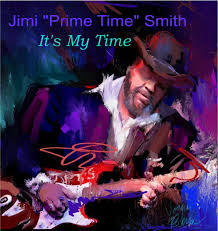
New Folk – No #
Jimi “Prime Time” Smith was raised in the blues. His mother, the late Johnnie Mae Dunson, was a drummer, vocalist, and songwriter who worked most notably with Jimmy Reed (she also served as Reed’s manager during the later years of his career) and finally re-emerged as a beloved blues “elder stateswoman” in the late 1990s and early 2000s. Smith’s early mentors and role models included such greats as Reed himself, Big Walter Horton, Eddie Taylor, Floyd Jones, and Sunnyland Slim; by the late 1970s and early ’80s, he was stepping out on his own to lead his own bands around town; after moving to Minneapolis and, more recently, Phoenix, Arizona, he further established himself as a formidable presence, fusing the rootsy traditionalism with which he’d been raised with the soul, funk, and rock-influenced styles of the newer generation. Nonetheless, to date he has not garnered the kind of national/international recognition that a musician of his pedigree and skills might expect. His recorded output has been relatively sparse, and although he’s enjoyed a fairly steady career as a performer, he’s not yet a first-call attraction on most major blues festivals.
On this disc, Smith comes charging out of the gate with untethered fury. The opener, Smith’s take on Bishop Neal Roberson’s modern gospel classic Don’t Let the Devil Ride, kicks off with a full-choir gospel shout that segues into a series of piercing guitar leads from Smith. The band lays down a relentless, driving backing over which Smith then roars out a sung sermon charged with both spiritual and worldly urgency. It’s a stunning opening; some might think it would be a challenge to maintain that level of quality and commitment throughout an entire set, but Smith and his crew manage to do just that. Whether churning out 12-bar shuffles (Breaking My Heart, Back on the Road), quieting things down for a Delta-tinged acoustic meditation (the title track, which features Smith’s longtime friend and compatriot Bob Corritore on harmonica), threatening to blow out the walls with roadhouse-rocking boogie (Moving On), nodding toward Memphis and Jackson with loping southern soul balladry (I’m Your Friend, with its echoes of Tyrone Davis), summoning an eros-charged urgency that recalls Muddy at his most intense (the searing, slide-driven She’s a Peach), or decrying the oppression and soul-killing despair that continue to poison the heart and soul of America in a tone that melds anguished outrage with hope-against-hope tenderness (Will It Ever Change), he combines technical mastery, emotional commitment, and an apparently still-expanding stylistic and thematic range with panache and finesse.
Smith’s guitar work, though based heavily in the post-King string-bending style, avoids cliche, and no matter how aggressively he may fire off his leads, his Chicago mentors obviously taught him the virtues of never sacrificing eloquence for overkill. His band, meanwhile, is fully worthy of the high standards he sets, both in their backing and their soloing (keyboardist Toby Lee Marshall and horn man Dave Foley, as well as the redoubtable Corritore, qualify for special recognition).
With this outing, Jimi “Prime Time” Smith sounds poised to finally take his rightful place in the upper levels of the modern-day blues pantheon.
—David Whiteis
BILLY BRANCH & THE SONS OF BLUES
The Blues Is My Biography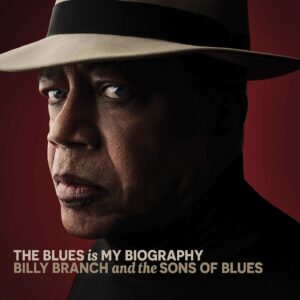
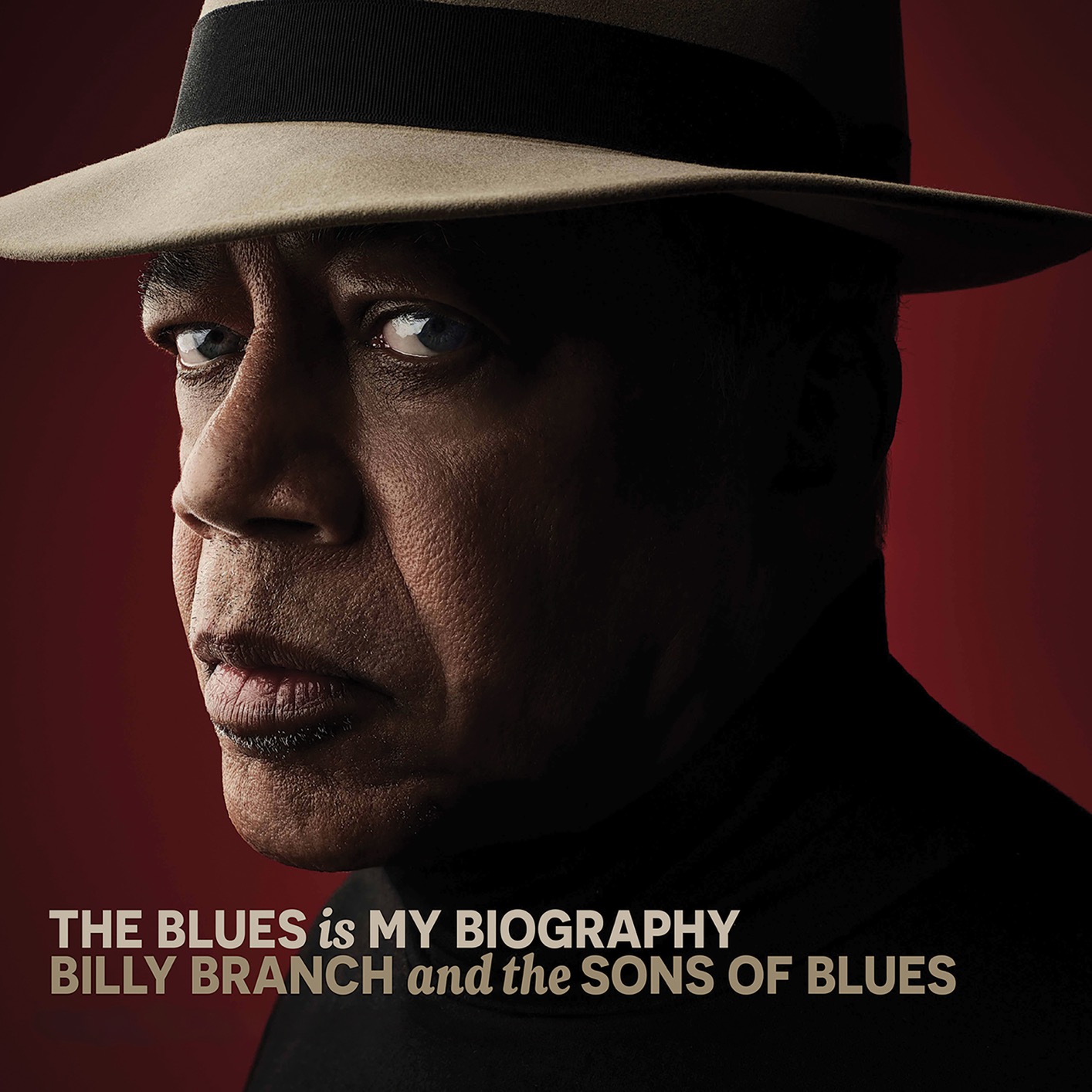
Rosa’s Lounge Records – No #
Tony Mangiullo, proprietor of Rosa’s Lounge, one of Chicago’s longest-running blues clubs, has launched a new label. This is the label’s debut release; it features harmonica great Billy Branch, who has been a mainstay at the club since it opened in 1984. Branch wrote or co-wrote nine of the 11 offerings here; he has said that it’s the most autobiographical recording he’s ever done.
Branch’s harp chops are on full display. His tone is as flexible and rich as that of any harpist working today; he crafts solos graced with a melodic and harmonic dexterity that makes clear the influence of both traditional and progressive jazz artists as well as such blues greats as James Cotton, Junior Wells, Big Walter Horton, and Carey Bell, all of whom were among his early mentors; and, as has been the case since the beginning, he has honed his Sons of Blues to a razor-sharp edge—they blend with him, and with one another, with unerring precision, both complementing and prodding Branch as he summons the spirits of the masters who continue to inspire him, taking his place among them as he does so. His voice may not be the most emotionally expressive in blues, but it’s straightforward and unforced, and he’s developed a technique of talk-singing some of his stories in a grizzled murmur that makes him sound like an oracle of life-toughened wisdom.
The opening track, Hole in Your Soul, kicks off with a characteristically barbed encomium from Bobby Rush (“Let me tell you ’bout the blues, and where it come from—it’s the mother of all music. If you don’t love the blues, you probably don’t love your mama!”) and goes on to celebrate the blues as an ongoing, living musical treasure deserving of equal billing—and equal praise—alongside pop, hip-hop, jazz, and country (complete with ironic shout-outs, from both Branch and the indefatigable Rush, to artists from these varied genres). Over the course of the rest of the set, Branch takes on themes as standard-issue as troubled love (Toxic Love, Call Your Bluff) and the treachery of so-called friends (Real Good Friends), and as immediate and timely as the struggle for social justice and liberation, both political and personal (Dead End Street, written by Ben Raleigh and David Axelrod but deepened with autobiographical reminiscences from Branch; the reggae-flavored, somewhat pedantic but still timely Ballad of the Million Men; the acerbically punning Begging for Change, which features guest appearances from Shemekia Copeland and Ronnie Baker Brooks and builds to near arena-rock intensity as Brooks’s Purple Rain–like guitar solo screams upward through the miasma toward transcendence). The Harmonica Man, after a sly nod to Willie Dixon and Howlin’ Wolf’s Back Door Man, revisits the living history of the blues as music of struggle and resistance (“Ancestral memories pour from my hands and mouth / A musical tale of survival in the South”); the title song, rather than another paean to the music itself, is a horn-rich ballad that invokes “the blues” as a state of being and a state of mind (“What in the world must I do to be free?”); Branch’s harp solo summons sweet/sour timbres that invoke the spirits of Horton and other past masters of tonal expression.
Not only is this the most autobiographical album Branch has ever released, it’s also his most courageous and uncompromising social statement, a message of hope and resistance in a time when such messages are more necessary—and come at more potential risk and cost—than ever.
—David Whiteis
CHRISTONE “KINGFISH” INGRAM
Hard Road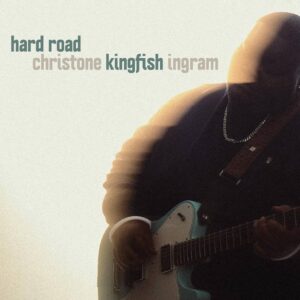
Red Zero – RZR-0001
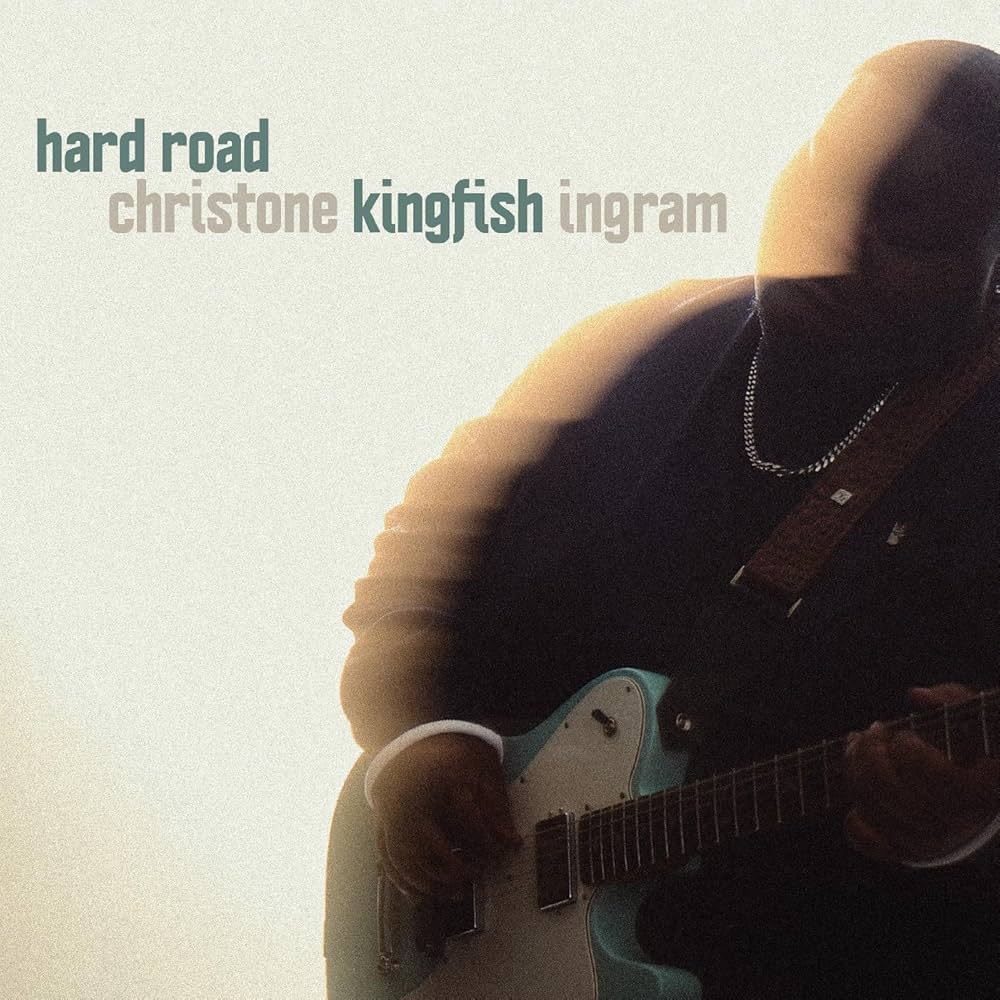
Hard Road is the third studio album by the guitar phenom and the first on Red Zero Records, the imprint he recently founded. With the new release, Christone “Kingfish” Ingram has kicked off Red Zero with a bang.
Hard Road is chock full of the soulful vocals and incendiary lead guitar work that’s made Ingram one of the fastest-rising stars in blues. He sets the tone with opening track Truth. The song is a rockin’ mission statement, with Ingram pledging to always speak to his truth and be real to himself. It’s a message he punctuates repeatedly with some consistently thrilling solos.
The affirmation of this track carries over into second song Bad Like Me. The gritty blues rocker takes that “truth” and becomes a declaration of who Ingram is and how he’s gotten to the point he’s at in his career.
From there, Ingram moves from personal to more generalized themes. S.S.S. (an abbreviation for “she’s so sexy” and “she’s so sweet”) is propelled by his wah-wah-heavy playing and a funky bottom end, while Nothin’ but Your Love is a slick, ’90s R&B–inflected ballad. That overt tipping of the cap to genre influences pops up again later on the Hendrix-and-Stevie Ray Vaughan–channeling Voodoo Charm. It’s hard to not hear Voodoo Child (Slight Return) in its chord progression and not hear Ingram’s song as a reworking of it, one that allows him to put down his own stylistic imprint.
Much of Hard Road is outsized: the up-tempo tracks sound huge, those and the slower fare all feature solos that reflect Ingram’s status as a modern-day guitar hero. These factors help make closing track Memphis such a treat. With its simple rhythm and harmonica fills from Harrell “Rell” Davenport, it’s a laconic country blues number. The change of pace is refreshing and unexpected. Placing it last was a savvy choice, as it highlights that although Ingram has proven himself to be a burgeoning master of a particular strain of electric blues, there are still exciting new directions and forms for him to pursue.
—Jim Shahen Jr.
KIRK FLETCHER
Keep on Pushing
VizzTone Records – VT-KF01
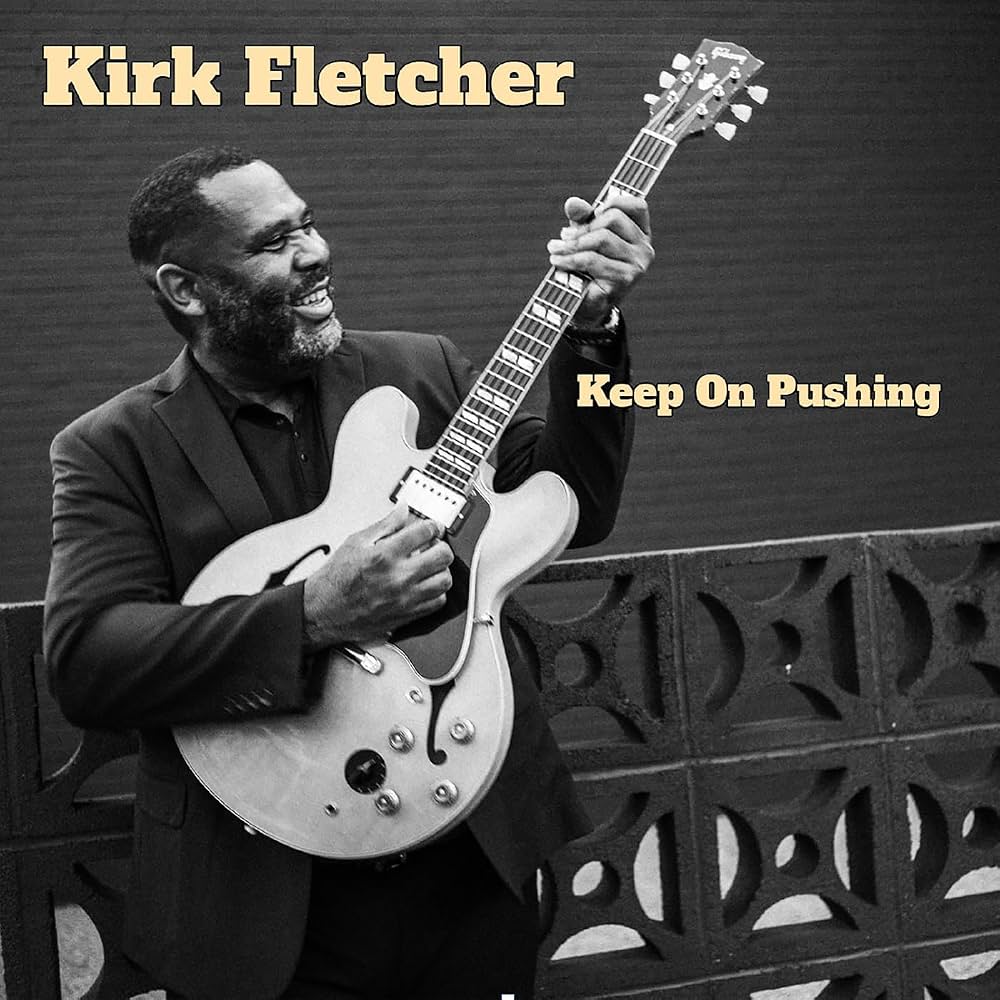
Singer/guitarist Kirk Fletcher has become a master at pushing the right buttons to create the ideal sonic atmosphere for his take on traditional and modern blues. On Keep on Pushing, the California-born Fletcher employs the singular tone of the Gibson electric guitar to set the mood.
Robert Johnson, T-Bone Walker, B.B. King, Chuck Berry, Clarence “Gatemouth” Brown, Lightnin’ Hopkins, Albert King, and a seemingly endless list of blues and rock guitarists chose the deep, smoky snarl of Gibson guitars—especially the iconic ES-335, Les Paul, and SG models—over the brighter, more trebly Fender Telecasters and Stratocasters. While he has played Fenders from time to time, these days Fletcher uses the ES-335 to perfect effect, along with his unmistakable chops and smooth, forceful vocals, to conjure a raw, old-school vibe.
Recorded live in the studio and produced by Fletcher and guitarist/singer JD Simo, Fletcher, Jason Smay (drums), Ron Eoff (bass), and Simo (guitars) bring life to some of Fletcher’s favorite songs that illustrate his varied influences. Having worked with artists like Kim Wilson, Charlie Musselwhite, and Joe Bonamassa, along with a stint in the Fabulous Thunderbirds, Fletcher has earned a reputation as an artist adept at mixing the past and the present.
Unlike his most recent releases, such as My Blues Pathway (2020) and Heartache by the Pound (2022) that blended blues and R&B amid plentiful horns, keys, and backing vocals, Keep on Pushing is a stripped-down affair with lyrics focused on resilience and perseverance that provide a counterpoint to the dark, thick sonic landscape.
On tracks like Nashville singer-songwriter Ted Jarrett’s It’s Love Baby, Big Bill Broonzy’s Just a Dream, and Arthur Crudup’s I’m Gonna Dig Myself a Hole, the Gibson snarl is brightened by Fletcher’s crisp leads. The up-tempo stomp of Every Dog Has Its Day, by New Orleans singer/pianist Edwin (“Eddie Bo”) Bocage, rumbles with a Fabulous Thunderbirds–like groove. On the ballad Lost Love, a 1951 gem by blues/R&B singer Percy Mayfield, Fletcher evokes B.B. King’s muted tone, vibrato, and trills.
The title track, penned by Fletcher (who suffered a stroke on stage in 2021), finds him in a reflective mood, as he sings “Don’t get lost in the struggle / you gotta live your life with ease.” Recorded in a sing/talk style, Think Twice Before You Speak, by soul singer Al King, is an ode to minding your own business, with lyrics like “The graveyard is full of people who talked too much.”
The album features two instrumentals. Fletcher’s Croke is a quick burst of electric blues energy, while Simo’s slide guitar powers the down and dirty Blues for Robert Nighthawk, co-written by Fletcher and Simo.
If you have not yet discovered the timeless blues mastery that Fletcher brings to the table, this album is a great place to start.
—Rod Evans
RORY BLOCK
Heavy on the Blues
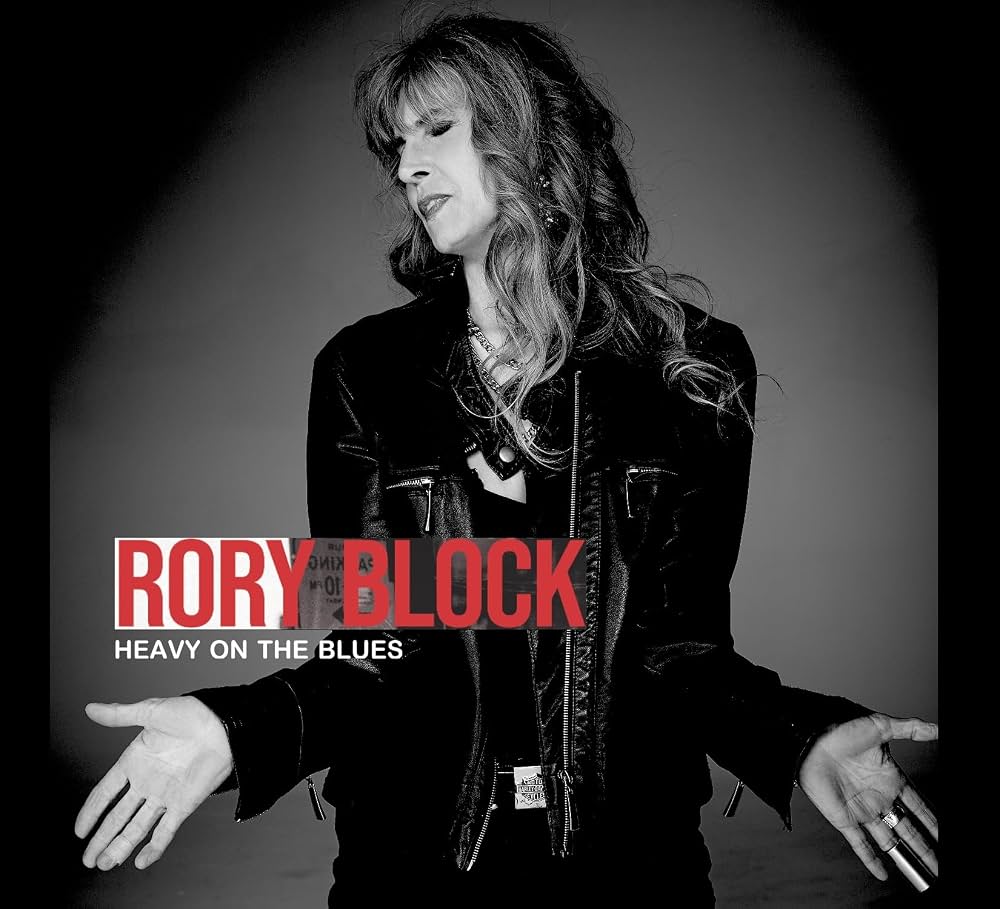
M.C. Records – MC-0095
Singer and acoustic guitar master Rory Block has a unique ability to put her own stamp on a song. She has won seven Blues Music Awards and gained wide recognition as one of the foremost interpreters of country and Delta blues. Heavy on the Blues is Block’s first recording for M.C. Records. With material by artists ranging from Charley Patton to Jimi Hendrix, Block draws from a deep well of influences and always keeps listeners on their toes.
A down-home reading of Tommy Tucker’s Hi-Heel Sneakers starts things off on the right foot. Block’s fretboard prowess and extraordinary range as a vocalist are evident right out of the gate. Covering material by soul blues giant Little Milton is a challenging task for any artist. Although Block’s version of Walking the Back Streets is stripped of horns and a rhythm section, the haunting minor key lament loses none of its power. Block does justice to Campbell’s mournful lyrics, and deft guitar work from guest Ronnie Earl adds bite. Jimmy Vivino lends his expert guitar chops to a gritty cover of Buddy Guy’s What Kind of Woman Is This. The beloved Hendrix tune The Wind Cries Mary may seem like an unusual choice for an acoustic guitarist, but Block and guest Joanna Connor make it their own.
It’s great to hear Block collaborate with other musicians, but her slower-paced solo material is just as engaging. Her love for Delta blues is apparent on a meditative reading of Charley Patton’s Down the Dirt Road Blues. Block’s voice is a powerful instrument in itself and she does a great job replicating Patton’s haunted moans. A cover of Willie Brown’s Mississippi Blues features some of Block’s most delicate fretwork. Can’t Quit That Stuff, the album’s sole original track, was inspired by a conversation between Block and the late Hubert Sumlin. Over a hypnotic arrangement featuring only guitar and drums, Block’s vivid storytelling makes the listener feel as if Sumlin has come back to life.
Once again, Block shows listeners what a skilled musician can achieve with just voice and a guitar. Top-notch production and a great set of songs make Heavy on the Blues the next best thing to catching Block at your favorite concert venue.
—Jon Kleinman
AL BASILE
Blues in Hand

Sweetspot – 9952
If any musician deserves the label “multitalented,” it’s Al Basile. The singer-songwriter and cornet player holds a master’s degree in creative writing from Brown University. He has published poetry, written plays, and spent years teaching English and music at a private school in Rhode Island. A longtime friend of guitarist Duke Robillard, Basile was a member of Roomful of Blues from 1973 to 1975. He has played horn and written songs for many of Robillard’s solo albums. On Blues in Hand, Basile and his band of Roomful of Blues / Robillard veterans are joined by the prolific Kid Andersen on guitar. The top-notch musicianship allows Basile to shine on every track.
Opening track All Your Lies is a churning, mid-tempo blues that’s a perfect showcase for Basile’s vocal and horn chops. His warm, expressive voice is seasoned with just the right amount of gravel and sass. As a cornet player, Basile cites Louis Armstrong as his greatest influence. He eschews the cerebral gymnastics of bebop in favor of a terse, lyrical style that aims straight for the listener’s heart. The minor-key workout Blues After Blues is a standout. Riffs from trumpeter Jeff “Doc” Chanonhouse and saxophonist Doug James channel the Memphis Horns, and Bruce Bears’ organ solo stirs some grease into the mix.
As a songwriter, Basile has a special gift for telling stories with lyrics. On How Is It?, he tackles the timeless theme of a messy romantic triangle. Beautiful rhythm guitar from Andersen and delicate keyboard riffs from Bears provide the perfect backdrop for Basile’s voice and horn. On Leave It All Behind You, Basile’s muted horn licks are as soulful as can be. The refrain “Leave it all behind you, just set it down and then move on” sounds like reassuring words from a barroom philosopher who’s seen it all before. Basile’s vocals are at their sassy best on Thank You, Fool. As he sardonically thanks the selfish man whose woman he stole, the band slips into a seamless R&B groove.
Blues in Hand is an impressive addition to Basile’s already solid body of work. The mix of Basile’s heartfelt horn and vocals, plus Andersen’s guitar, will surely win over new fans.
—Jon Kleinman
ANGEL OCASIO JR.
The Road Home
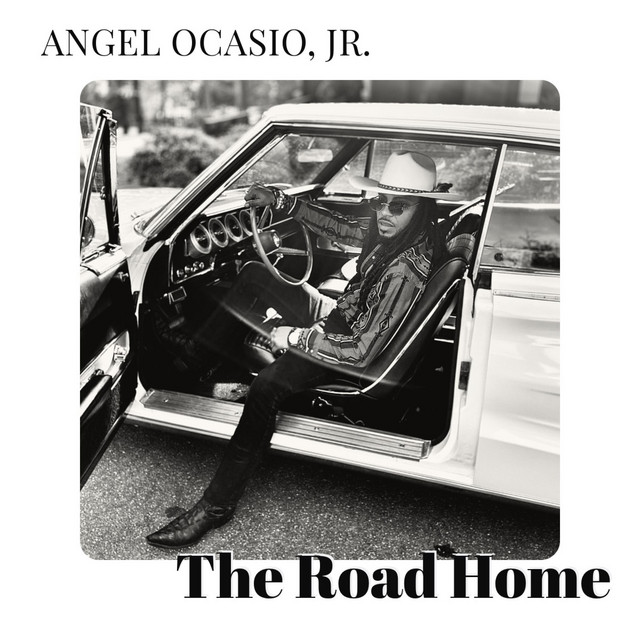
Wild Ivory Records – No #
Macon, Georgia’s Angel (Cash) Ocasio Jr. may have learned to play guitar in church (thanks to relative Elihue “Uncle Big” Johnson Jr.), but the Cash’s Juke Joint frontman’s latest solo release belies a well-traveled and studied ace musician, singer, writer, and producer.
While deeply rooted in blues and sacred steel traditions, The Road Home takes the long way around to its destination, making stops in the many worlds informed by R&B, soul, rock, and funk along the way.
Ocasio handles the majority of the instruments himself but drummer Javares “J.D.” Dunn’s power and finesse behind the kit, as well as guests Blind Dog Mayer (harmonica) and Coco Cook (vocals), keep The Road Home from sounding like a one-man band vanity project.
Leadoff track Lone Road, a moody dobro and synth piece that sounds like a modern take on a Morricone western soundtrack, gives way to the heavy riffing of Walk with Me, a crunchy blues rocker in the vein of Gary Clark Jr. or Alvin “Youngblood” Hart’s Muscle Theory that showcases Ocasio’s considerable slide skills and soulful vocals. Early in the Morning has a minor key vibe reminiscent of B.B. King or Lightnin’ Hopkins and Set in My Ways would fit on a late ’70s Johnny “Guitar” Watson funk album. Ocasio’s duet with Coco Cook, Mr. Easer, has a southern soul feel that sets up the album closer, the acoustic blues Something I Can Feel. Need some lap steel wizardry in your life? Cue up the smoking instrumental Cash Jam.
Ocasio’s instrumental prowess stands out across the 11 tracks on The Road Home, but the songs never suffer from overplaying or excessive production. Sure, this record is a guitar junkie’s dream, but Ocasio’s smooth vocalizing and strong songwriting skills never take a back seat to his searing solos.
Despite its all-over-the-road nature, The Road Home is a cohesive piece of work and an impressive showcase for one of the most exciting young artists in the blues world today. Take notice, y’all.
—Tim Lee
ERIN HARPE
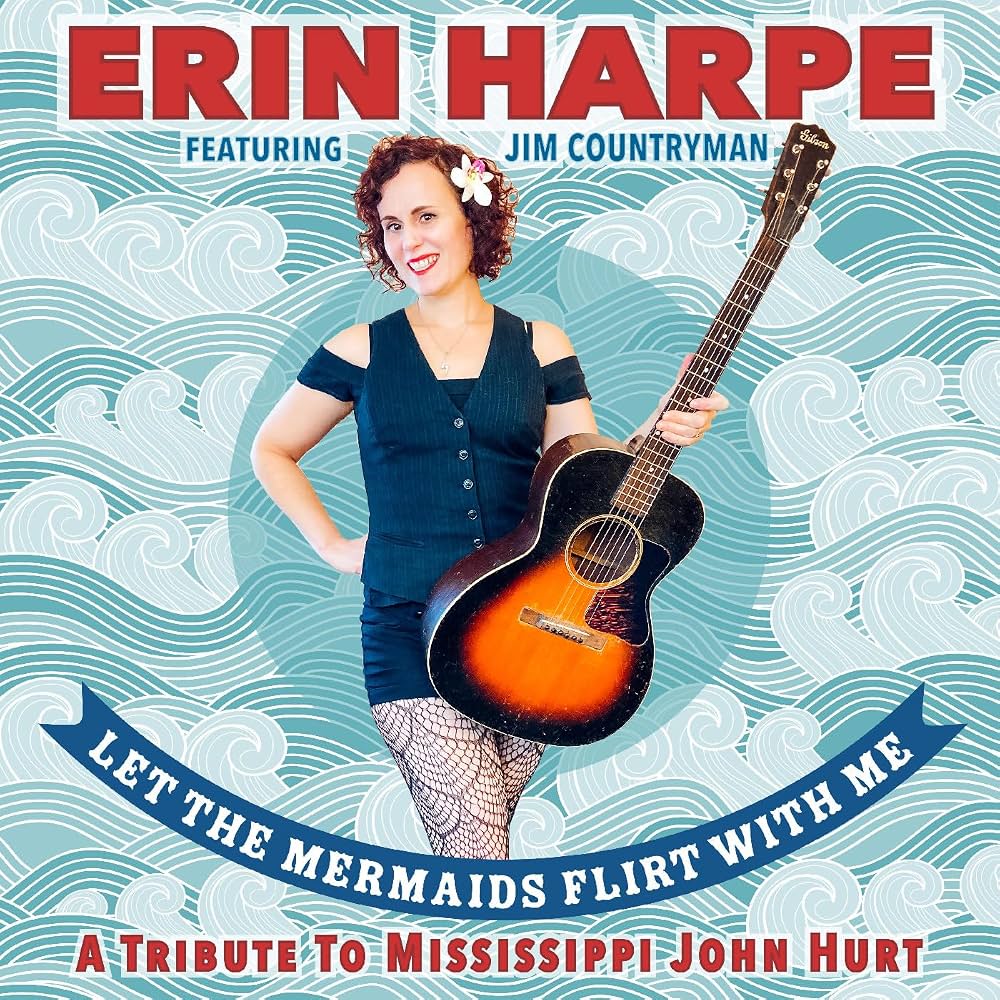
Let the Mermaids Flirt with Me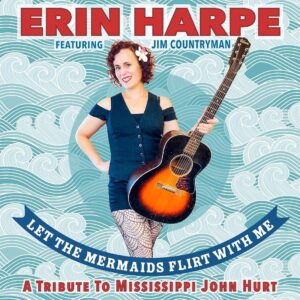
VizzTone – VTEHM 001
John “Mississippi” Hurt, from Avalon, Mississippi, was one of the most beloved figures of American folk and country blues. A gentle soul with an unmistakable touch, he became one of the great “rediscovered” artists of the 1960s blues revival. His music remains timeless—melodically elegant and understated, with syncopated, intricate fingerpicking, and fluid left-hand arpeggios. His lilting, wistful style, and that soothing voice, could make even murder and sorrow sound sweet.
Carrying that legacy forward is Erin Harpe, one of the most accomplished—yet still underrated—acoustic blues artists working today. A native of Annapolis, Maryland, now based in Boston, Harpe was raised in the Piedmont fingerpicking tradition. Her father, the renowned musician and visual artist Neil Harpe, steeped her from childhood in the DC roots music scene, where legends gathered around Archie’s Barbershop. Among her early influences was blueswoman Eleanor Ellis, who served as both mentor and inspiration. But Neil Harpe was her strongest guide—and the one who first introduced her to Mississippi John Hurt.
To tackle a full tribute to Hurt, you need serious alternating-bass fingerpicking chops—and Erin Harpe has them in spades. Her new album, Let the Mermaids Flirt with Me, recorded live without overdubs in her Boston home studio, is self-produced. Her husband, Jim Countryman, is sound engineer and joins her on the album on bass and ukulele. The stripped-down approach maintains Hurt’s mellow, back porch vibe.
Harpe is an exceptionally passionate and sensual singer and a virtuosic fingerpicker. She kicks out syncopated melodic runs with ease, always tastefully. Her rich, sensual voice, deft touch, and eloquent instrumentation make these songs shimmer with warmth and reverence. You can hear her love for Hurt—and for the tradition he represents—in every note.
The project began when the Mississippi John Hurt Foundation invited Harpe to perform a fundraiser at the famed Caffè Lena in Saratoga Springs, New York, inspiring her to revisit the Hurt catalog she has played since her teenage years. The album includes nine well-loved and well-worn Hurt songs, plus You Are My Sunshine. Harpe brings on Candy Man, Casey Jones, Let the Mermaids Flirt with Me, Got the Blues (Can’t Be Satisfied), Richland Woman, Make Me a Pallet on Your Floor, Frankie, Nobody’s Dirty Business, and Stagolee.
Erin Harpe doesn’t just cover Mississippi John Hurt—she communes with him. In Let the Mermaids Flirt with Me, she channels the warmth, grace, and quiet soul of the master, carrying the flame of acoustic blues into the modern age with reverence and joy—with humility, sweetness, and unshakable groove. Few artists today embody the spirit of the country blues as purely, as humbly, and as beautifully as Erin Harpe.
—Frank Matheis
VALERIE JUNE
Owls, Omens, and Oracles

Concord – CRE02871
Singer-songwriter Valerie June’s remarkable artistry is not limited to the musical realm. Since her last release, the 2022 EP Under Cover (LB #282), the Humboldt, Tennessee, native has published her third book, Light Beams: A Workbook for Being Your Badass Self (Andrews McMeel, 2023). She speaks publicly on creativity and the transformative power of radical joy, is a certified yoga and mindfulness instructor, and passionately advocates for arts education.
Yet music remains at the forefront of her endeavors, and a new Valerie June album is always a welcome event. Produced by M. Ward, Owls, Omens, and Oracles channels her visions of joy, unity, and love into a spellbinding, uplifting whole.
As ever, June is unbound by genre constraints: her songs contain a multitude of roots elements and styles, from the crunchy garage rock guitars and crashing cymbals of Joy, Joy! to the ’60s girl group sparkle of All I Really Wanna Do. With its New Orleans–style horns and easy swing, Love Me Any Ole Way sounds like a lost track from a Cosimo Matassa session. The gospel groove of Changed is anchored by the abiding harmonies of the Blind Boys of Alabama; Norah Jones’ smoky voice melds seamlessly with June’s on Sweet Things Just for You. Her banjo is the driving force of My Life Is a Country Song, while the beautiful, a cappella Calling My Spirit swirls her reedy vocals into a shape note hymn. All are swathed in a gossamer veil of echo, giving them a vintage, AM radio feel.
The album’s thematic heart is rooted in Endless Tree, an upbeat, rocking anthem that beckons listeners to seek harmony with those around them. “Although we might not all agree / Still live together peacefully,” she gently urges, and the empathy and hope in her voice stir the soul.
And these are Valerie June’s great gifts as an artist—her genuine positivity, sweetness of spirit, and infectious joy touch the hearts of those with ears to hear her message. In a world that seems increasingly dark of late, Owls, Omens, and Oracles is a bright beacon of guiding light.
—Melanie Young
THE BC COMBO FEATURING BEV CONKLIN
Glass Half Full
MoMojo Records – No #
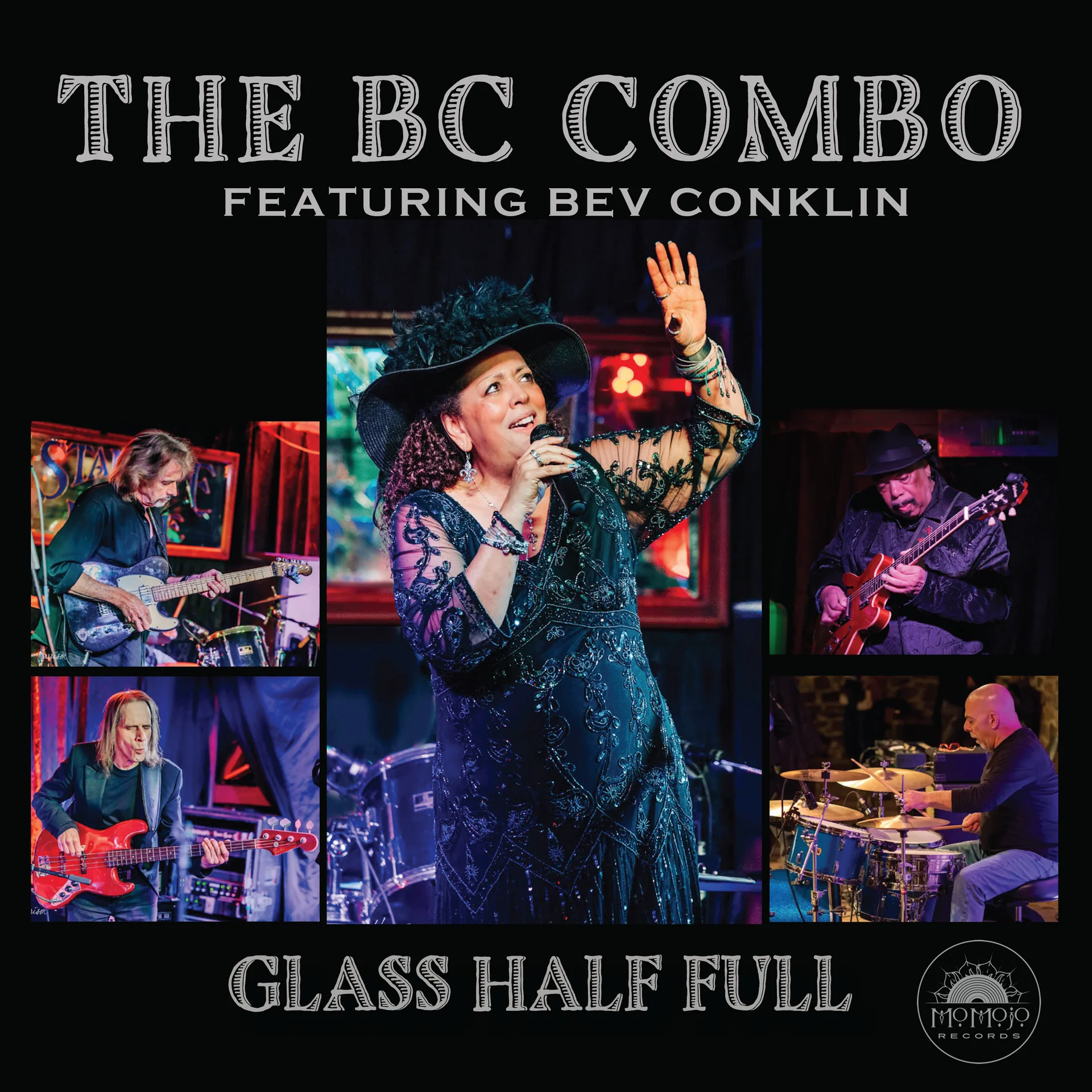
If you’re looking for a new release that’s a blend of soul and blues, look no further than Glass Half Full by acclaimed vocalist Bev Conklin and the BC Combo. The 12 songs on the album—the act’s first for New Orleans imprint MoMojo Records—are a consistently engaging and enchanting listen.
There are two stars that shine brightest on Glass Half Full: Conklin and guitarist/vocalist Wayne Smith. The latter pairs with guitarist Joe Mac for some killer lead work on the title track and he acquits himself well as a lead vocalist, teaming with Conklin on the propulsive Mr. Agent Man.
The rhythmic Love and Affection is another winner. Conklin’s vocals are hypnotic, luring the listener in. The BC Combo offers up a similarly compelling sonic backdrop, punctuated with more outstanding lead playing from Mac. It’s followed up by the group going in a completely different direction on No Back Door, a lovely jazz-blues hybrid. Conklin’s vocals float above the low-key arrangement, allowing her knack for melody to stand out.
But the best moments on Glass Half Full come when Conklin and the Combo kick out the jams. It’s a Small Club allows Conklin and Smith to duet to fantastic effect, as their vocals, the up-tempo groove and Mac’s tasty leads are ripe for spontaneous dancing—or at the very least, vigorous toe-tapping. Those good feelings carry over into succeeding track We’re Gonna Get Some. Drummer Glenn Spadone offers up a funky backbeat that anchors the song. The rest of the band follows with aplomb and makes for an undeniably good time.
“Undeniably good time” can also serve to sum up the entirety of Glass Half Full. It’s light in the best possible way. The album moves from song to song with grace and swiftness, paced in such a way that it never drags. It’s a pleasing listen from start to finish and well worth your time.
—Jim Shahen Jr.